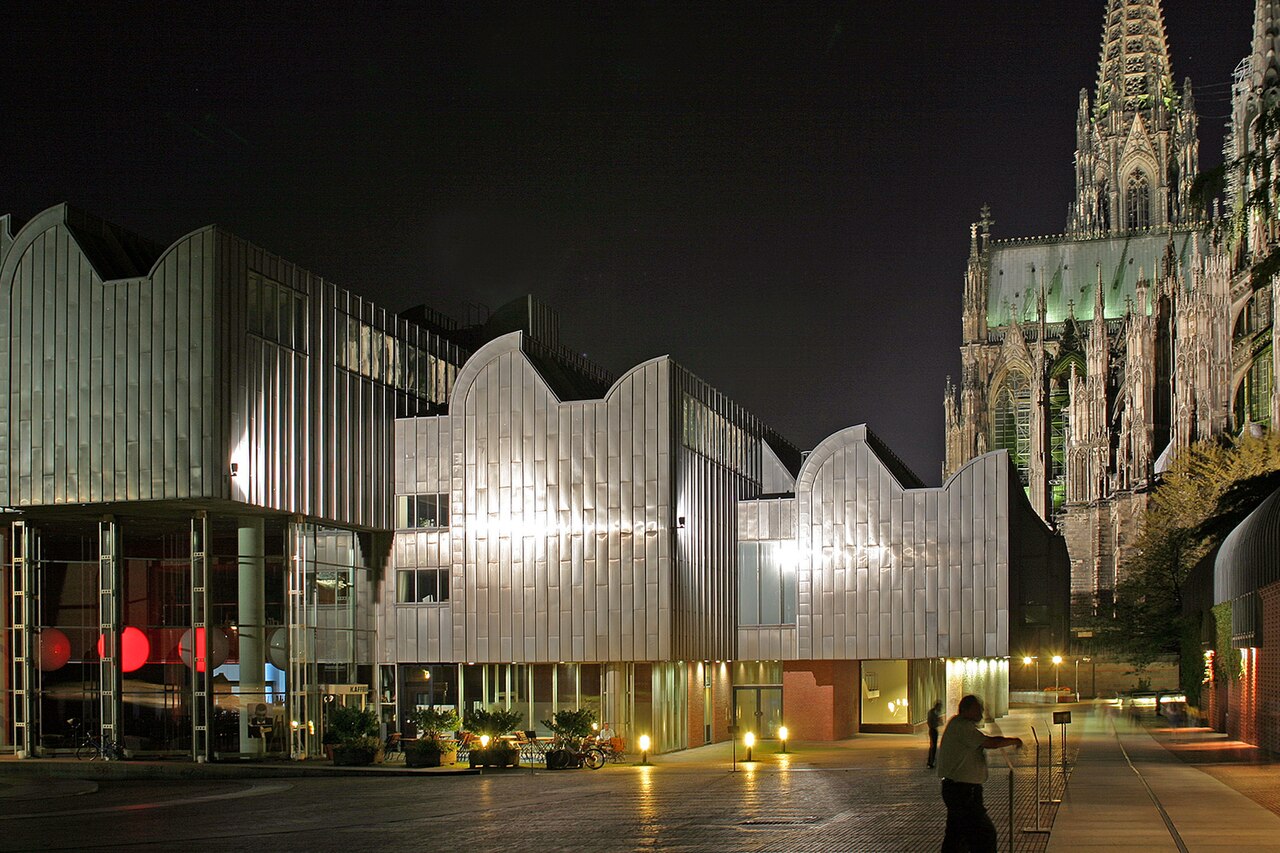
Museum Ludwig is a prominent institution for modern and contemporary art located in Cologne, Germany. Situated adjacent to the Cologne Cathedral, the museum was founded in 1976 following a significant donation of modern art by Peter and Irene Ludwig. The building, designed by architects Peter Busmann and Godfried Haberer, serves as a major cultural hub housing extensive collections of Pop Art, Abstract Expressionism, and Surrealism.
The museum is internationally recognized for holding one of the largest Picasso collections in Europe, alongside a substantial assembly of Russian avant-garde works. Its permanent collection provides a comprehensive overview of art movements from the early 20th century to the present day, frequently hosting major temporary exhibitions that explore contemporary social and aesthetic themes.
Key Facts
- Materials
- Concrete, Glass, Steel
- Civilization
- Modern German
- Accessibility
- Fully wheelchair accessible
- Date(s)
- 1976
- Condition
- Active, well-maintained
- Original Function
- Art Museum
- Key Figures
- Peter Ludwig, Irene Ludwig, Pablo Picasso
Foundation and Donation
1976The museum was established after Peter and Irene Ludwig donated their extensive collection of modern art to the city of Cologne. This act consolidated various municipal collections into a single, dedicated space for modern art.
Architectural Development
1986The current museum building, designed by Busmann and Haberer, was inaugurated in 1986. The structure was integrated into a larger complex that also houses the Cologne Philharmonic concert hall, creating a unified cultural center.
Expansion of Collections
1990s - PresentThroughout the late 20th and early 21st centuries, the museum significantly expanded its holdings, particularly in the fields of photography and contemporary media art, solidifying its status as a leading European art institution.
Cultural Significance
Museum Ludwig plays a critical role in the cultural landscape of the Rhineland, acting as a bridge between historical modernism and contemporary artistic practice. Its collection of Pop Art, notably works by Andy Warhol and Roy Lichtenstein, established the museum as a primary site for the study of American post-war art in Europe.
Beyond its permanent collection, the museum serves as a platform for critical discourse regarding the role of museums in society. Its commitment to the Russian avant-garde and its extensive photography archive contribute to a broader understanding of 20th-century visual culture and political history.
Interpretive Notes
Scholarly debates and areas of uncertainty
Debates often center on the provenance of certain pieces within the Russian avant-garde collection and the ethical considerations regarding the acquisition of works during the Cold War era. Additionally, scholars frequently discuss the museum's role in balancing the preservation of the Ludwig family's specific collecting vision with the need for a more diverse and inclusive contemporary acquisition policy.
Visiting Information
Entry Rules
Open Tuesday to Sunday. Tickets can be purchased online or at the museum entrance. Concessions are available for students and seniors. Visitors are requested to leave large bags in the provided lockers.
Best Times to Visit
Weekday mornings are generally quieter. The museum is often busier on weekends and during major temporary exhibition openings.
Photography
Non-commercial photography is permitted in the permanent collection galleries without flash or tripods. Photography may be restricted in specific temporary exhibitions due to copyright agreements.
Preservation Notes
Maintain a safe distance from all artworks. Do not touch surfaces or frames. Climate control systems are in place to protect sensitive media; please follow all posted signage regarding environmental regulations.
Nearby POIs
10 shownKey Facts
- Materials
- Concrete, Glass, Steel
- Civilization
- Modern German
- Accessibility
- Fully wheelchair accessible
- Date(s)
- 1976
- Condition
- Active, well-maintained
- Original Function
- Art Museum
- Key Figures
- Peter Ludwig, Irene Ludwig, Pablo Picasso