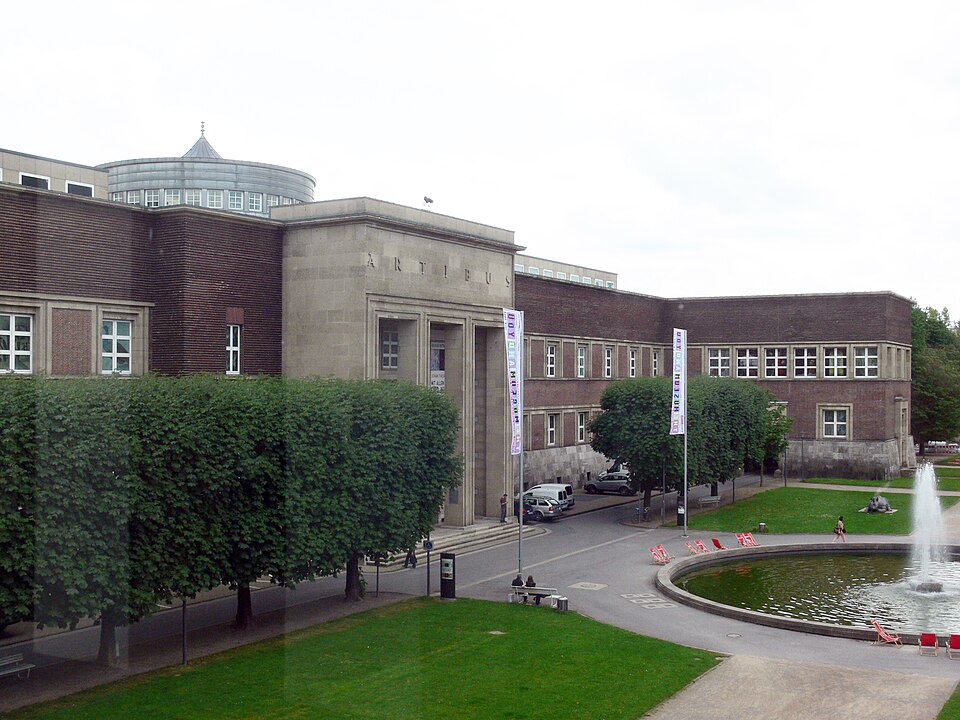
The Museum Kunstpalast is a prominent art museum situated within the Ehrenhof complex in Düsseldorf, Germany. Established in its current form through the merger of the Kunstmuseum Düsseldorf and the Kunstpalast foundation, it serves as a major cultural institution housing a diverse collection that spans from classical antiquity to the present day.
The museum is particularly noted for its extensive collection of fine arts, including significant paintings by Peter Paul Rubens, and its world-renowned archive of international graphics. The building itself is an architectural landmark, reflecting the early 20th-century urban planning of the Ehrenhof area, and continues to host major temporary exhibitions alongside its permanent holdings.
Key Facts
- Materials
- Brick, Stone, Glass
- Civilization
- German
- Accessibility
- Fully wheelchair accessible
- Date(s)
- 1926
- Condition
- Active, well-maintained
- Original Function
- Exhibition hall and museum
- Key Figures
- Peter Paul Rubens, Helmut Hentrich
Origins and the Ehrenhof Complex
1925-1926The museum was built as part of the 'GeSoLei' (Gesundheit, Soziale Fürsorge und Leibesübungen) exhibition, a major trade fair in Düsseldorf. The Ehrenhof complex was designed by architect Wilhelm Kreis to serve as a cultural hub for the city.
Post-War Consolidation
1945-2000Following the destruction of World War II, the museum underwent significant reconstruction. In the late 20th century, the city's various art collections were consolidated, leading to the formation of the modern Kunstpalast institution.
Modern Expansion
2001-PresentIn 2001, the museum underwent a major renovation led by architect Oswald Mathias Ungers. This project modernized the interior spaces to accommodate large-scale international exhibitions while preserving the historic facade.
Cultural Significance
The Museum Kunstpalast is central to the cultural identity of Düsseldorf, acting as a bridge between the city's industrial history and its status as a contemporary art hub. Its glass collection is considered one of the most important in Europe, reflecting the region's historical ties to glass manufacturing and design.
Beyond its permanent collection, the museum plays a vital role in the international art circuit, frequently collaborating with global institutions to bring major retrospectives to the Rhineland. It remains a focal point for public engagement with art history and contemporary visual culture in Germany.
Interpretive Notes
Scholarly debates and areas of uncertainty
Discussions often center on the balance between the museum's role as a repository for historical European masters and its mandate to showcase contemporary, often experimental, art. Additionally, the architectural integration of the historic Ehrenhof site with modern exhibition requirements remains a subject of ongoing critique in urban planning circles.
Visiting Information
Entry Rules
Open Tuesday to Sunday. Tickets can be purchased online or at the box office. Concessions available for students and seniors. Large bags and backpacks must be stored in lockers.
Best Times to Visit
Weekday mornings are generally quieter. The museum is often busiest during the opening weeks of major temporary exhibitions.
Photography
Non-commercial photography is permitted in the permanent collection without flash or tripods. Photography is strictly prohibited in temporary exhibitions due to copyright agreements.
Preservation Notes
Maintain a safe distance from all artworks. Flash photography and the use of selfie sticks are prohibited to protect light-sensitive materials and glass exhibits.
Nearby POIs
10 shownSources & Further Reading
- [1]
- [2]Düsseldorf und seine Museen — Christoph Danelzik-Brüggemann. Droste Verlag (2015)
Key Facts
- Materials
- Brick, Stone, Glass
- Civilization
- German
- Accessibility
- Fully wheelchair accessible
- Date(s)
- 1926
- Condition
- Active, well-maintained
- Original Function
- Exhibition hall and museum
- Key Figures
- Peter Paul Rubens, Helmut Hentrich