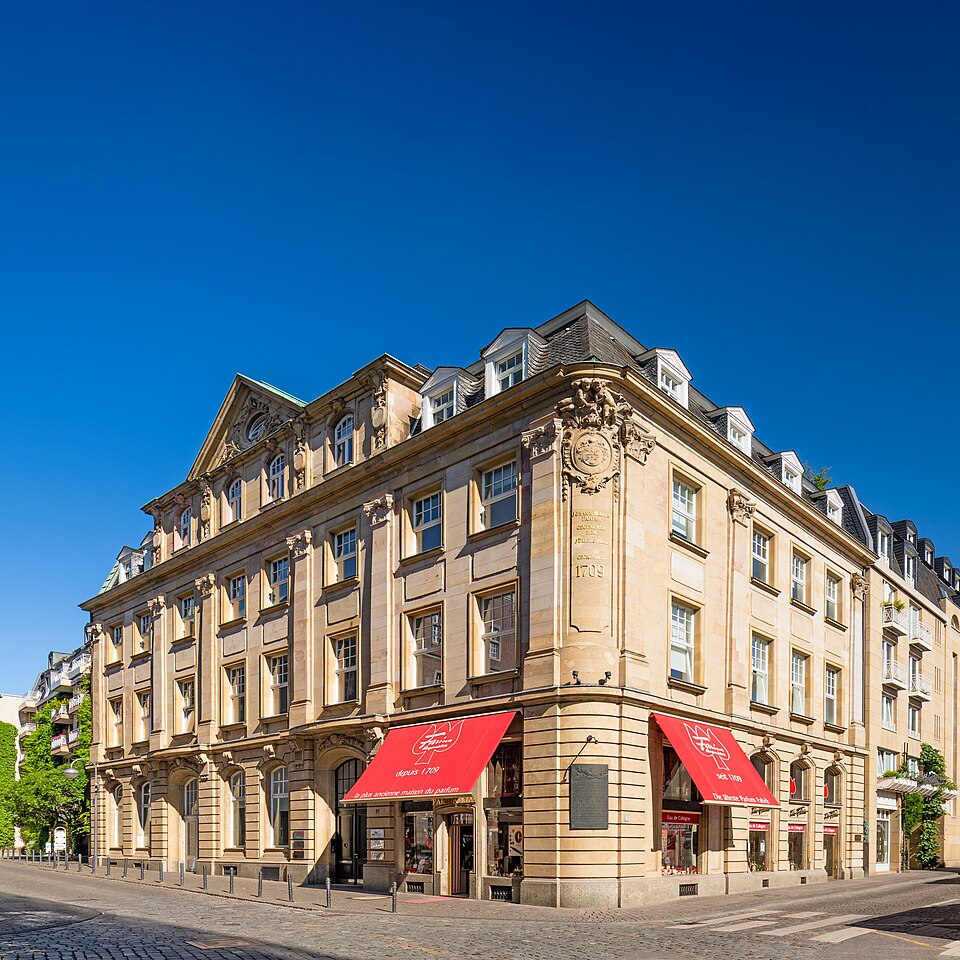
The Farina Fragrance Museum is located in the original building where Johann Maria Farina created the world-famous Eau de Cologne in 1709. As the oldest fragrance factory in existence, the site preserves the history of the Farina family business and the evolution of modern perfumery through original production equipment, historical correspondence, and an extensive collection of perfume decanters.
The museum provides insight into the 18th-century manufacturing processes that defined the luxury fragrance industry. Visitors can view the original distillation apparatus and archival documents that detail the development of the scent, which became a staple of European royal courts and high society during the Enlightenment.
Key Facts
- Materials
- Stone, Brick, Timber
- Civilization
- German
- Accessibility
- Limited due to historic building constraints
- Date(s)
- 1709
- Condition
- Well-preserved, functioning museum
- Original Function
- Perfume factory and residence
- Key Figures
- Johann Maria Farina
Founding of the House
1709Johann Maria Farina established his business in Cologne, creating a fragrance he named 'Eau de Cologne' in honor of his adopted city. The site served as both his residence and the primary production facility for the scent.
Expansion and Royal Patronage
18th-19th CenturyThe fragrance gained immense popularity among European nobility, including figures such as Napoleon Bonaparte and Queen Victoria. The factory expanded its operations to meet international demand while maintaining secret production methods.
Establishment of the Museum
2006To mark the 300th anniversary of the company, the Farina family opened the museum to the public, showcasing the history of the brand and the development of the perfume industry within the original factory walls.
Cultural Significance
The museum is central to the history of Cologne and the global perfume industry. It represents the transition from artisanal apothecary practices to the industrial-scale production of luxury goods. The site serves as a testament to the Farina family's legacy and the enduring cultural impact of the Eau de Cologne scent on European social history.
Interpretive Notes
Scholarly debates and areas of uncertainty
There is occasional academic discussion regarding the distinction between the original 'Eau de Cologne' formula and the numerous imitations that emerged throughout the 19th century, which often led to complex legal disputes over trademark and naming rights.
Visiting Information
Entry Rules
Access is by guided tour only. Advance booking is highly recommended as group sizes are strictly limited due to the historic nature of the building.
Best Times to Visit
Weekday mornings are generally less crowded. The museum is open year-round, but booking several weeks in advance is advised during peak tourist seasons.
Photography
Photography is permitted in designated areas; however, flash photography is prohibited to protect sensitive historical documents and artifacts.
Preservation Notes
Visitors are requested to refrain from wearing strong perfumes during the tour to ensure the olfactory experience of the exhibits remains clear for all guests.
Nearby POIs
10 shownSources & Further Reading
- [1]
- [2]The History of Perfume in Europe — Eugénie Briot. Journal of Cultural Heritage (2015)
Key Facts
- Materials
- Stone, Brick, Timber
- Civilization
- German
- Accessibility
- Limited due to historic building constraints
- Date(s)
- 1709
- Condition
- Well-preserved, functioning museum
- Original Function
- Perfume factory and residence
- Key Figures
- Johann Maria Farina