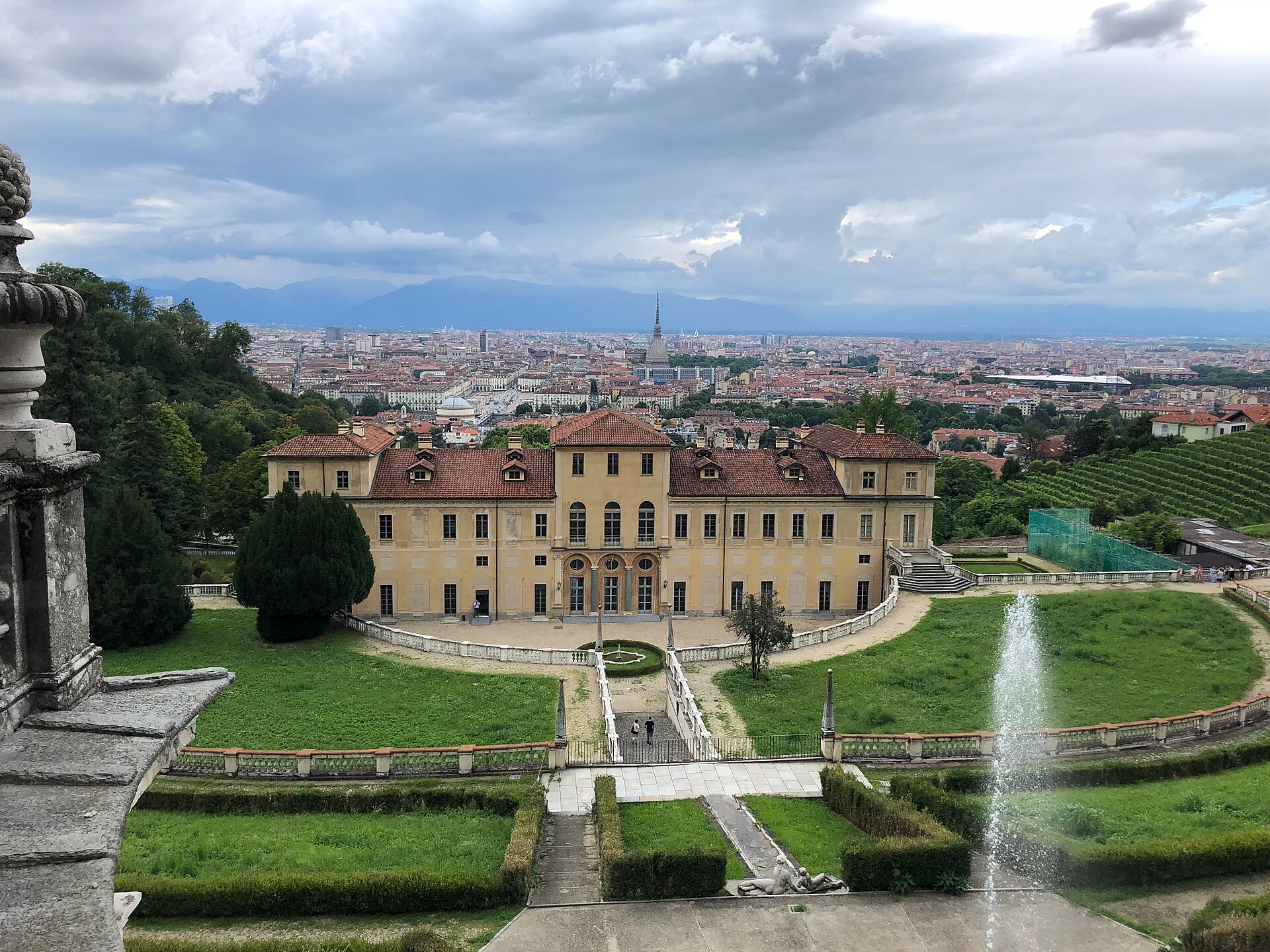
Villa della Regina is a 17th-century Baroque villa located on the hills overlooking Turin. Originally commissioned by Prince Maurice of Savoy in 1615, it was designed by Ascanio Vitozzi and later expanded by architects such as Amedeo di Castellamonte. The villa served as a private residence for the queens of the House of Savoy, from whom it derives its name, and is renowned for its sophisticated integration of architecture and landscape.
The interior features elaborate frescoes by artists like Daniel Seiter and Giovanni Battista Crosato, alongside original 18th-century furnishings. The estate is particularly noted for its terraced Italian gardens, which include a central amphitheater and a complex system of fountains, offering expansive views of the city of Turin and the surrounding Alpine landscape.
Key Facts
- Materials
- Brick, Stucco, Marble, Wood
- Civilization
- Savoyard
- Accessibility
- Partially accessible; some garden paths are steep
- Date(s)
- 1615 - 1730
- Condition
- Restored and open as a museum
- Original Function
- Royal residence and vineyard estate
- Key Figures
- Prince Maurice of Savoy, Anna Maria of Orléans, Queen Maria Antonia Ferdinanda
Origins and Construction
17th CenturyCommissioned by Prince Maurice of Savoy, the villa was intended as a suburban retreat. The initial design followed the model of a Roman villa, emphasizing the connection between the building and the terraced vineyard landscape.
Royal Residence
18th CenturyThe villa became the preferred residence of the Savoy queens. During this period, the interiors were extensively redecorated in the Rococo style, and the gardens were expanded to include the characteristic amphitheater and water features.
Decline and Restoration
20th - 21st CenturyFollowing the end of the monarchy, the villa fell into disrepair and suffered damage during World War II. A major restoration project, initiated in the 1990s and completed in 2006, returned the villa and its gardens to their former splendor, allowing for its reopening to the public.
Cultural Significance
The Villa della Regina is a key component of the 'Residences of the Royal House of Savoy' UNESCO World Heritage site. It represents the pinnacle of 17th-century Piedmontese court culture, illustrating the transition from the austere Baroque style to the more decorative Rococo aesthetic favored by the later Savoy monarchs.
Interpretive Notes
Scholarly debates and areas of uncertainty
Debate exists regarding the extent of Ascanio Vitozzi's original design versus the later modifications by Castellamonte. Scholars continue to analyze the original hydraulic engineering of the garden fountains, which were highly advanced for their time.
Visiting Information
Entry Rules
Open Tuesday through Sunday. Tickets are required for entry. Visitors are requested to follow marked paths in the gardens to preserve the historic landscape.
Best Times to Visit
Spring and early autumn offer the best conditions for exploring the terraced gardens. Morning visits are recommended to avoid the afternoon sun on the hillside.
Photography
Personal photography is permitted without flash or tripods. Commercial photography requires prior authorization from the museum administration.
Preservation Notes
The villa is a protected heritage site. Visitors must refrain from touching frescoes or historic furniture. Stay on designated paths in the gardens to protect the restored vegetation.
Nearby POIs
11 shown- Chiesa di Santa Maria del Monte dei Cappuccini0.9 km
- Chiesa della Gran Madre di Dio0.9 km
- Museo Nazionale del Cinema1.7 km
- Palazzo Carignano2.1 km
- Borgo Medioevale2.2 km
- Museo Egizio2.2 km
- Palazzo Madama2.3 km
- Palazzo Reale di Torino2.4 km
- Porta Palatina2.7 km
- Museo d'Arte Orientale, MAO2.9 km
- Museo Nazionale dell'Automobile4 km
Key Facts
- Materials
- Brick, Stucco, Marble, Wood
- Civilization
- Savoyard
- Accessibility
- Partially accessible; some garden paths are steep
- Date(s)
- 1615 - 1730
- Condition
- Restored and open as a museum
- Original Function
- Royal residence and vineyard estate
- Key Figures
- Prince Maurice of Savoy, Anna Maria of Orléans, Queen Maria Antonia Ferdinanda
Nearby POIs
11 shown- Chiesa di Santa Maria del Monte dei Cappuccini0.9 km
- Chiesa della Gran Madre di Dio0.9 km
- Museo Nazionale del Cinema1.7 km
- Palazzo Carignano2.1 km
- Borgo Medioevale2.2 km
- Museo Egizio2.2 km
- Palazzo Madama2.3 km
- Palazzo Reale di Torino2.4 km
- Porta Palatina2.7 km
- Museo d'Arte Orientale, MAO2.9 km
- Museo Nazionale dell'Automobile4 km