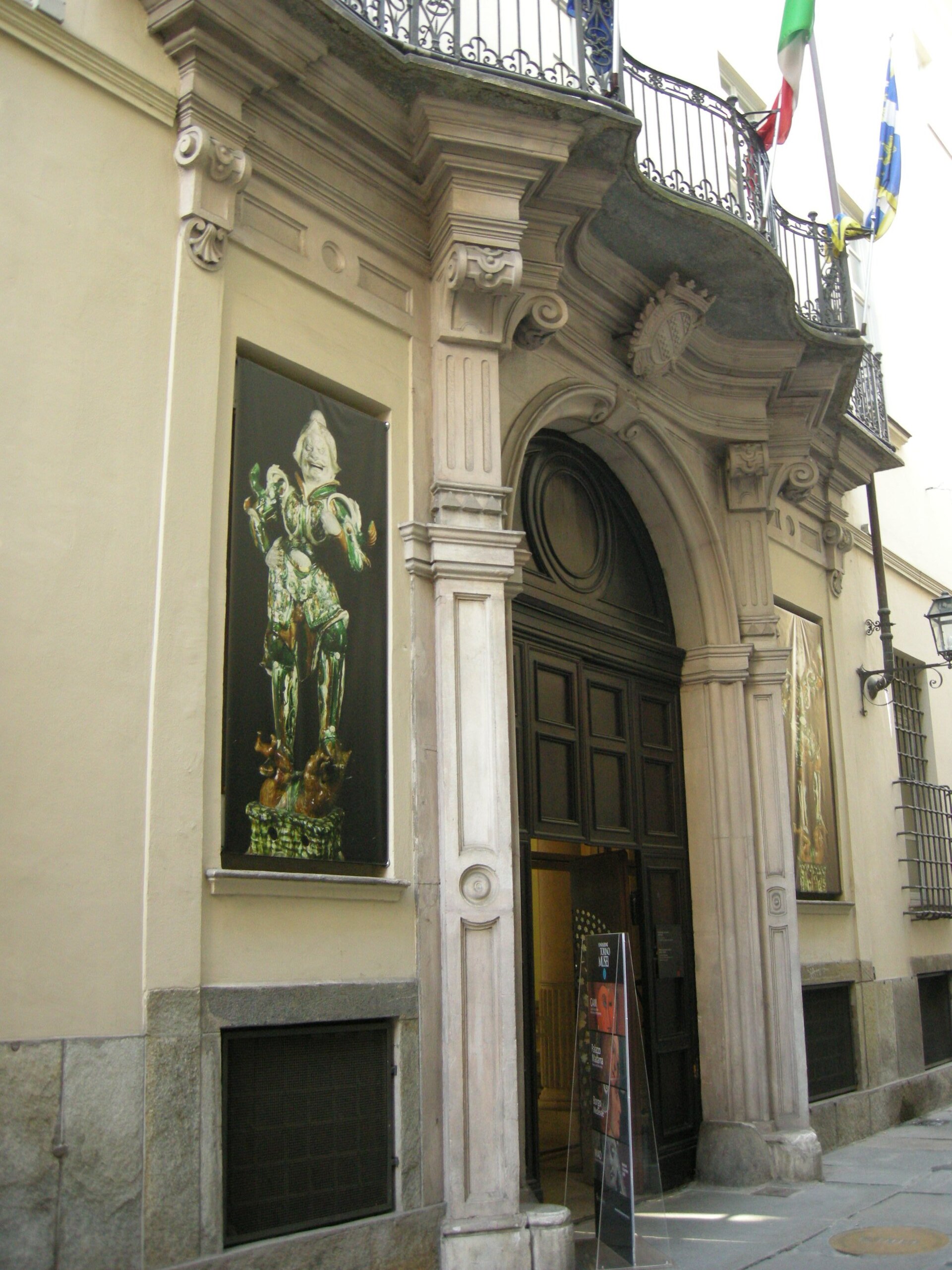
The Museo d'Arte Orientale (MAO) is housed within the Palazzo Mazzonis, a 17th-century aristocratic residence in the heart of Turin. The museum serves as a primary repository for Asian art in Italy, featuring a collection of approximately 2,200 works that span the cultural and artistic traditions of the Asian continent, ranging from the Gandhara region to Japan.
The museum's layout is organized into thematic galleries that explore the religious, social, and aesthetic dimensions of Asian civilizations. The building itself underwent significant restoration to adapt its historic architecture for the display of delicate artifacts, creating a dialogue between the Baroque structure and the diverse cultural heritage housed within its walls.
Key Facts
- Materials
- Brick, Stone, Stucco
- Civilization
- Various Asian cultures
- Accessibility
- Fully accessible with elevators
- Date(s)
- 17th century (Palazzo Mazzonis)
- Condition
- Restored and active museum
- Original Function
- Aristocratic residence
- Key Figures
- Mazzonis family
Palazzo Mazzonis Origins
17th centuryThe building was originally constructed as a private residence for the Mazzonis family, a prominent local dynasty. It reflects the architectural style of Turin's aristocratic palaces of the period.
Transformation into a Museum
2008Following extensive restoration work, the Palazzo Mazzonis was inaugurated as the Museo d'Arte Orientale in 2008, centralizing various Asian art collections previously held by the Civic Museum of Ancient Art.
Contemporary Development
21st centuryThe museum continues to expand its collection and research initiatives, hosting temporary exhibitions that focus on contemporary Asian art alongside its permanent historical displays.
Cultural Significance
The MAO plays a critical role in fostering intercultural dialogue between Italy and Asia. By providing a dedicated space for the study and appreciation of Eastern traditions, it serves as a bridge for understanding the historical and philosophical developments of civilizations from the Near East to the Far East.
Interpretive Notes
Scholarly debates and areas of uncertainty
Discussions within the museum community often focus on the challenges of contextualizing diverse Asian artifacts within a European Baroque architectural setting, and the ongoing efforts to balance traditional historical curation with contemporary artistic perspectives.
Visiting Information
Entry Rules
Open Tuesday through Sunday. Tickets can be purchased at the entrance or online. Modest dress is not strictly enforced, but visitors are expected to maintain a quiet demeanor appropriate for a museum environment.
Best Times to Visit
Weekday mornings are generally quieter. The museum is a popular destination during the winter months and for special temporary exhibition openings.
Photography
Personal photography is permitted without flash or tripods. Professional photography requires prior authorization from the museum administration.
Preservation Notes
Maintain a respectful distance from all artifacts. Flash photography is strictly prohibited to protect light-sensitive materials. Food and drink are not permitted in the galleries.
Nearby POIs
11 shown- Porta Palatina0.3 km
- Palazzo Reale di Torino0.6 km
- Palazzo Madama0.6 km
- Museo Egizio0.8 km
- Palazzo Carignano0.8 km
- Museo Nazionale del Cinema1.2 km
- Chiesa della Gran Madre di Dio2 km
- Chiesa di Santa Maria del Monte dei Cappuccini2.2 km
- Villa della Regina2.9 km
- Borgo Medioevale2.9 km
- Pinacoteca Giovanni e Marella Agnelli4.8 km
Sources & Further Reading
- [1]MAO Museo d'Arte Orientale: Guida alle collezioni — Fondazione Torino Musei. Silvana Editoriale (2008)View
- [2]Torino: Il Palazzo Mazzonis e il MAO — AA.VV.. Umberto Allemandi & C. (2009)
Key Facts
- Materials
- Brick, Stone, Stucco
- Civilization
- Various Asian cultures
- Accessibility
- Fully accessible with elevators
- Date(s)
- 17th century (Palazzo Mazzonis)
- Condition
- Restored and active museum
- Original Function
- Aristocratic residence
- Key Figures
- Mazzonis family
Nearby POIs
11 shown- Porta Palatina0.3 km
- Palazzo Reale di Torino0.6 km
- Palazzo Madama0.6 km
- Museo Egizio0.8 km
- Palazzo Carignano0.8 km
- Museo Nazionale del Cinema1.2 km
- Chiesa della Gran Madre di Dio2 km
- Chiesa di Santa Maria del Monte dei Cappuccini2.2 km
- Villa della Regina2.9 km
- Borgo Medioevale2.9 km
- Pinacoteca Giovanni e Marella Agnelli4.8 km