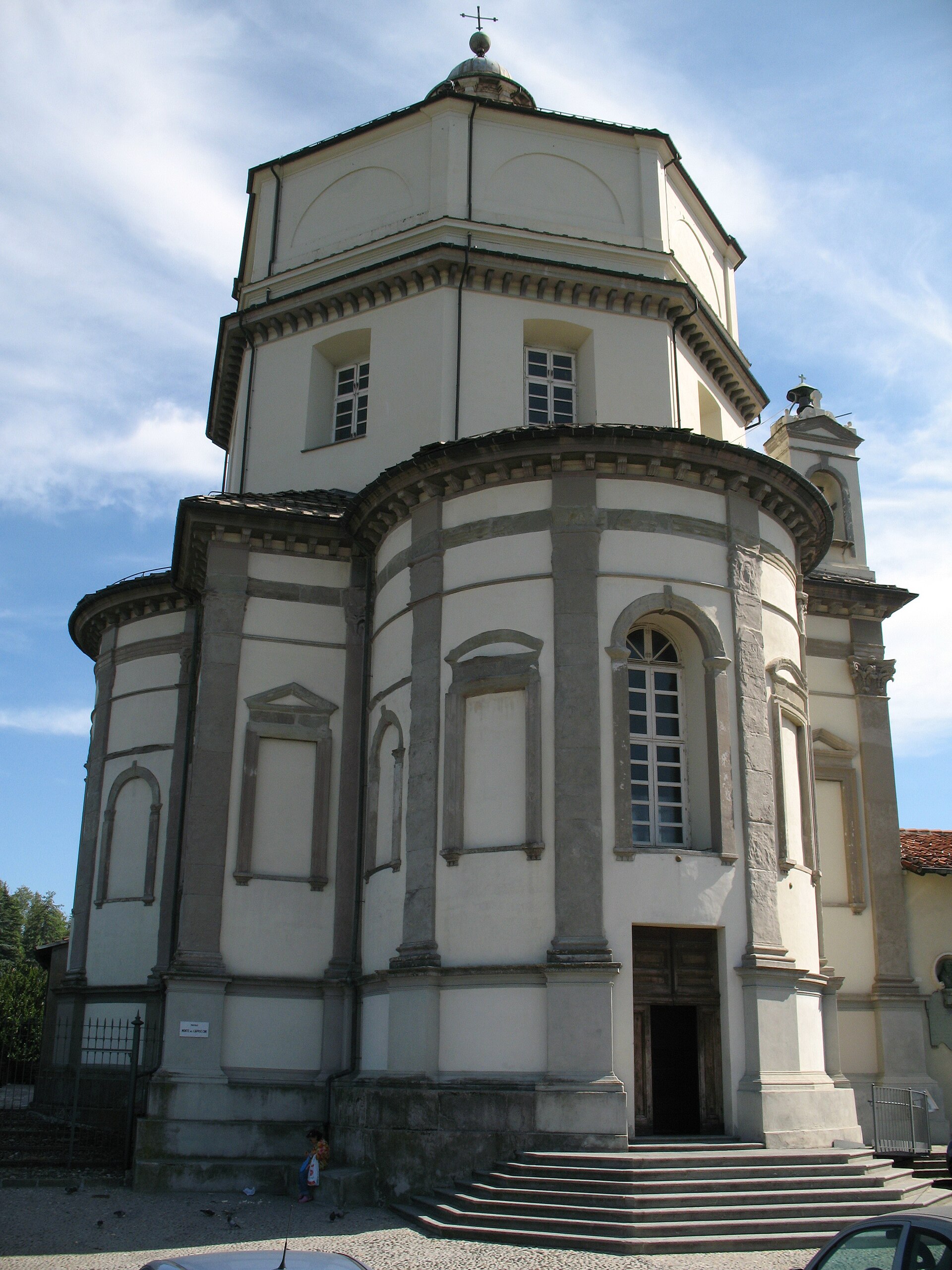
The Chiesa di Santa Maria del Monte dei Cappuccini is a prominent late-Renaissance church situated on a hill overlooking the Po River in Turin. Commissioned by the House of Savoy and the Capuchin order, the construction began in 1583 under the direction of architect Ascanio Vitozzi. It serves as a significant example of the transition between late-Renaissance and early Baroque architectural styles in the Piedmont region.
Beyond its religious function, the site held strategic military importance due to its elevated position, which provided a clear vantage point over the city and the surrounding Alpine landscape. The complex includes the church, a monastery, and a museum dedicated to mountaineering, reflecting the site's long-standing connection to the geography of the Italian Alps.
Key Facts
- Materials
- Brick, Stone, Stucco
- Civilization
- Italian
- Accessibility
- Accessible via road; steep pedestrian path from the riverbank
- Date(s)
- 1583-1656
- Condition
- Well-preserved, active religious site
- Original Function
- Monastic church and convent
- Key Figures
- Ascanio Vitozzi, Carlo di Castellamonte, Duke Charles Emmanuel I of Savoy
Founding and Construction
1583-1610The church was commissioned by Duke Charles Emmanuel I of Savoy to fulfill a vow and to provide a home for the Capuchin friars. Ascanio Vitozzi designed the structure with a centralized plan, which was a departure from traditional longitudinal church designs of the era.
Architectural Completion
1610-1656Following the death of Vitozzi, the project was overseen by other architects, including Carlo di Castellamonte. The interior decoration and the completion of the dome were finalized during the mid-17th century, solidifying its status as a landmark of the Turin skyline.
Military and Cultural Evolution
18th-20th centuryDue to its strategic location, the hill was fortified during various conflicts. In the 20th century, the monastery complex became home to the Museo Nazionale della Montagna, which documents the history of the Alps and mountaineering culture.
Cultural Significance
The church serves as a spiritual and visual anchor for Turin, representing the historical alliance between the House of Savoy and the Catholic Church. Its location on the Monte dei Cappuccini has made it a symbol of the city's relationship with the Alpine environment.
Culturally, the site is deeply integrated into the identity of Turin, serving as a primary viewpoint for residents and visitors to observe the city's urban layout against the backdrop of the Alps. The presence of the National Mountain Museum further cements its role as a center for Alpine studies and heritage.
Interpretive Notes
Scholarly debates and areas of uncertainty
There is ongoing academic discussion regarding the extent of Ascanio Vitozzi's original design versus the modifications made by his successors. Some architectural historians argue that the dome's proportions were significantly altered during the 17th-century construction phase, impacting the intended visual harmony of the exterior.
Visiting Information
Entry Rules
Open daily. Entry to the church is free. Visitors are expected to maintain a respectful demeanor as it is an active place of worship. The adjacent museum requires a separate ticket.
Best Times to Visit
Sunset is widely considered the best time to visit for panoramic views of the city lights and the Alpine peaks. Weekday mornings are generally quieter for those wishing to view the interior architecture.
Photography
Personal photography is permitted inside the church without flash. Tripods are generally prohibited during services.
Preservation Notes
The site is well-maintained, but visitors should remain on designated paths. Restoration work on the exterior facade is performed periodically to address weathering from the exposed hilltop location.
Nearby POIs
11 shownSources & Further Reading
- [1]The Architecture of the Piedmontese Baroque — Henry A. Millon. Journal of the Society of Architectural Historians (1963)View
- [2]Torino: Guida Storica — Giuseppe Torinese. Edizioni del Capoluogo (2015)
Key Facts
- Materials
- Brick, Stone, Stucco
- Civilization
- Italian
- Accessibility
- Accessible via road; steep pedestrian path from the riverbank
- Date(s)
- 1583-1656
- Condition
- Well-preserved, active religious site
- Original Function
- Monastic church and convent
- Key Figures
- Ascanio Vitozzi, Carlo di Castellamonte, Duke Charles Emmanuel I of Savoy