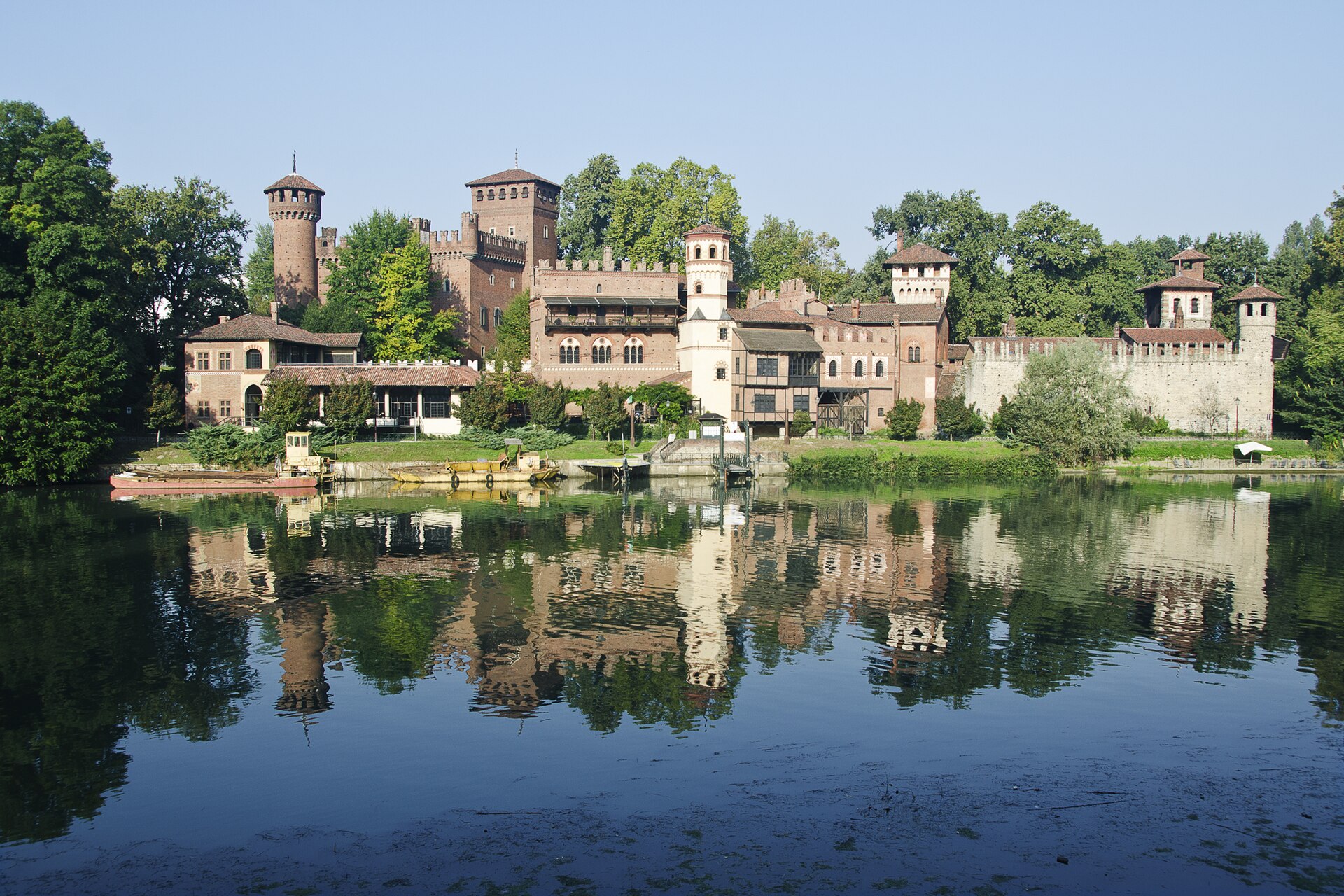
The Borgo Medioevale is an open-air museum located within the Parco del Valentino in Turin, Italy. Constructed for the 1884 Italian General Exhibition, the site is a faithful, albeit romanticized, reconstruction of a 15th-century Piedmontese village. It was designed to showcase the architectural and artistic heritage of the region, incorporating elements from various castles and buildings found throughout the Aosta Valley and Piedmont.
The complex features a fortified entrance, a central square, a church, and various workshops, all built using traditional techniques to mimic the medieval aesthetic. While it is not an authentic medieval settlement, it serves as a significant example of 19th-century historicism and the cultural desire to preserve and celebrate regional identity through architectural revival.
Key Facts
- Materials
- Brick, Wood, Stone, Wrought iron
- Civilization
- Italian
- Accessibility
- Partially accessible; some cobblestone paths may be difficult for wheelchairs
- Date(s)
- 1884
- Condition
- Well-preserved, functioning as a museum and cultural space
- Original Function
- Exhibition pavilion for the 1884 Italian General Exhibition
- Key Figures
- Alfredo d'Andrade, Vittorio Avondo, Federico Pastoris
Conception and Exhibition
1884The village was conceived by a committee of artists and historians led by Alfredo d'Andrade for the 1884 Italian General Exhibition. The goal was to create a 'living' museum that would educate the public on the medieval history of the Piedmont and Aosta regions.
Permanent Preservation
1884-1900Following the conclusion of the exhibition, the Borgo was intended to be dismantled. However, its immense popularity and architectural value led the city of Turin to decide to preserve it as a permanent fixture of the Parco del Valentino.
Modern Era
20th Century - PresentThe site has undergone several restoration projects to maintain its structural integrity. Today, it operates as a museum managed by the Fondazione Torino Musei, hosting cultural events, artisan workshops, and educational programs.
Cultural Significance
The Borgo Medioevale represents a pivotal moment in Italian cultural history where the 19th-century fascination with the Middle Ages met the burgeoning field of architectural preservation. It serves as a physical archive of architectural details that might otherwise have been lost to time, acting as a bridge between the historical reality of the 15th century and the romanticized vision of the 19th century.
For the people of Turin, the site is a beloved landmark within the Parco del Valentino, symbolizing the city's commitment to its regional heritage and the intersection of art, history, and public space.
Interpretive Notes
Scholarly debates and areas of uncertainty
Academic debate often centers on the tension between the site's 'fake' nature as a 19th-century construction and its value as a repository of authentic architectural motifs. Some scholars argue that the site creates a distorted view of medieval life, while others emphasize its importance as a legitimate historical document of 19th-century historiography and the 'revival' movement.
Visiting Information
Entry Rules
The village area is open to the public free of charge. Access to the Rocca (the fortress) and specific exhibitions requires a ticket. Open daily, though hours may vary seasonally.
Best Times to Visit
Spring and autumn are ideal for walking through the park and the village. Weekdays are recommended to avoid the high volume of weekend visitors.
Photography
Personal photography is permitted. Commercial photography and professional equipment require prior authorization from the museum administration.
Preservation Notes
Visitors are requested to respect the historic structures and stay on designated paths. As the site is a reconstruction of delicate materials, touching the walls or architectural details is discouraged.
Nearby POIs
11 shown- Chiesa di Santa Maria del Monte dei Cappuccini1.6 km
- Chiesa della Gran Madre di Dio1.9 km
- Museo Nazionale dell'Automobile2.1 km
- Villa della Regina2.2 km
- Museo Egizio2.2 km
- Pinacoteca Giovanni e Marella Agnelli2.3 km
- Palazzo Carignano2.3 km
- Museo Nazionale del Cinema2.4 km
- Palazzo Madama2.5 km
- Palazzo Reale di Torino2.7 km
- Museo d'Arte Orientale, MAO2.9 km
Sources & Further Reading
- [1]
- [2]Alfredo d'Andrade e il Borgo Medioevale — Vera Comoli Mandracci. Allemandi (1990)
Key Facts
- Materials
- Brick, Wood, Stone, Wrought iron
- Civilization
- Italian
- Accessibility
- Partially accessible; some cobblestone paths may be difficult for wheelchairs
- Date(s)
- 1884
- Condition
- Well-preserved, functioning as a museum and cultural space
- Original Function
- Exhibition pavilion for the 1884 Italian General Exhibition
- Key Figures
- Alfredo d'Andrade, Vittorio Avondo, Federico Pastoris
Nearby POIs
11 shown- Chiesa di Santa Maria del Monte dei Cappuccini1.6 km
- Chiesa della Gran Madre di Dio1.9 km
- Museo Nazionale dell'Automobile2.1 km
- Villa della Regina2.2 km
- Museo Egizio2.2 km
- Pinacoteca Giovanni e Marella Agnelli2.3 km
- Palazzo Carignano2.3 km
- Museo Nazionale del Cinema2.4 km
- Palazzo Madama2.5 km
- Palazzo Reale di Torino2.7 km
- Museo d'Arte Orientale, MAO2.9 km