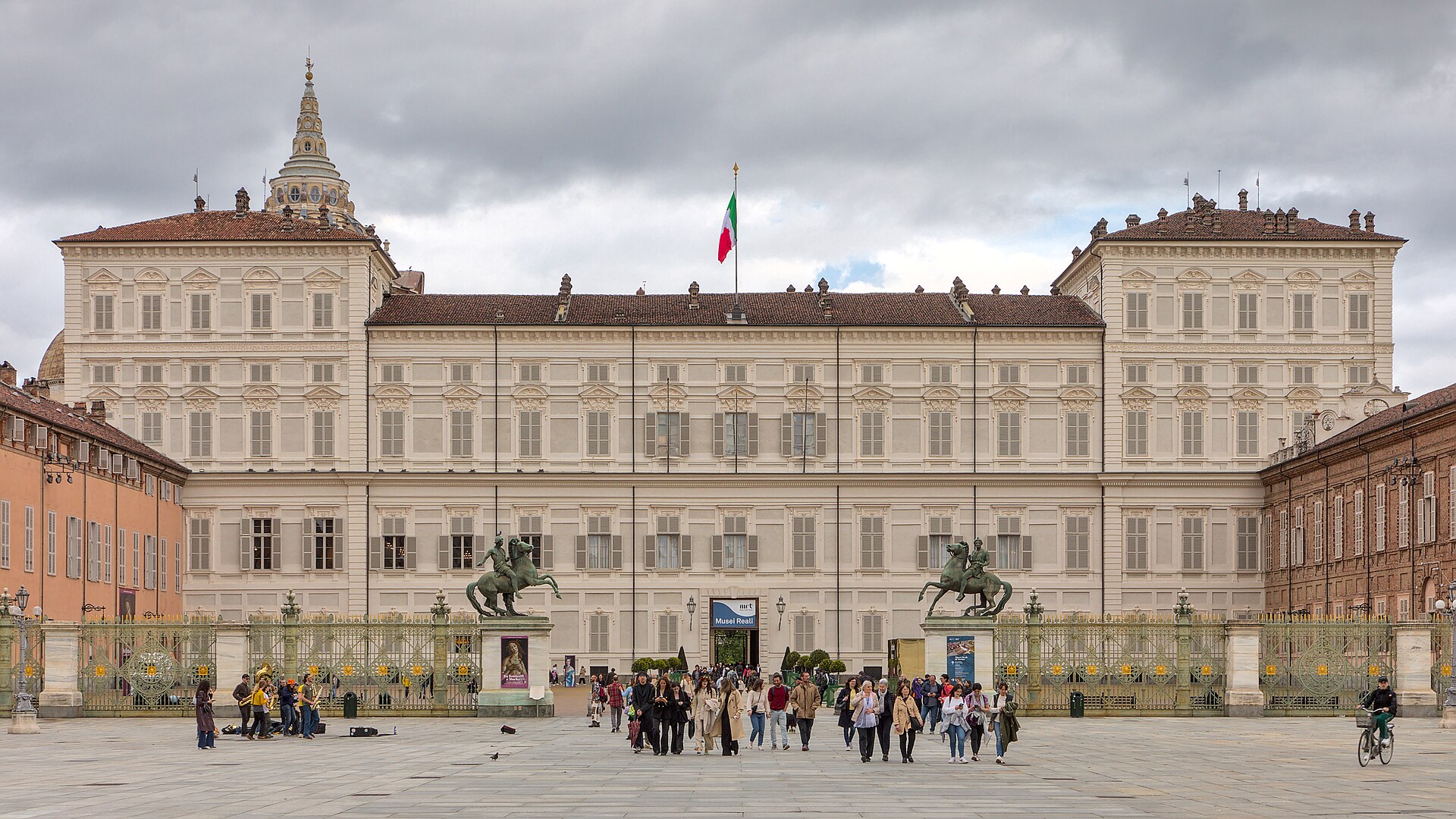
The Royal Palace of Turin is a historic palace of the House of Savoy in Turin, Italy. Originally built in the 16th century and later modernized in the 17th century by Christine Marie of France, it served as the primary seat of power for the Dukes of Savoy and later the Kings of Sardinia.
The complex includes the Palazzo Chiablese and the Chapel of the Holy Shroud, a masterpiece of Baroque architecture designed by Guarino Guarini. The palace is renowned for its lavish interiors, including the Royal Armory and the extensive gardens designed by André Le Nôtre, reflecting the political and cultural ambitions of the Savoy dynasty.
Key Facts
- Materials
- Brick, Marble, Stucco, Gilded wood
- Civilization
- Savoyard
- Accessibility
- Partially accessible; elevator access to main floors
- Date(s)
- 1584 - 17th century
- Condition
- Museum and state property
- Original Function
- Royal residence
- Key Figures
- Christine Marie of France, Guarino Guarini, Filippo Juvarra
Origins and Expansion
16th-17th CenturyThe palace was built on the site of the former Bishop's Palace. Under the regency of Christine Marie of France, the structure was significantly expanded and decorated in the Baroque style, establishing it as the center of the Savoyard court.
Architectural Evolution
18th CenturyDuring the 18th century, architects such as Filippo Juvarra were commissioned to modernize the interiors and add the grand staircase, further elevating the palace's status as one of Europe's most sophisticated royal residences.
The Chapel of the Holy Shroud
1668-1694Guarino Guarini designed the Chapel of the Holy Shroud to house the Shroud of Turin. Its complex geometric dome and dark marble interior represent a pinnacle of Italian Baroque engineering and religious architecture.
Modern Era
20th Century - PresentFollowing the abolition of the Italian monarchy in 1946, the palace became state property. It was designated a UNESCO World Heritage Site in 1997 and now functions as a major museum complex.
Cultural Significance
The Royal Palace of Turin stands as a testament to the political influence of the House of Savoy, which played a pivotal role in the unification of Italy. It serves as a repository of Piedmontese art, history, and royal ceremony.
The site is deeply linked to the religious history of the region through the Chapel of the Holy Shroud, which has drawn pilgrims and scholars for centuries. It remains a central landmark in Turin's urban identity and a primary site for cultural tourism.
Interpretive Notes
Scholarly debates and areas of uncertainty
Debates persist regarding the structural integrity and restoration techniques of Guarini's dome following the 1997 fire. Scholars continue to analyze the extent of the damage to the original Baroque materials versus the necessity of modern structural reinforcements.
Visiting Information
Entry Rules
Open Tuesday to Sunday. Tickets are required for entry to the Royal Museums complex. Visitors must follow security protocols; large bags are not permitted in the galleries.
Best Times to Visit
Weekday mornings are recommended to avoid weekend crowds. Spring and autumn offer the best conditions for exploring the palace gardens.
Photography
Personal photography is permitted without flash or tripods. Commercial photography requires prior authorization from the museum administration.
Preservation Notes
The palace is a protected heritage site. Visitors are requested to refrain from touching tapestries, furniture, and wall surfaces. Restoration work may be ongoing in specific wings.
Nearby POIs
11 shown- Palazzo Madama0.2 km
- Porta Palatina0.3 km
- Palazzo Carignano0.5 km
- Museo Egizio0.6 km
- Museo d'Arte Orientale, MAO0.6 km
- Museo Nazionale del Cinema0.7 km
- Chiesa della Gran Madre di Dio1.5 km
- Chiesa di Santa Maria del Monte dei Cappuccini1.7 km
- Villa della Regina2.4 km
- Borgo Medioevale2.7 km
- Museo Nazionale dell'Automobile4.7 km
Sources & Further Reading
- [1]The Royal Palace of Turin: Architecture and Power — Enrico Castelnuovo. Umberto Allemandi (2002)
- [2]Guarino Guarini and the Chapel of the Holy Shroud — Henry A. Millon. Journal of the Society of Architectural Historians (1998)View
Key Facts
- Materials
- Brick, Marble, Stucco, Gilded wood
- Civilization
- Savoyard
- Accessibility
- Partially accessible; elevator access to main floors
- Date(s)
- 1584 - 17th century
- Condition
- Museum and state property
- Original Function
- Royal residence
- Key Figures
- Christine Marie of France, Guarino Guarini, Filippo Juvarra
Nearby POIs
11 shown- Palazzo Madama0.2 km
- Porta Palatina0.3 km
- Palazzo Carignano0.5 km
- Museo Egizio0.6 km
- Museo d'Arte Orientale, MAO0.6 km
- Museo Nazionale del Cinema0.7 km
- Chiesa della Gran Madre di Dio1.5 km
- Chiesa di Santa Maria del Monte dei Cappuccini1.7 km
- Villa della Regina2.4 km
- Borgo Medioevale2.7 km
- Museo Nazionale dell'Automobile4.7 km