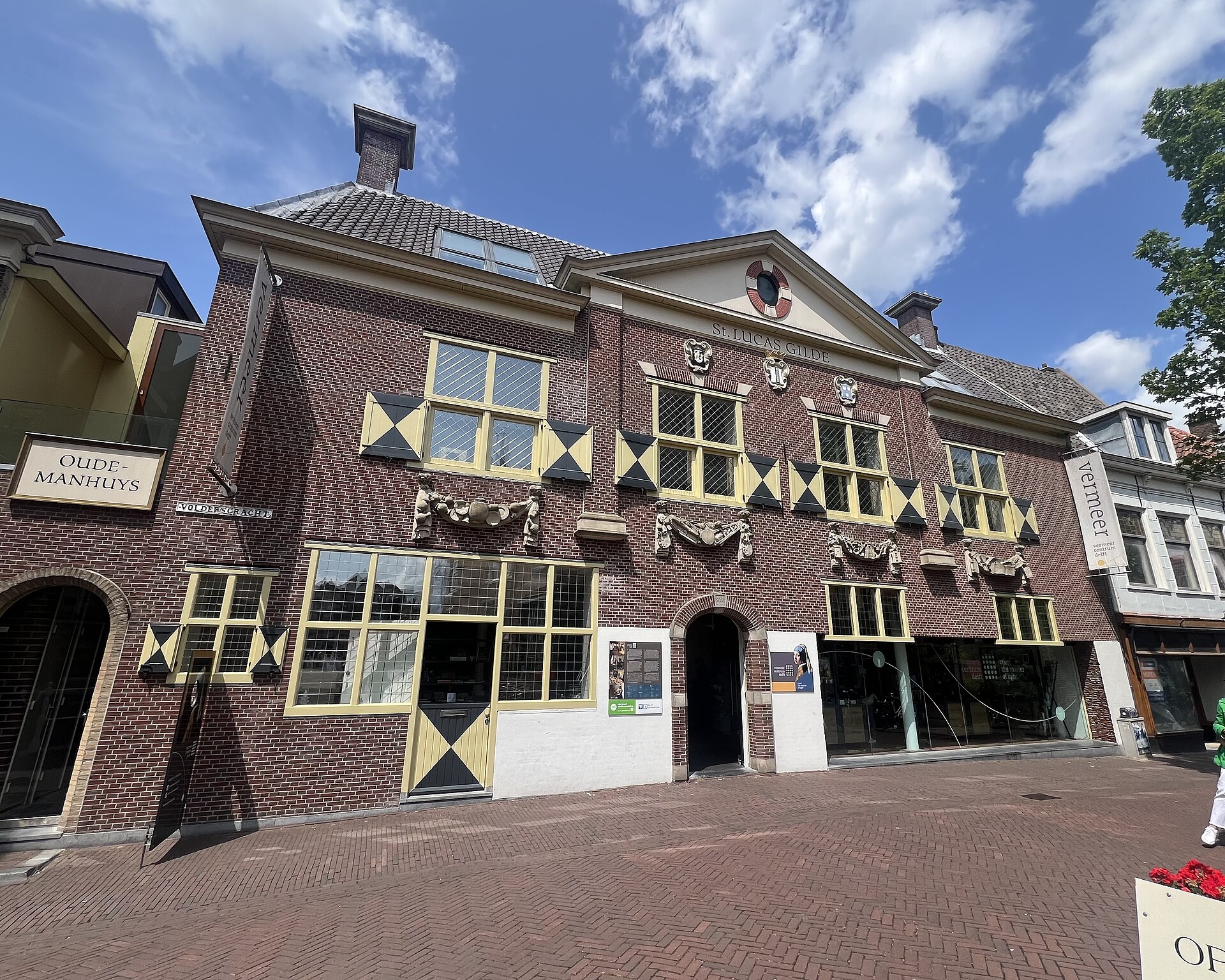
The Vermeer Centrum is an educational facility located in Delft, Netherlands, situated on the historic site of the former Saint Luke's Guild, where Johannes Vermeer was once a member. Rather than housing original works, the center provides a comprehensive exploration of the artist's life, techniques, and the cultural context of the seventeenth-century Dutch Republic.
The museum features full-scale, high-quality reproductions of all thirty-seven known paintings by Vermeer. Through interactive exhibits, visitors can examine the artist's use of light, color, and perspective, as well as the materials and pigments characteristic of his studio practice.
Key Facts
- Materials
- Brick, Glass, Wood
- Civilization
- Dutch
- Accessibility
- Fully wheelchair accessible
- Date(s)
- 2007
- Condition
- Active
- Original Function
- Educational center
- Key Figures
- Johannes Vermeer
Historical Context of the Site
17th CenturyThe building stands on the location of the former Saint Luke's Guild hall. During the 17th century, this guild served as the professional organization for painters, glassmakers, and other artisans in Delft, and it was here that Vermeer registered as a master painter in 1653.
Establishment of the Center
2007The Vermeer Centrum was established to fill a void in Delft, as the city possesses no original paintings by its most famous resident. The center was designed to provide an immersive educational experience focused on the artist's working methods and the social history of the era.
Modern Operations
2007-PresentThe center continues to operate as a primary educational resource for scholars and tourists alike, offering guided tours and workshops that demonstrate the optical and chemical techniques Vermeer employed to achieve his signature style.
Cultural Significance
The Vermeer Centrum plays a vital role in the cultural identity of Delft, bridging the gap between the city's historical legacy and the global interest in Vermeer's work. By focusing on the 'how' of his art, it demystifies the creative process and highlights the technical sophistication of Dutch Golden Age painting.
Interpretive Notes
Scholarly debates and areas of uncertainty
There is ongoing academic discussion regarding the extent to which Vermeer utilized optical devices, such as the camera obscura, to achieve his precise perspective. The center presents these theories as part of its educational programming, though definitive proof remains a subject of debate among art historians.
Visiting Information
Entry Rules
Open daily. Tickets can be purchased at the entrance or online. No specific dress code required.
Best Times to Visit
Weekday mornings are generally quieter, allowing for a more focused experience with the interactive displays.
Photography
Personal photography is permitted for non-commercial use. Flash photography is discouraged to protect the displays.
Preservation Notes
The center is a modern facility; visitors are asked to respect the exhibits and follow standard museum conduct.
Nearby POIs
11 shownSources & Further Reading
- [1]Vermeer: The Complete Works — Karl Schütz. Taschen (2015)
- [2]The Young Vermeer — Edwin Buijsen. Waanders Publishers (2010)
Key Facts
- Materials
- Brick, Glass, Wood
- Civilization
- Dutch
- Accessibility
- Fully wheelchair accessible
- Date(s)
- 2007
- Condition
- Active
- Original Function
- Educational center
- Key Figures
- Johannes Vermeer