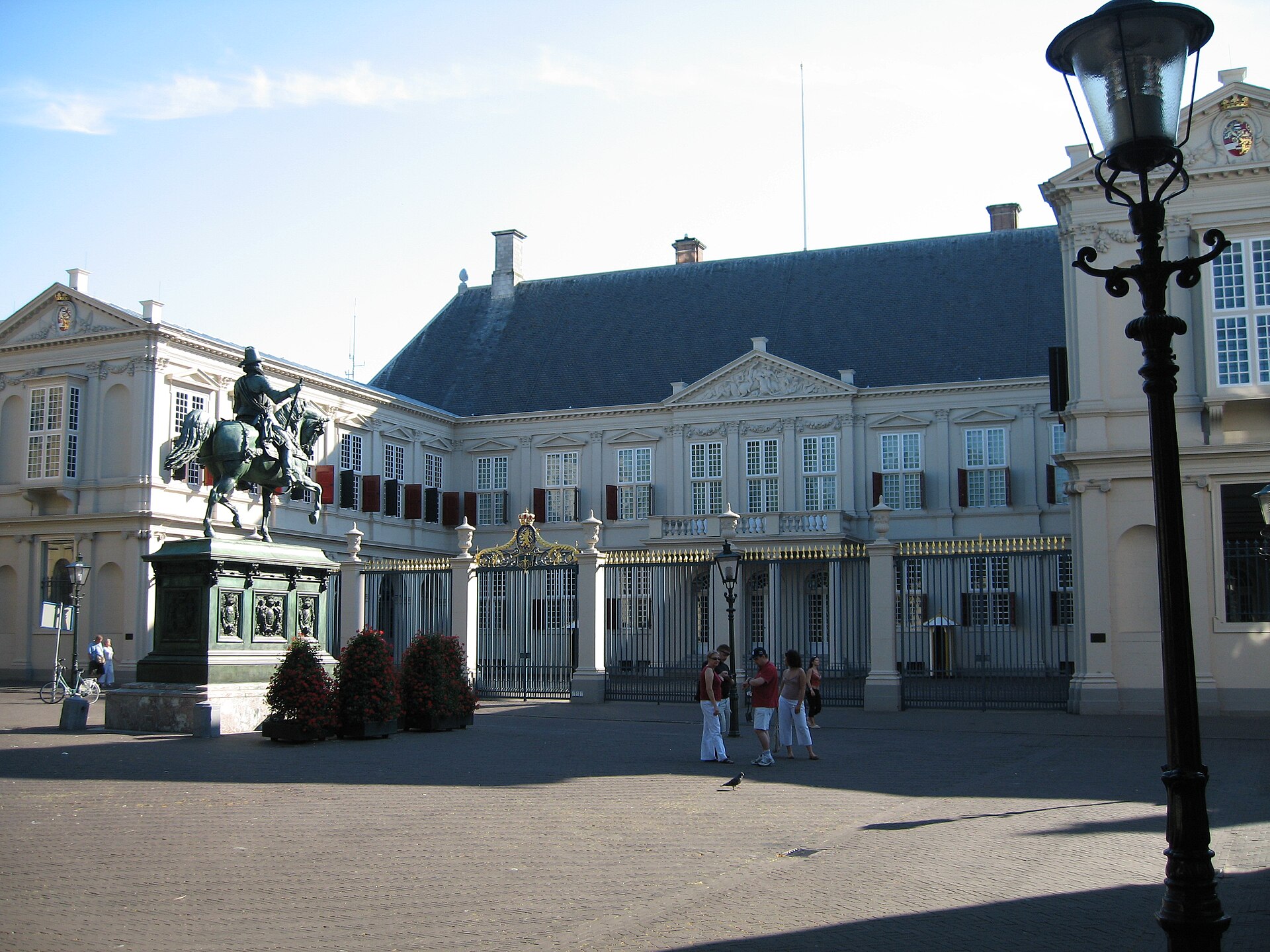
Noordeinde Palace is one of the three official palaces of the Dutch royal family and serves as the primary workplace for the monarch. Located in the heart of The Hague, the site functions as a center for state affairs, including the reception of foreign ambassadors and the hosting of official ceremonies.
The current structure features a neoclassical facade, though its origins date back to a medieval farmhouse known as 'Oude Hof'. Following extensive renovations in the early 19th century, it was established as a royal residence. While the palace is not open to the public, the surrounding palace gardens are accessible and serve as a popular public park.
Key Facts
- Materials
- Brick, Sandstone
- Civilization
- Dutch
- Accessibility
- Gardens are wheelchair accessible
- Date(s)
- 1640 (original structure), 1817 (major renovation)
- Condition
- Active royal workplace
- Original Function
- Residential estate
- Key Figures
- Queen Wilhelmina, King Willem-Alexander, Amalia van Solms
Origins as Oude Hof
16th-17th CenturyThe site began as a medieval farmhouse. In 1609, the States of Holland gifted the property to the widow of William the Silent, Louise de Coligny, who expanded the residence.
Royal Residence
19th CenturyAfter the establishment of the Kingdom of the Netherlands, King William I commissioned architect Jan de Greef to renovate the palace, giving it the neoclassical appearance seen today.
Modern Usage
20th Century-PresentThe palace transitioned from a primary residence to an administrative workplace. It remains the site where the monarch conducts daily state business and receives credentials from foreign diplomats.
Cultural Significance
Noordeinde Palace is a symbol of the Dutch constitutional monarchy. Its location on the Noordeinde street, one of the most prominent shopping and cultural districts in The Hague, integrates the royal institution into the daily life of the city.
The palace gardens, known as the Paleistuin, are historically significant as a rare example of a royal garden open to the public, reflecting the Dutch tradition of accessible urban green spaces.
Interpretive Notes
Scholarly debates and areas of uncertainty
There is ongoing discussion regarding the balance between the security requirements of an active royal workplace and the public's desire for greater access to the palace's historical interiors.
Visiting Information
Entry Rules
The palace interior is closed to the public. The palace gardens are open to the public daily from sunrise to sunset.
Best Times to Visit
Spring and summer months for the palace gardens. The area is particularly active during Prinsjesdag (the third Tuesday in September) when the royal procession passes nearby.
Photography
Photography of the exterior is permitted from public areas. Security protocols are strictly enforced near the palace gates.
Preservation Notes
The building is a designated Rijksmonument. Maintenance is managed by the Rijksgebouwendienst to ensure the preservation of its neoclassical architectural features.
Nearby POIs
11 shownSources & Further Reading
- [1]The Royal House of the Netherlands: Noordeinde Palace — Koninklijk Huis. Official Website of the Dutch Royal House (2023)View
- [2]The Hague: A History of the Royal City — J.G.C. Vrij. Municipal Archives of The Hague (2015)
Key Facts
- Materials
- Brick, Sandstone
- Civilization
- Dutch
- Accessibility
- Gardens are wheelchair accessible
- Date(s)
- 1640 (original structure), 1817 (major renovation)
- Condition
- Active royal workplace
- Original Function
- Residential estate
- Key Figures
- Queen Wilhelmina, King Willem-Alexander, Amalia van Solms