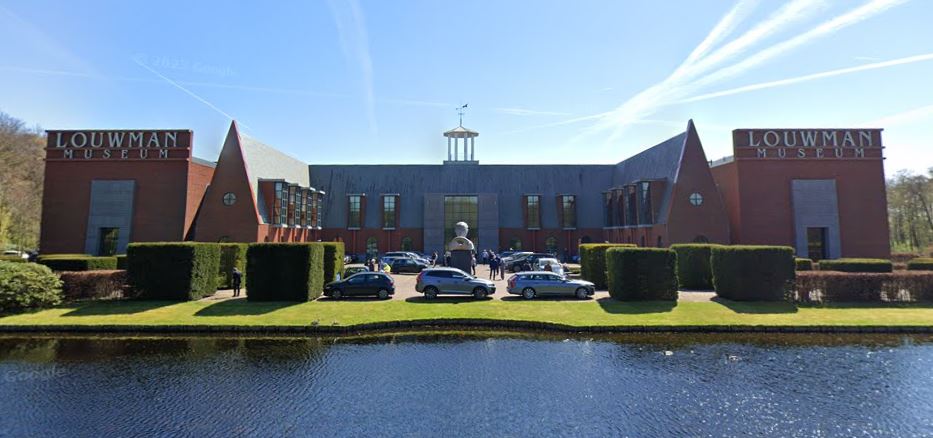
The Louwman Museum in The Hague houses the world's oldest private collection of historic automobiles, motorcycles, and carriages. Established by the Louwman family, the collection traces the evolution of transport from the late 19th century to the modern era, featuring over 250 rare vehicles. The museum serves as a comprehensive archive of automotive history, highlighting technical innovation, industrial design, and the social impact of the motorcar.
The museum building was designed by American architect Michael Graves and opened in 2010. Its architecture is characterized by a blend of classical and modern elements, featuring a distinct brick facade that integrates with the surrounding landscape of the Park Marlot. The facility is purpose-built to provide climate-controlled preservation for its extensive collection while offering an immersive educational experience for visitors.
Key Facts
- Materials
- Brick, Glass, Steel
- Civilization
- Dutch
- Accessibility
- Fully wheelchair accessible
- Date(s)
- 2010
- Condition
- Excellent, purpose-built facility
- Original Function
- Automotive Museum
- Key Figures
- Michael Graves, Evert Louwman
Origins of the Collection
1934The collection began in 1934 when Pieter Louwman purchased a 1914 Dodge. This initial acquisition sparked a multi-generational passion for preserving automotive history, leading to the systematic gathering of rare and significant vehicles.
Expansion and Relocation
20th CenturyThroughout the late 20th century, the collection grew significantly in size and prestige. It was previously housed in various locations, including Leidschendam, before the need for a larger, specialized facility became apparent to accommodate the growing number of artifacts.
The Michael Graves Building
2010The current museum opened in 2010 in The Hague. Designed by renowned architect Michael Graves, the building was specifically engineered to house the collection, providing optimal environmental conditions and a layout that guides visitors through the chronological history of the automobile.
Cultural Significance
The Louwman Museum is a cornerstone of automotive heritage in Europe. It preserves not only the mechanical history of transport but also the aesthetic and cultural shifts associated with the rise of the automobile. The collection is recognized for its depth, including unique prototypes and vehicles with significant historical provenance, making it a vital resource for automotive historians and enthusiasts alike.
Interpretive Notes
Scholarly debates and areas of uncertainty
Discussions regarding the museum often center on the balance between private ownership and public accessibility of historical artifacts. While the museum is open to the public, its status as a private collection occasionally prompts academic debate regarding the curation and long-term preservation strategies compared to state-funded national museums.
Visiting Information
Entry Rules
Open Tuesday to Sunday. Tickets can be purchased online or at the entrance. Visitors are expected to follow standard museum conduct; food and drink are restricted to the designated museum restaurant.
Best Times to Visit
Weekday mornings are generally quieter. The museum is a popular destination for weekend visitors, so arriving early helps avoid peak crowds.
Photography
Personal photography is permitted for non-commercial use. The use of flash, tripods, and selfie sticks is prohibited to ensure the safety of the exhibits.
Preservation Notes
Do not touch the vehicles or display cases. Maintain a respectful distance from all exhibits to prevent accidental damage to the paintwork and delicate components.
Nearby POIs
11 shownSources & Further Reading
- [1]
- [2]Michael Graves: Architecture and Design — Ian Luna. Rizzoli (2012)
Key Facts
- Materials
- Brick, Glass, Steel
- Civilization
- Dutch
- Accessibility
- Fully wheelchair accessible
- Date(s)
- 2010
- Condition
- Excellent, purpose-built facility
- Original Function
- Automotive Museum
- Key Figures
- Michael Graves, Evert Louwman