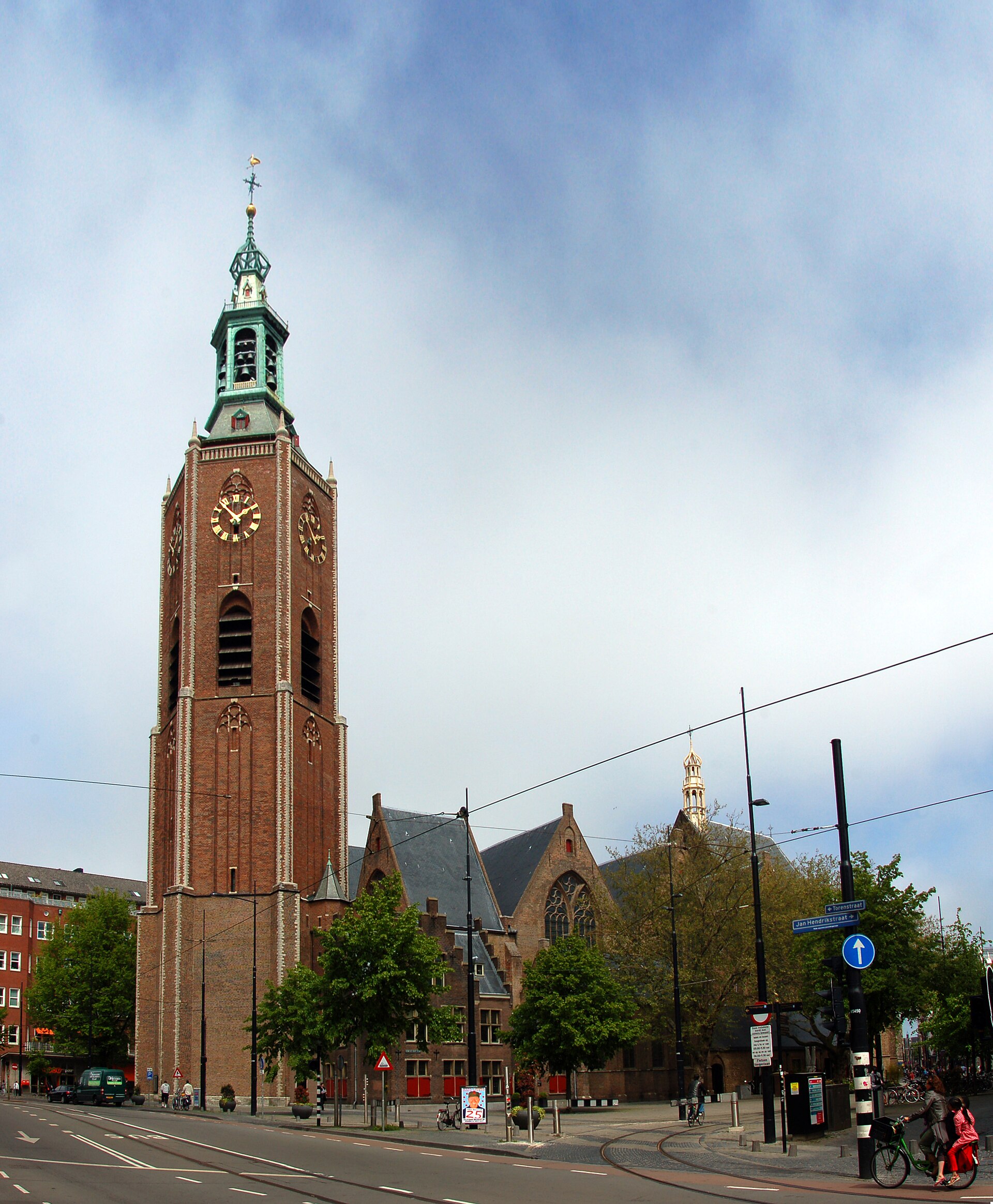
The Grote of Sint-Jacobskerk, located in the heart of The Hague, is a prominent late-Gothic cruciform church dating back to the 13th century. Its most recognizable feature is the 100-meter-high hexagonal tower, which has served as a navigational landmark and a symbol of the city's historical importance for centuries.
The interior is characterized by its expansive wooden barrel-vaulted ceiling and a collection of stained glass windows. Beyond its architectural significance, the church holds deep ties to the House of Orange-Nassau, having served as the traditional site for the baptisms and marriages of numerous members of the Dutch royal family.
Key Facts
- Materials
- Brick, Sandstone, Wood
- Civilization
- Dutch
- Accessibility
- Ground level accessible, some areas restricted
- Date(s)
- 13th - 16th century
- Condition
- Well-preserved, active cultural and religious venue
- Original Function
- Catholic Parish Church
- Key Figures
- House of Orange-Nassau
Origins and Early Construction
13th - 14th centuryThe church began as a modest wooden structure in the 13th century. As The Hague grew in political importance, the building was expanded into a stone cruciform church, reflecting the increasing wealth and status of the local parish.
Gothic Expansion
15th - 16th centuryDuring this period, the church underwent significant expansion, including the construction of the iconic hexagonal tower. The architectural style transitioned into the late-Gothic tradition, characterized by large windows and intricate stone detailing.
Reformation and Royal Ties
16th - 19th centuryFollowing the Protestant Reformation, the church was stripped of its Catholic iconography and converted to a Reformed place of worship. It became the primary church for the Dutch nobility and the House of Orange-Nassau, cementing its role in royal ceremonies.
Modern Preservation
20th century - presentThe church underwent extensive restoration in the late 20th century to stabilize the tower and preserve the historic wooden vaults. Today, it functions as a multi-purpose space for concerts, exhibitions, and civic events while maintaining its religious heritage.
Cultural Significance
The Grote of Sint-Jacobskerk is a cornerstone of The Hague's identity, representing the intersection of religious history and national statehood. Its association with the Dutch royal family elevates it from a local parish church to a site of national historical importance.
Locally, the church serves as a cultural hub, hosting high-profile events and concerts. The tower remains a defining element of the city skyline, frequently referenced in local literature and art as a symbol of The Hague's resilience and continuity.
Interpretive Notes
Scholarly debates and areas of uncertainty
There is ongoing academic discussion regarding the exact sequence of the tower's construction phases and the extent to which the original medieval foundations were modified during the 16th-century expansion. Additionally, the provenance of certain salvaged medieval artworks remains a subject of study.
Visiting Information
Entry Rules
Open to the public for visits and tower climbs. Check official website for seasonal opening hours and ticket prices for tower access. Modest attire is recommended.
Best Times to Visit
Spring and summer months offer the best visibility from the tower. Weekday mornings are generally quieter for interior visits.
Photography
Personal photography is permitted. Professional or commercial shoots require prior authorization from the church administration.
Preservation Notes
Visitors are requested to refrain from touching historic stonework and to remain on designated paths. The tower climb is physically demanding and restricted to those in good health.
Nearby POIs
11 shownSources & Further Reading
- [1]De Grote of Sint-Jacobskerk in Den Haag — J.J.M. van der Meer. Stichting Grote Kerk Den Haag (2015)
- [2]Architectural History of the Netherlands — Wim Denslagen. NAi Publishers (2005)
Key Facts
- Materials
- Brick, Sandstone, Wood
- Civilization
- Dutch
- Accessibility
- Ground level accessible, some areas restricted
- Date(s)
- 13th - 16th century
- Condition
- Well-preserved, active cultural and religious venue
- Original Function
- Catholic Parish Church
- Key Figures
- House of Orange-Nassau