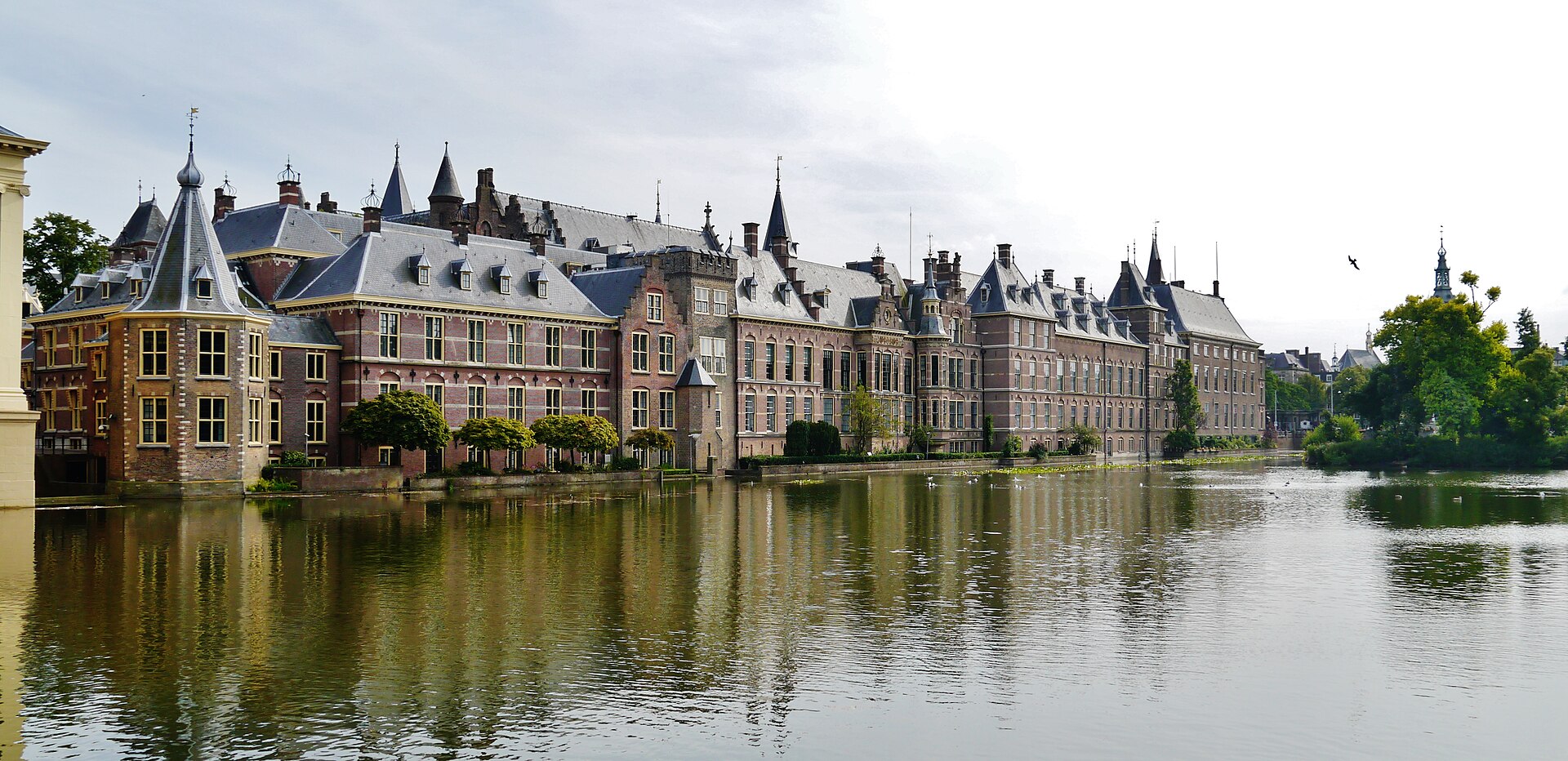
The Binnenhof is a complex of buildings in the city center of The Hague, serving as the meeting place of the States General of the Netherlands and the office of the Prime Minister. Its architectural core, the Ridderzaal (Knight's Hall), dates back to the 13th century and was originally constructed as a count's castle for the Counts of Holland.
Over the centuries, the complex has evolved from a medieval fortress into the administrative heart of the Dutch Republic and the modern Kingdom of the Netherlands. It remains the oldest parliament building in the world still in use, characterized by its central courtyard and a mix of architectural styles reflecting various phases of Dutch political history.
Key Facts
- Materials
- Brick, Sandstone, Slate
- Civilization
- Dutch
- Accessibility
- Limited; guided tours available for specific areas
- Date(s)
- 13th century - 17th century
- Condition
- Active government complex, currently undergoing major long-term renovation
- Original Function
- Castle and administrative center for the Counts of Holland
- Key Figures
- Floris IV, Count of Holland, Johan van Oldenbarnevelt, Johan de Witt
Medieval Origins
13th centuryThe site was established by Count Floris IV of Holland, who purchased the land to build a residence. His son, William II, and grandson, Floris V, expanded the site, with the latter commissioning the construction of the Ridderzaal, which served as the Great Hall for the counts.
Political Center of the Republic
16th - 18th centuryFollowing the Dutch Revolt, the Binnenhof became the permanent seat of the States General. It served as the epicenter of the Dutch Golden Age, witnessing the execution of Johan van Oldenbarnevelt and the political dominance of the Stadtholders.
Modern Parliamentary Era
19th century - presentWith the establishment of the Kingdom of the Netherlands, the Binnenhof was formalized as the seat of the bicameral parliament. It has hosted the annual State Opening of Parliament since the 19th century, maintaining its role as the primary venue for national governance.
Cultural Significance
The Binnenhof is the primary symbol of Dutch democracy and political continuity. Its endurance as a seat of government for over 800 years makes it a unique site in European political history, representing the transition from feudal countship to a modern parliamentary democracy.
Interpretive Notes
Scholarly debates and areas of uncertainty
There is ongoing academic discussion regarding the extent of the original 13th-century layout, as subsequent renovations and the addition of the Mauritshuis and other peripheral buildings have obscured the medieval defensive perimeter.
Visiting Information
Entry Rules
Access is restricted due to ongoing large-scale renovations. Guided tours are available for the Ridderzaal and the First Chamber when parliament is not in session. Security screening is mandatory for all visitors.
Best Times to Visit
Weekdays during parliamentary recess periods offer the best opportunity for guided tours of the interior chambers.
Photography
Photography is permitted in the central courtyard, but restricted inside government chambers and security-sensitive areas.
Preservation Notes
The complex is currently undergoing a comprehensive, multi-year renovation to modernize infrastructure and preserve historical masonry. Visitors should expect scaffolding and restricted access to certain courtyards.
Nearby POIs
11 shownSources & Further Reading
- [1]The Binnenhof: The Heart of Dutch Politics — J.G.C. Vrij. Waanders Publishers (2010)
- [2]The Ridderzaal: History and Architecture — Rijksgebouwendienst. Government Buildings Agency (2018)
Key Facts
- Materials
- Brick, Sandstone, Slate
- Civilization
- Dutch
- Accessibility
- Limited; guided tours available for specific areas
- Date(s)
- 13th century - 17th century
- Condition
- Active government complex, currently undergoing major long-term renovation
- Original Function
- Castle and administrative center for the Counts of Holland
- Key Figures
- Floris IV, Count of Holland, Johan van Oldenbarnevelt, Johan de Witt