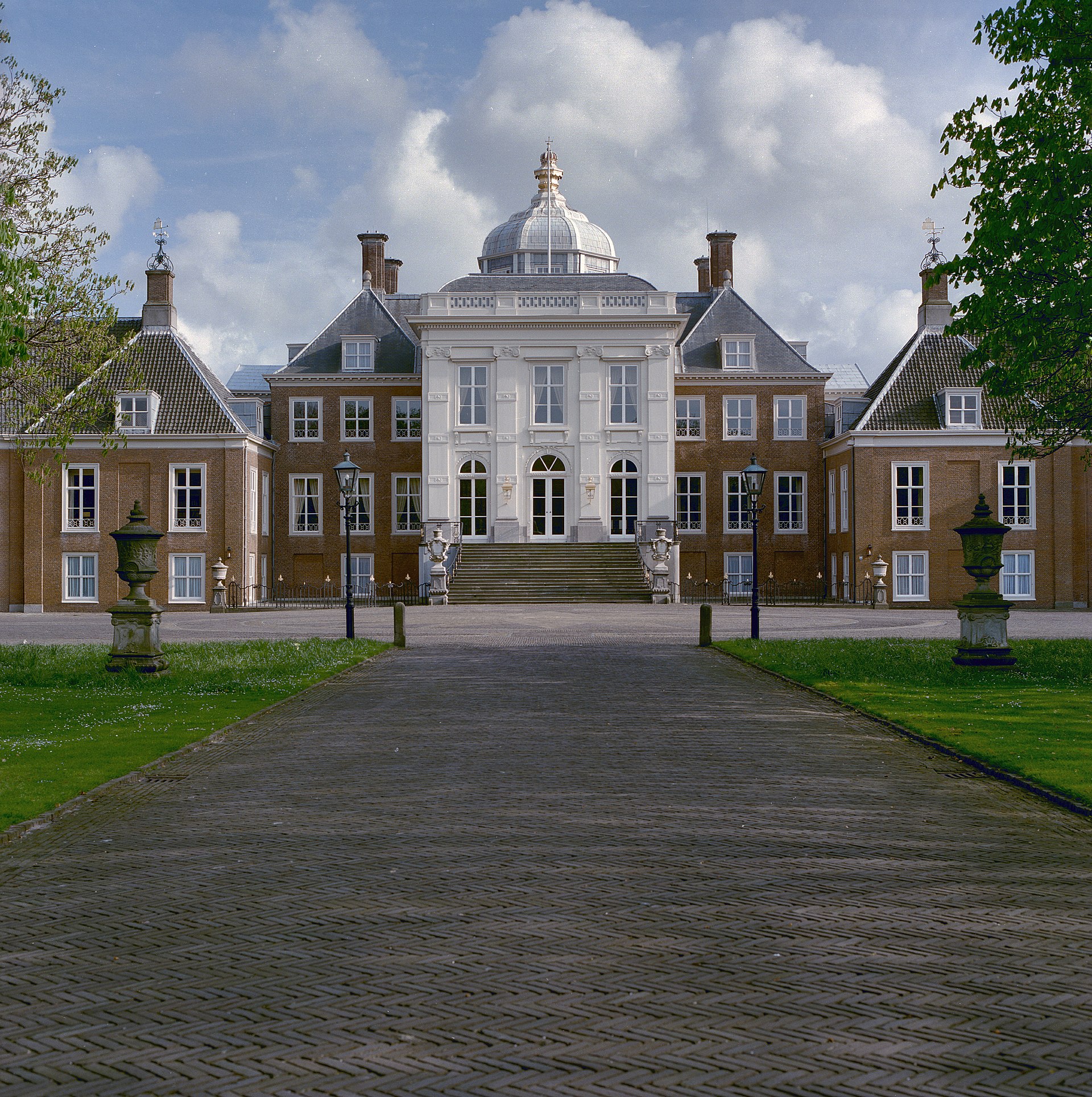
Huis ten Bosch is one of the three official residences of the Dutch monarch, located in the Haagse Bos forest in The Hague. Commissioned in 1645 by Amalia of Solms-Braunfels, the wife of Prince Frederick Henry of Orange, the palace was designed by architects Pieter Post and Bartholomeus van Bassen as a summer retreat. It serves as a significant example of Dutch Baroque architecture, characterized by its symmetrical layout and central octagonal hall.
The palace is renowned for the Oranjezaal, a grand central hall commissioned by Amalia to commemorate her late husband. This space features an extensive collection of paintings by prominent Dutch and Flemish masters of the 17th century, including works by Jacob van Campen and Jan Lievens. While the palace has undergone various renovations and expansions over the centuries, it remains a private residence for the Dutch Royal Family and is not open to the public.
Key Facts
- Materials
- Brick, Sandstone
- Civilization
- Dutch
- Accessibility
- Not accessible to the public
- Date(s)
- 1645-1652
- Condition
- Well-preserved, active royal residence
- Original Function
- Summer residence
- Key Figures
- Amalia of Solms-Braunfels, Frederick Henry, Prince of Orange, Pieter Post
Origins and Construction
1645-1652The palace was commissioned by Amalia of Solms-Braunfels as a country house. Construction began in 1645 under the direction of Pieter Post, following the designs of Bartholomeus van Bassen. It was intended as a memorial to her husband, Prince Frederick Henry.
Expansion and Royal Use
18th-19th centuryDuring the 18th century, the palace was expanded with two wings by architect Daniel Marot. It became a primary residence for the House of Orange-Nassau, particularly during the reign of William IV and his successors, serving as a center for court life.
Modern Era and Restoration
20th century - presentFollowing extensive damage during World War II, the palace underwent significant restoration. In 1981, it became the primary residence of Queen Beatrix. It continues to serve as a royal residence and a venue for state receptions.
Cultural Significance
Huis ten Bosch is a cornerstone of Dutch national heritage, representing the political and artistic zenith of the Dutch Golden Age. The Oranjezaal is considered one of the most important interior ensembles of the 17th century, reflecting the dynastic ambitions and cultural patronage of the House of Orange.
Beyond its architectural value, the palace functions as a symbol of the Dutch monarchy's continuity. Its location within the Haagse Bos provides a historical link between the royal family and the city of The Hague, which has served as the administrative heart of the Netherlands for centuries.
Interpretive Notes
Scholarly debates and areas of uncertainty
Scholarly discussion often focuses on the iconographic program of the Oranjezaal. Debates persist regarding the extent to which the paintings were intended as a cohesive political manifesto for the House of Orange versus a personal funerary monument for Prince Frederick Henry.
Visiting Information
Entry Rules
The palace is a private royal residence and is not open to the public. The surrounding park, the Haagse Bos, is open for public recreation.
Best Times to Visit
The surrounding Haagse Bos park is accessible year-round, with spring and autumn offering the best conditions for viewing the palace exterior from the park pathways.
Photography
Photography of the palace exterior is permitted from public areas of the Haagse Bos. Commercial photography requires authorization from the Royal House.
Preservation Notes
The palace is maintained by the Dutch government and the Royal House. Strict security protocols are in place to protect the site and its historical collections.
Nearby POIs
11 shownSources & Further Reading
- [1]The Oranjezaal: A Dutch Golden Age Masterpiece — P.J.J. van Thiel. Waanders Publishers (1999)
- [2]Huis ten Bosch: Palace and Residence — R.J. van der Meulen. Royal Collections Archive (2015)
Key Facts
- Materials
- Brick, Sandstone
- Civilization
- Dutch
- Accessibility
- Not accessible to the public
- Date(s)
- 1645-1652
- Condition
- Well-preserved, active royal residence
- Original Function
- Summer residence
- Key Figures
- Amalia of Solms-Braunfels, Frederick Henry, Prince of Orange, Pieter Post