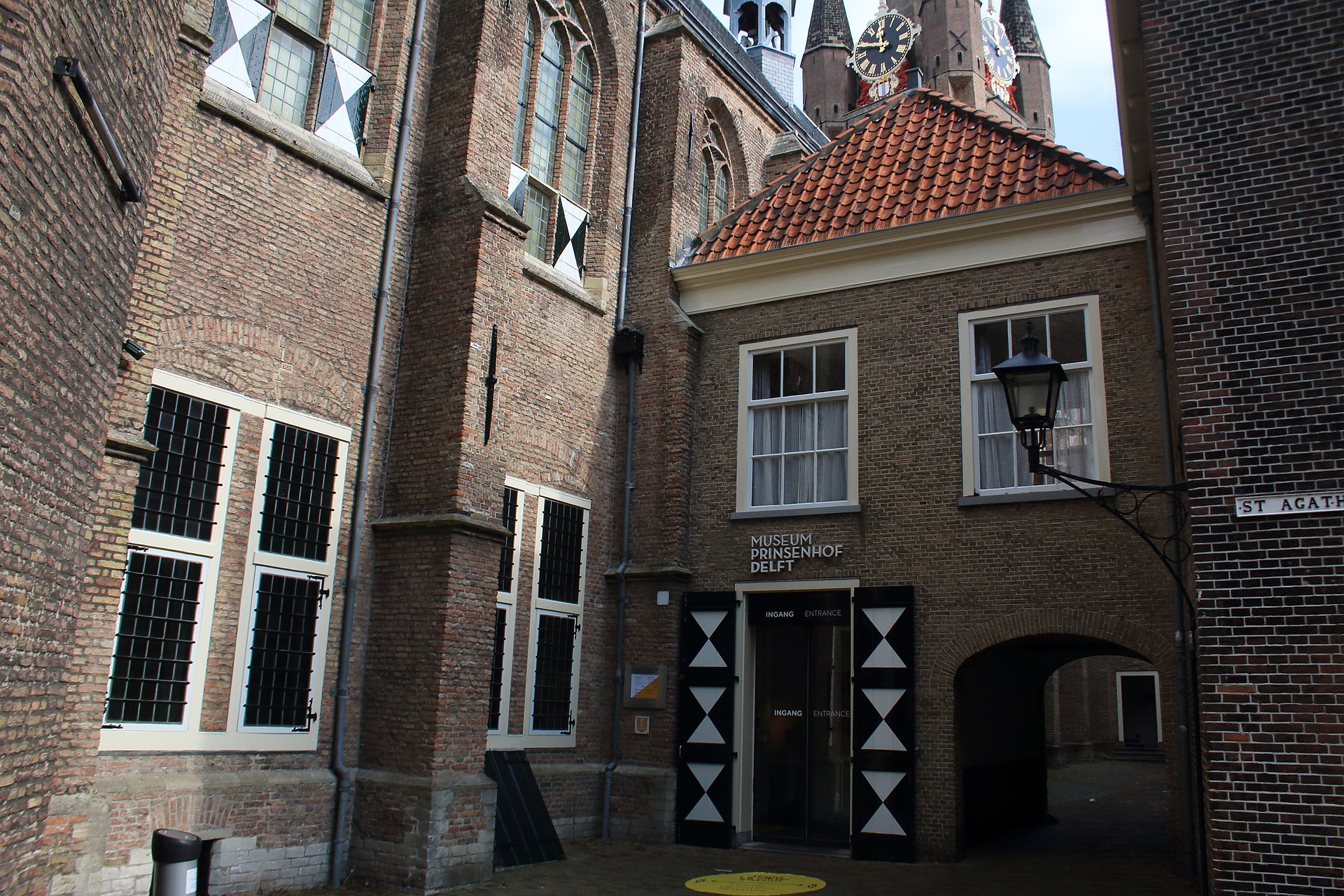
Museum Het Prinsenhof is located in a former 15th-century monastery of the Order of Saint Agatha in Delft. The site gained historical significance as the residence of William the Silent, Prince of Orange, during the Dutch Revolt against Spanish rule. It was here, in 1584, that William was assassinated by Balthasar Gerards, an event marked by bullet holes still visible in the wall of the stairwell.
Today, the complex serves as a museum dedicated to the history of the Netherlands, the Dutch Revolt, and the artistic legacy of Delft. The collection includes significant works from the Dutch Golden Age, as well as extensive displays of Delftware, the tin-glazed pottery that brought the city international renown during the 17th and 18th centuries.
Key Facts
- Materials
- Brick, Stone, Timber
- Civilization
- Dutch
- Accessibility
- Wheelchair accessible with elevator access to most floors
- Date(s)
- 1403 (monastery foundation)
- Condition
- Well-preserved, active museum
- Original Function
- Monastery
- Key Figures
- William the Silent, Balthasar Gerards
Monastic Origins
1403-1572The site was established as the St. Agatha Convent in 1403. It functioned as a cloister for nuns until the Reformation, when the building was secularized and repurposed by the city of Delft.
Residence of the Prince
1572-1584Following the outbreak of the Dutch Revolt, William the Silent chose the former convent as his headquarters. It became the administrative heart of the nascent Dutch Republic until his assassination in the building's hallway in 1584.
Museum Transformation
19th century-presentThe building underwent various uses before being established as a museum in the early 20th century. Extensive renovations have since integrated the historic architecture with modern exhibition spaces, focusing on the preservation of both the site's political history and its artistic collections.
Cultural Significance
The Prinsenhof is a cornerstone of Dutch national identity, representing the struggle for independence from the Spanish Habsburg Empire. The site is inextricably linked to the 'Father of the Fatherland,' William the Silent, and serves as a physical witness to the birth of the Dutch state.
Beyond its political history, the museum plays a vital role in preserving the cultural heritage of Delft. By showcasing the evolution of Delftware and the works of local masters, it highlights the city's transition from a medieval religious center to a global hub of trade and artistic innovation during the 17th century.
Interpretive Notes
Scholarly debates and areas of uncertainty
Debates often center on the interpretation of the assassination event and the extent to which the site's narrative emphasizes nationalistic myth-making versus objective historical analysis. Additionally, there is ongoing scholarly discussion regarding the provenance of specific Delftware pieces within the collection and their role in the broader context of global trade networks.
Visiting Information
Entry Rules
Open Tuesday through Sunday. Tickets can be purchased online or at the entrance. Photography is permitted for personal use without flash or tripods.
Best Times to Visit
Weekday mornings are generally quieter. The museum is particularly relevant during commemorations of the Dutch Revolt or local heritage festivals.
Photography
Personal photography permitted; no flash, tripods, or selfie sticks. Commercial photography requires prior written permission.
Preservation Notes
The building is a protected historic monument. Visitors are requested to refrain from touching the walls, particularly near the historical bullet holes, and to follow all marked pathways.
Nearby POIs
11 shownSources & Further Reading
- [1]The Prinsenhof: A History of the Dutch Revolt — J.J.M. van der Meer. Delft University Press (2015)
- [2]Delftware: Art and Industry — M.S. van Aken-Fehmers. Waanders Publishers (2007)
Key Facts
- Materials
- Brick, Stone, Timber
- Civilization
- Dutch
- Accessibility
- Wheelchair accessible with elevator access to most floors
- Date(s)
- 1403 (monastery foundation)
- Condition
- Well-preserved, active museum
- Original Function
- Monastery
- Key Figures
- William the Silent, Balthasar Gerards