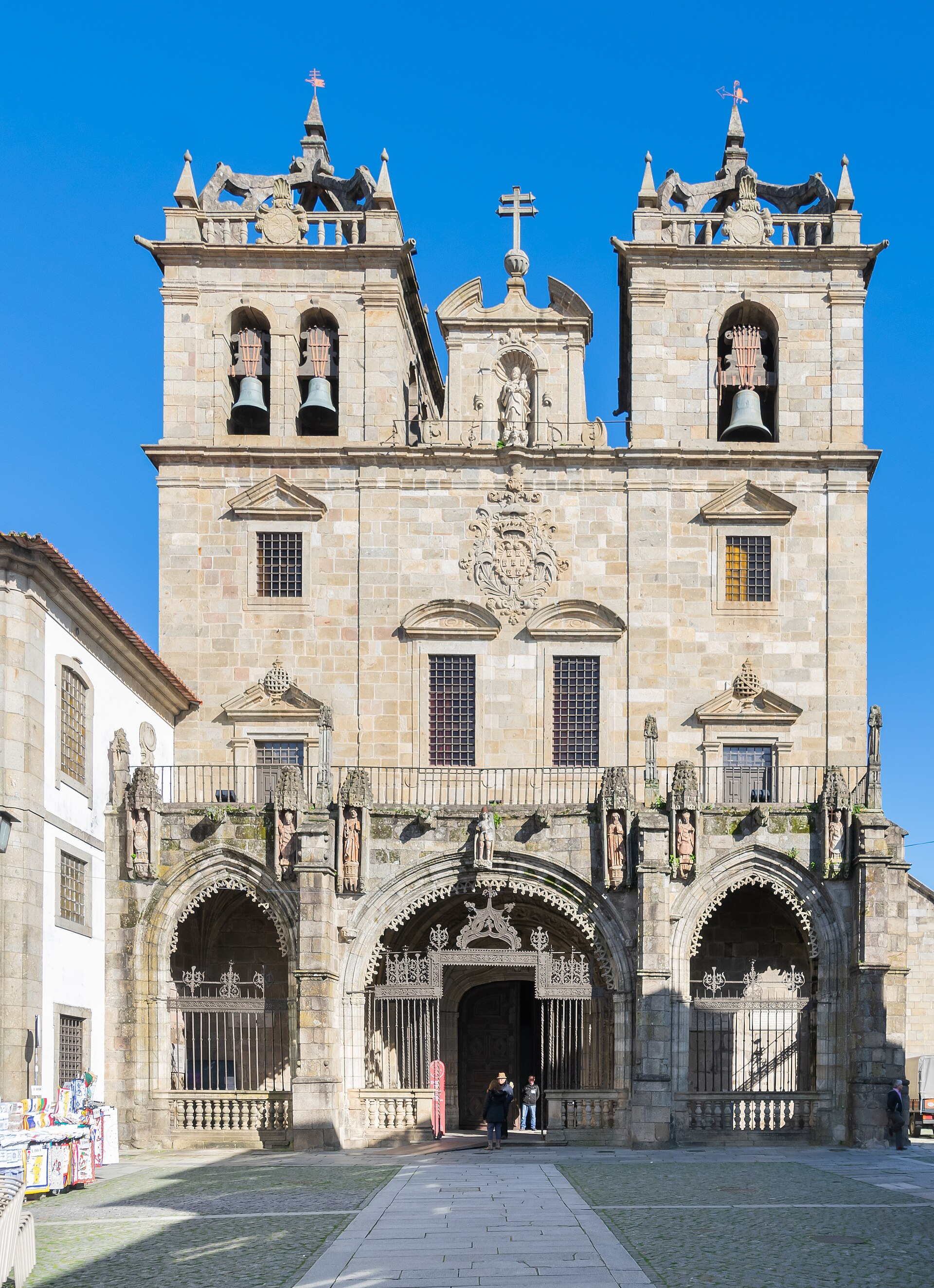
The Braga Cathedral, or Sé de Braga, is the oldest cathedral in Portugal and serves as the seat of the Archdiocese of Braga. Its history is deeply intertwined with the formation of the Portuguese nation, as it was the site of the baptism of Afonso Henriques, the first King of Portugal, and served as the burial place of his parents, Count Henry and Countess Teresa.
The structure is a complex architectural palimpsest, reflecting centuries of modifications. While the original Romanesque core remains visible, subsequent centuries introduced Gothic, Manueline, and Baroque elements. The cathedral is renowned for its ornate pipe organs, the treasury museum, and the intricate carvings that define its interior chapels.
Key Facts
- Materials
- Granite, Limestone, Gilded wood
- Civilization
- Portuguese
- Accessibility
- Ground floor accessible; some chapels have steps
- Date(s)
- 1070 - 1093 CE
- Condition
- Active religious site and museum
- Original Function
- Cathedral
- Key Figures
- Bishop Pedro de Braga, Count Henry of Portugal, Countess Teresa of Portugal
Foundations
11th CenturyConstruction began in 1070 under the direction of Bishop Pedro de Braga. It was built over the remains of an earlier religious structure, establishing the site as the ecclesiastical center of the region.
Medieval Expansion
12th - 14th CenturyThe cathedral was significantly expanded during the 12th century, incorporating Romanesque features. During this time, it became a major pilgrimage destination and a symbol of the Reconquista's religious authority.
Gothic and Manueline Additions
15th - 16th CenturyThe cathedral underwent major renovations, including the addition of the Gothic main chapel and the Manueline-style portal, reflecting the wealth and artistic trends of the Portuguese Age of Discovery.
Baroque Transformation
17th - 18th CenturyThe interior was heavily modified with Baroque altarpieces, gilded wood carvings, and the installation of two massive pipe organs, which remain among the most significant in the country.
Cultural Significance
The Sé de Braga is central to Portuguese national identity, often referred to by the popular saying 'older than the Sé de Braga' to describe something of great antiquity. As the seat of the Primate of Portugal, it holds immense historical weight in the development of the Catholic Church in the Iberian Peninsula.
Interpretive Notes
Scholarly debates and areas of uncertainty
There is ongoing academic discussion regarding the exact extent of the pre-Romanesque foundations and the degree to which the original 11th-century layout was influenced by Cluniac architectural styles.
Visiting Information
Entry Rules
Open daily. Tickets are required for the treasury museum and the upper choir. Modest dress is expected as it is an active place of worship.
Best Times to Visit
Early morning or late afternoon to avoid peak tourist groups. Weekdays are generally quieter than weekends.
Photography
Photography is permitted in the main nave without flash, but strictly prohibited in the treasury museum and specific chapels.
Preservation Notes
The cathedral is under constant maintenance due to the age of the granite masonry. Visitors are asked to respect silence and avoid touching the gilded wood carvings.
Nearby POIs
11 shown- Archiepiscopal Palace of Braga0.1 km
- Arco da Porta Nova0.2 km
- Pius XII Museum0.2 km
- Igreja de Santa Cruz0.2 km
- Biscainhos Museum0.3 km
- Castelo de Braga0.3 km
- Palacio do Raio0.4 km
- Roman Thermae of Maximinus0.5 km
- Basilica dos Congregados0.5 km
- Nogueira da Silva Museum0.5 km
- Sanctuary of Bom Jesus do Monte4.2 km
Sources & Further Reading
- [1]The Cathedral of Braga: A History — José Mattoso. Editorial Presença (1997)
- [2]Romanesque Architecture in Portugal — Carlos Alberto Ferreira de Almeida. IPPAR (2001)
Key Facts
- Materials
- Granite, Limestone, Gilded wood
- Civilization
- Portuguese
- Accessibility
- Ground floor accessible; some chapels have steps
- Date(s)
- 1070 - 1093 CE
- Condition
- Active religious site and museum
- Original Function
- Cathedral
- Key Figures
- Bishop Pedro de Braga, Count Henry of Portugal, Countess Teresa of Portugal
Nearby POIs
11 shown- Archiepiscopal Palace of Braga0.1 km
- Arco da Porta Nova0.2 km
- Pius XII Museum0.2 km
- Igreja de Santa Cruz0.2 km
- Biscainhos Museum0.3 km
- Castelo de Braga0.3 km
- Palacio do Raio0.4 km
- Roman Thermae of Maximinus0.5 km
- Basilica dos Congregados0.5 km
- Nogueira da Silva Museum0.5 km
- Sanctuary of Bom Jesus do Monte4.2 km