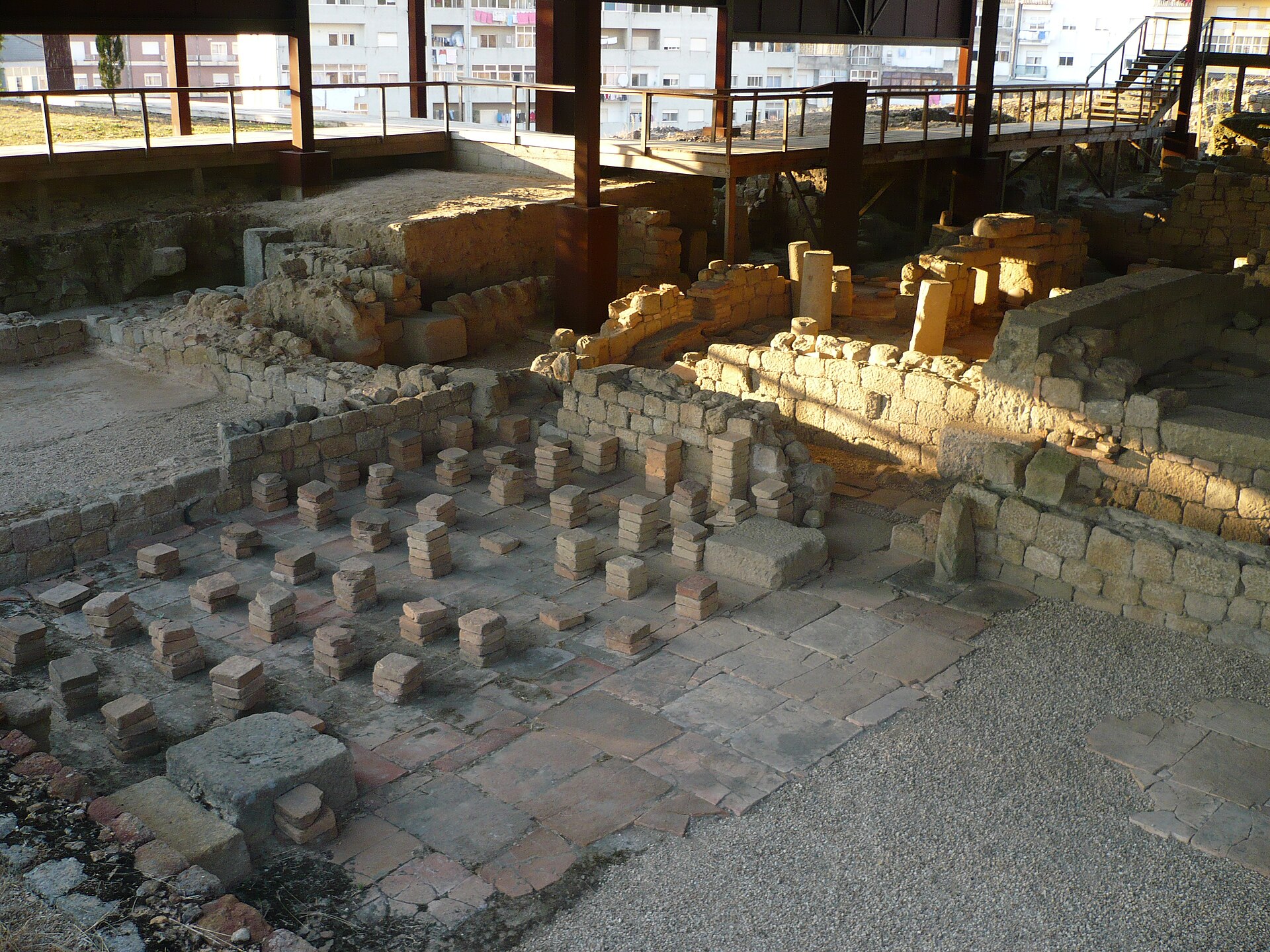
The Roman Thermae of Maximinus, located in the city of Braga (ancient Bracara Augusta), represent one of the most significant archaeological sites in northern Portugal. These public baths were part of a larger urban complex that served the administrative and social needs of the Roman provincial capital, reflecting the sophisticated hydraulic engineering and architectural standards of the 1st to 3rd centuries CE.
The site features well-preserved remains of the hypocaust system, which allowed for the circulation of hot air beneath the floors, as well as remnants of the frigidarium and caldarium. Integrated into the modern urban fabric, the ruins provide critical evidence of the Romanization of the Gallaecia region and the daily life of its inhabitants.
Key Facts
- Materials
- Granite, Brick, Mortar, Ceramic tiles
- Civilization
- Roman
- Accessibility
- Ground level access, partially visible from street level
- Date(s)
- 1st - 3rd century CE
- Condition
- Archaeological ruins, partially excavated and preserved
- Original Function
- Public baths (Thermae)
- Key Figures
- Maximinus (eponym)
Establishment of Bracara Augusta
1st century CEFollowing the consolidation of Roman power in the Iberian Peninsula, the city of Bracara Augusta was founded. The construction of public baths was a priority for Roman urban planning, serving as a central hub for hygiene and social interaction.
Expansion and Peak Usage
2nd - 3rd century CEDuring the height of the Roman Empire, the baths underwent significant expansions and renovations. The complex was equipped with advanced heating systems and decorative elements, reflecting the prosperity of the regional capital.
Decline and Rediscovery
5th century - 1970sWith the decline of the Roman administration, the baths fell into disuse and were gradually buried by urban development. The site remained largely forgotten until systematic archaeological excavations in the late 20th century revealed the extent of the structures.
Cultural Significance
The Thermae of Maximinus are a cornerstone of Braga's historical identity, illustrating the city's status as a major Roman administrative center. They serve as a tangible link to the Roman past, helping locals and visitors understand the evolution of urban life in the region over two millennia.
Interpretive Notes
Scholarly debates and areas of uncertainty
There is ongoing discussion regarding the exact extent of the bath complex and its relationship to the nearby theatre. Some scholars debate whether the site functioned exclusively as public baths or if it served as a multi-purpose civic center.
Visiting Information
Entry Rules
Open to the public. Access is managed by the local municipality; check local tourism office for guided tour availability.
Best Times to Visit
Spring and autumn for comfortable walking temperatures. The site is outdoors and exposed to the elements.
Photography
Personal photography is permitted. Commercial use requires authorization from the Braga municipal authorities.
Preservation Notes
The site is an active archaeological zone. Do not climb on walls or remove any loose stones. Stay within designated visitor pathways.
Nearby POIs
11 shownSources & Further Reading
- [1]Bracara Augusta: A Cidade Romana — Martins, M.. Universidade do Minho (2005)
- [2]Roman Baths in the Iberian Peninsula — Silva, A. C.. Journal of Roman Archaeology (2012)
Key Facts
- Materials
- Granite, Brick, Mortar, Ceramic tiles
- Civilization
- Roman
- Accessibility
- Ground level access, partially visible from street level
- Date(s)
- 1st - 3rd century CE
- Condition
- Archaeological ruins, partially excavated and preserved
- Original Function
- Public baths (Thermae)
- Key Figures
- Maximinus (eponym)