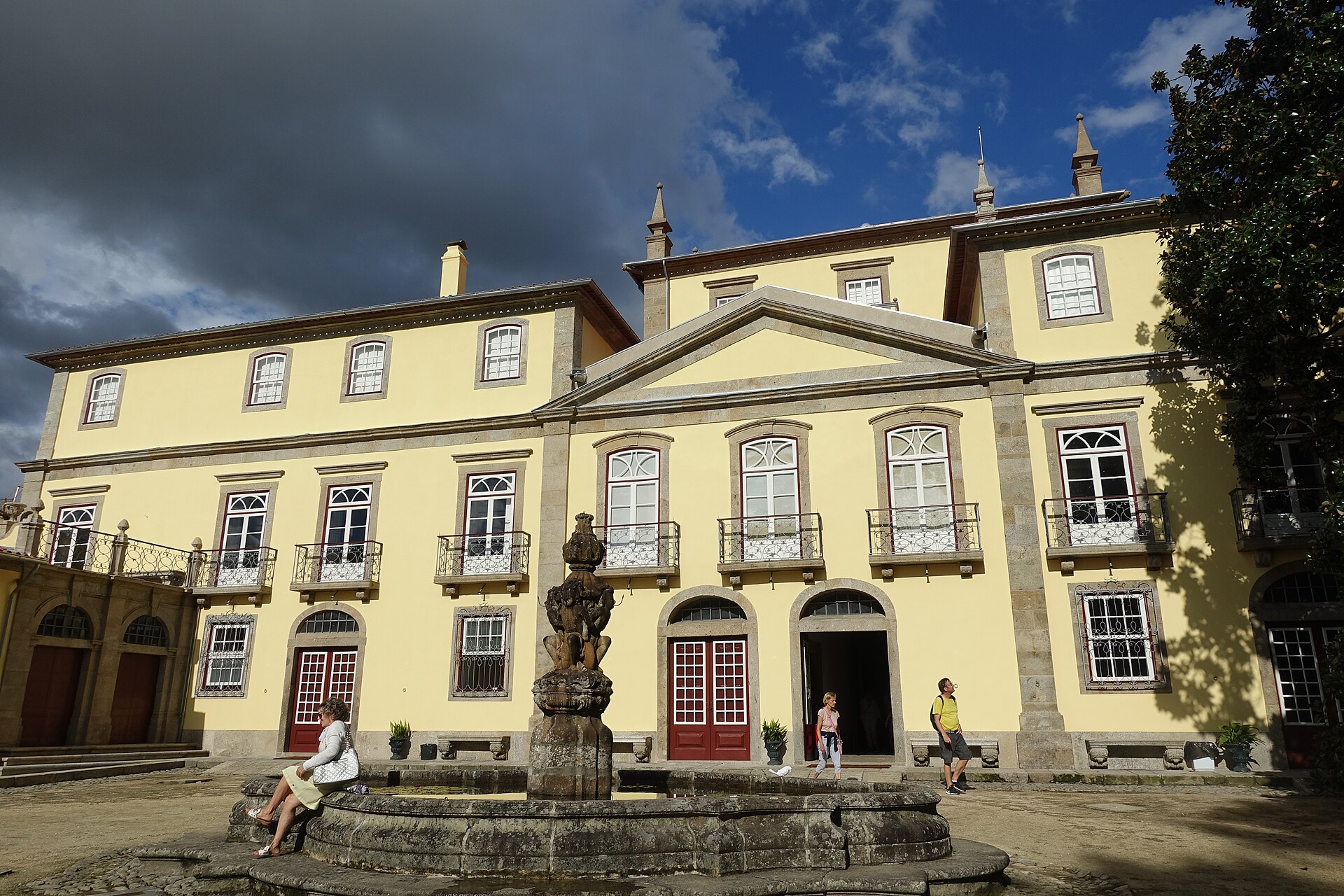
The Biscainhos Museum is housed in a former aristocratic palace in Braga, Portugal, originally constructed in the 17th century and significantly expanded during the 18th century. The site serves as a preserved example of the residential architecture and lifestyle of the Portuguese nobility, featuring ornate interiors, period furniture, and decorative arts that reflect the social hierarchy of the era.
The museum is particularly noted for its extensive Baroque garden, which retains its original layout, including fountains, terraces, and stone sculptures. The collection provides a comprehensive look at the material culture of the period, ranging from ceramics and glassware to musical instruments and religious artifacts, offering a window into the daily life of the house's former inhabitants.
Key Facts
- Materials
- Granite, Wood, Azulejos (glazed tiles)
- Civilization
- Portuguese
- Accessibility
- Partially accessible; garden areas may have uneven terrain
- Date(s)
- 17th - 18th century
- Condition
- Well-preserved museum
- Original Function
- Aristocratic residence
- Key Figures
- Count of Bertiandos
Origins and Construction
17th centuryThe palace was established in the 17th century as a private residence for the nobility in Braga. Its architecture reflects the transition from traditional manor styles to the more elaborate Baroque aesthetic that would define the city's elite housing.
Expansion and Baroque Refinement
18th centuryDuring the 18th century, the residence underwent significant expansion. The interior was updated with fine woodwork and decorative arts, and the extensive terraced gardens were laid out, becoming one of the most significant examples of Baroque garden design in northern Portugal.
Establishment as a Museum
20th centuryThe property was acquired by the Portuguese state and opened to the public as a museum in 1978. The initiative aimed to preserve the integrity of the house and its gardens as a national monument, documenting the lifestyle of the Portuguese aristocracy.
Cultural Significance
The Biscainhos Museum is a vital site for understanding the social and domestic history of the Portuguese nobility. It serves as a rare, intact example of an aristocratic home where the relationship between the interior living spaces and the surrounding Baroque gardens remains preserved, illustrating the aesthetic and social values of the 18th-century elite.
Interpretive Notes
Scholarly debates and areas of uncertainty
Debates among architectural historians often focus on the attribution of specific garden elements and the extent of 19th-century modifications to the original 18th-century layout, as records from the transition period are incomplete.
Visiting Information
Entry Rules
Open Tuesday to Sunday. Closed on Mondays and public holidays. Tickets are required for entry.
Best Times to Visit
Spring and early summer are ideal for viewing the Baroque gardens in bloom. Mid-week mornings generally offer the quietest experience.
Photography
Non-commercial photography is permitted without flash. Tripods and professional equipment require prior authorization.
Preservation Notes
Visitors are requested to refrain from touching the furniture, textiles, and decorative surfaces. Please remain on designated paths within the garden to protect the historic landscaping.
Nearby POIs
11 shownSources & Further Reading
- [1]Museu dos Biscainhos: Guia do Visitante — Direção-Geral do Património Cultural. DGPC Portugal (2020)View
- [2]The Baroque Gardens of Northern Portugal — Helder Carita. Editorial Presença (2015)
Key Facts
- Materials
- Granite, Wood, Azulejos (glazed tiles)
- Civilization
- Portuguese
- Accessibility
- Partially accessible; garden areas may have uneven terrain
- Date(s)
- 17th - 18th century
- Condition
- Well-preserved museum
- Original Function
- Aristocratic residence
- Key Figures
- Count of Bertiandos