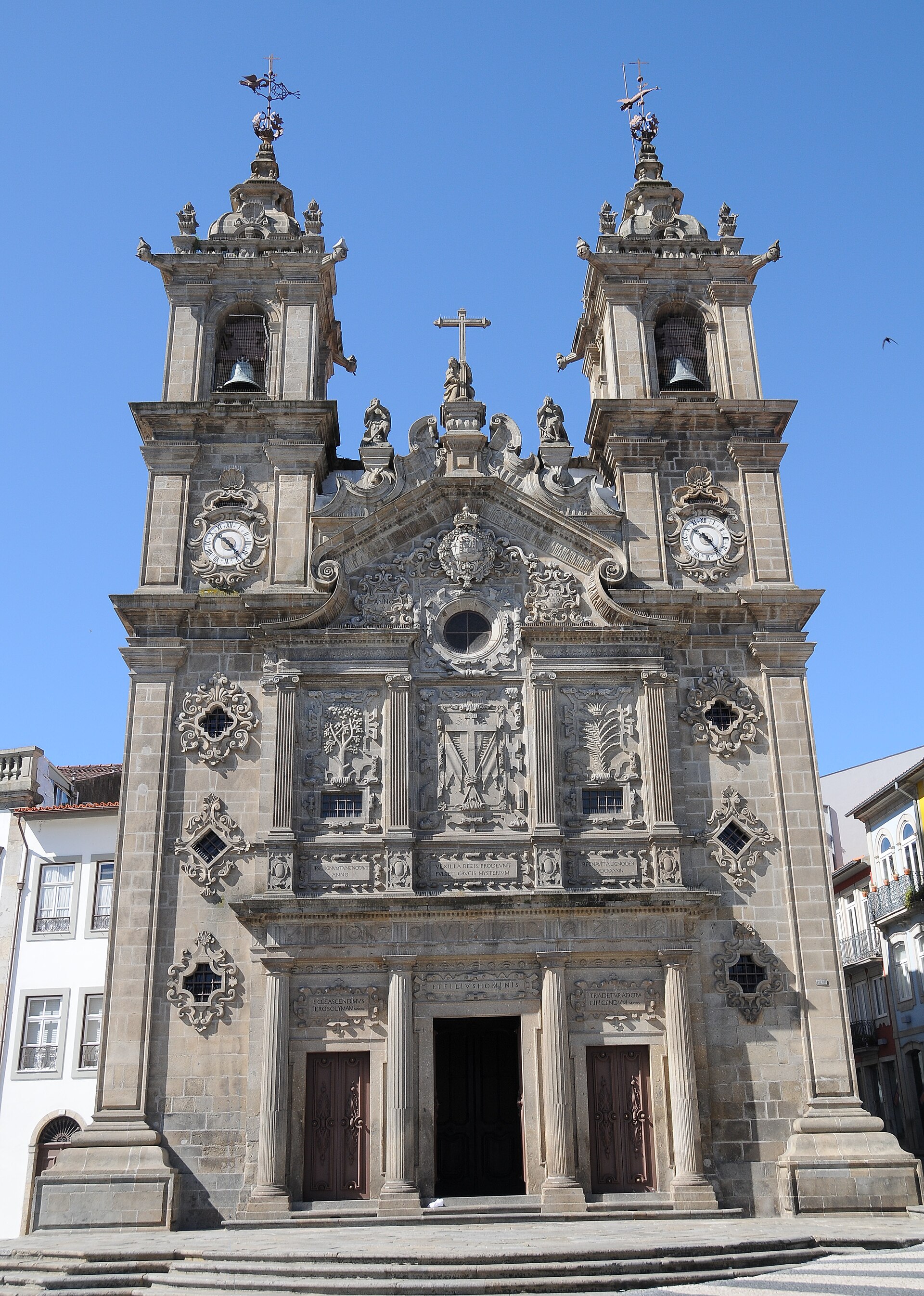
The Igreja de Santa Cruz, located in the historic center of Braga, is a prominent example of 17th-century Portuguese Baroque architecture. Commissioned by the Confraternity of the Holy Cross, the church was built to replace an earlier, smaller chapel and serves as a testament to the religious fervor and architectural ambition of the period.
The facade is noted for its intricate stonework, featuring two distinct towers and a central portal adorned with elaborate carvings. The interior is characterized by its rich gilded woodcarving (talha dourada), which covers the altars and ceiling, reflecting the decorative opulence typical of the Counter-Reformation era in Portugal.
Key Facts
- Materials
- Granite, Gilded wood, Azulejos
- Civilization
- Portuguese
- Accessibility
- Ground level access available
- Date(s)
- 1625 - 1737
- Condition
- Well-preserved and active
- Original Function
- Confraternity church
- Key Figures
- Archbishop Rodrigo da Cunha
Foundation and Early Construction
17th CenturyThe church was founded by the Confraternity of the Holy Cross in 1625. The project was supported by Archbishop Rodrigo da Cunha, who sought to establish a significant religious landmark in the growing city of Braga.
Baroque Expansion
18th CenturyDuring the early 1700s, the interior underwent significant decorative upgrades. The installation of the gilded wood altarpieces and the completion of the towers solidified the church's status as a masterpiece of the Braga Baroque style.
Modern Preservation
20th Century - PresentThe church has undergone several restoration campaigns to preserve its granite facade and delicate interior woodcarvings. It remains an active place of worship and a key site for cultural tourism in Braga.
Cultural Significance
The Igreja de Santa Cruz is deeply embedded in the religious life of Braga, a city historically known as the 'Rome of Portugal.' The church serves as a focal point for local religious processions and reflects the historical influence of lay confraternities in managing urban ecclesiastical spaces.
Its architectural style influenced the development of the 'Braga Baroque,' a regional variation characterized by the heavy use of granite and ornate, expressive sculptural details that distinguish it from the more restrained styles found in other parts of the country.
Interpretive Notes
Scholarly debates and areas of uncertainty
There is ongoing academic discussion regarding the attribution of the specific sculptural programs on the facade. While some scholars point to the influence of local master masons, others suggest the involvement of itinerant artists from the broader Iberian Peninsula who brought stylistic elements from Spanish Mannerism.
Visiting Information
Entry Rules
Open daily to the public. Entry is free, but visitors are expected to maintain silence and respect ongoing religious services. Modest dress is requested.
Best Times to Visit
Weekday mornings are generally quietest. The church is particularly significant during Holy Week (Semana Santa), when it becomes a central hub for Braga's famous religious processions.
Photography
Photography is permitted without flash. Tripods and professional equipment require prior authorization from the parish office.
Preservation Notes
The interior gilded wood is highly sensitive to humidity and light. Please refrain from touching any surfaces or altarpieces. Stay within designated visitor areas.
Nearby POIs
11 shownSources & Further Reading
- [1]Baroque Architecture in Portugal — Robert C. Smith. University of Pennsylvania Press (1968)
- [2]Braga: A History of the City — Avelino de Jesus da Costa. University of Minho Press (1995)
Key Facts
- Materials
- Granite, Gilded wood, Azulejos
- Civilization
- Portuguese
- Accessibility
- Ground level access available
- Date(s)
- 1625 - 1737
- Condition
- Well-preserved and active
- Original Function
- Confraternity church
- Key Figures
- Archbishop Rodrigo da Cunha