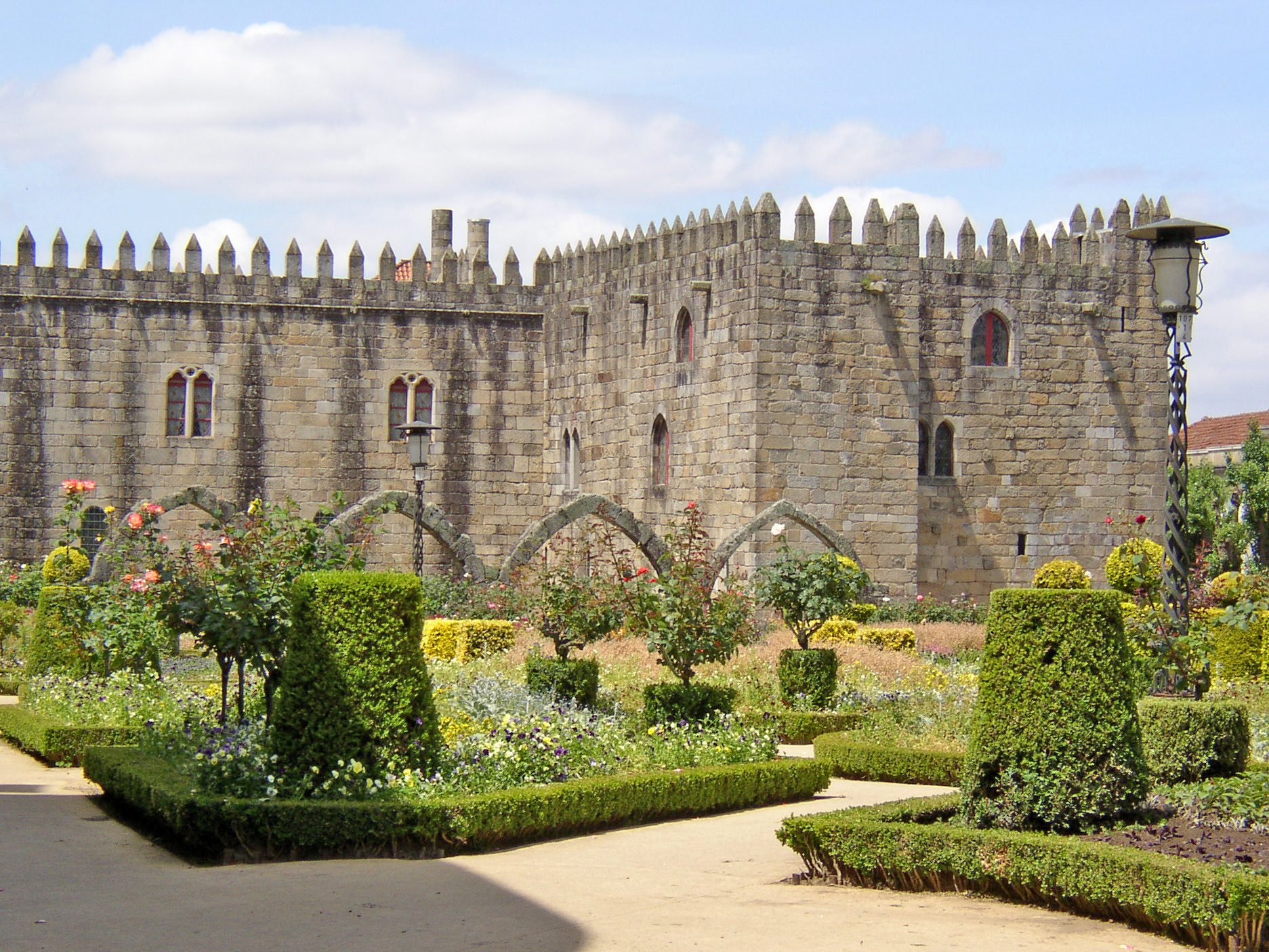
The Archiepiscopal Palace of Braga is a complex of interconnected buildings that served as the residence and administrative seat of the Archbishops of Braga. Its architecture reflects centuries of development, with the oldest sections dating back to the 14th century, while significant expansions and stylistic modifications were carried out during the 17th and 18th centuries.
The palace is situated adjacent to the Braga Cathedral and currently houses the Rectory of the University of Minho and the Public Library of Braga. Its facade and interior courtyards display a transition from austere medieval fortification styles to the ornate decorative elements characteristic of the Portuguese Baroque period.
Key Facts
- Materials
- Granite, Stone masonry, Tile
- Civilization
- Portuguese
- Accessibility
- Ground floor accessible, upper levels limited
- Date(s)
- 14th - 18th century
- Condition
- Well-preserved, repurposed for academic and library use
- Original Function
- Episcopal residence and administrative center
- Key Figures
- Archbishop Diogo de Sousa, Archbishop Rodrigo de Moura Teles
Medieval Foundations
14th centuryThe initial structure was commissioned to provide a fortified residence for the Archbishops, reflecting the immense political power held by the prelates of Braga during the Middle Ages.
Renaissance Expansion
16th centuryUnder the patronage of Archbishop Diogo de Sousa, the palace underwent significant renovations, incorporating Renaissance architectural features and expanding the residential wings to accommodate a growing administrative staff.
Baroque Transformation
18th centuryArchbishop Rodrigo de Moura Teles oversaw the most extensive modifications, adding the ornate Baroque wings and decorative elements that define the current exterior appearance of the palace complex.
Modern Repurposing
20th century - presentFollowing the secularization of church properties, the palace was repurposed for public use. It now serves as the administrative heart of the University of Minho and houses the municipal public library.
Cultural Significance
The palace stands as a testament to the 'Bracara Augusta' legacy, where the Archbishop of Braga held the title of Primate of the Spains. It symbolizes the historical intersection of ecclesiastical authority and regional governance in Northern Portugal.
Today, the site serves as a vital cultural hub for the city, bridging its historical religious identity with its modern role as a center for education and public knowledge through the university and library facilities.
Interpretive Notes
Scholarly debates and areas of uncertainty
There is ongoing academic discussion regarding the extent of the original medieval layout, as subsequent Baroque renovations significantly obscured the earlier defensive architectural features of the palace.
Visiting Information
Entry Rules
The public library and university administrative areas are open during standard business hours. Visitors should respect the academic environment and follow posted signage regarding restricted zones.
Best Times to Visit
Weekday mornings are ideal for visiting the library and observing the exterior architecture without the congestion of university student traffic.
Photography
Photography is permitted in public courtyards and exterior areas. Flash and tripods are prohibited inside the library and administrative offices.
Preservation Notes
The structure is a protected national monument. Visitors are requested to refrain from touching the granite masonry and to remain within designated public access areas.
Nearby POIs
11 shownSources & Further Reading
- [1]Património Arquitetónico de Braga — José Eduardo de Sá. Edições Municipais (2015)
- [2]The Archbishops of Braga: Power and Patronage — Maria Helena da Cruz Coelho. University of Minho Press (2018)
Key Facts
- Materials
- Granite, Stone masonry, Tile
- Civilization
- Portuguese
- Accessibility
- Ground floor accessible, upper levels limited
- Date(s)
- 14th - 18th century
- Condition
- Well-preserved, repurposed for academic and library use
- Original Function
- Episcopal residence and administrative center
- Key Figures
- Archbishop Diogo de Sousa, Archbishop Rodrigo de Moura Teles