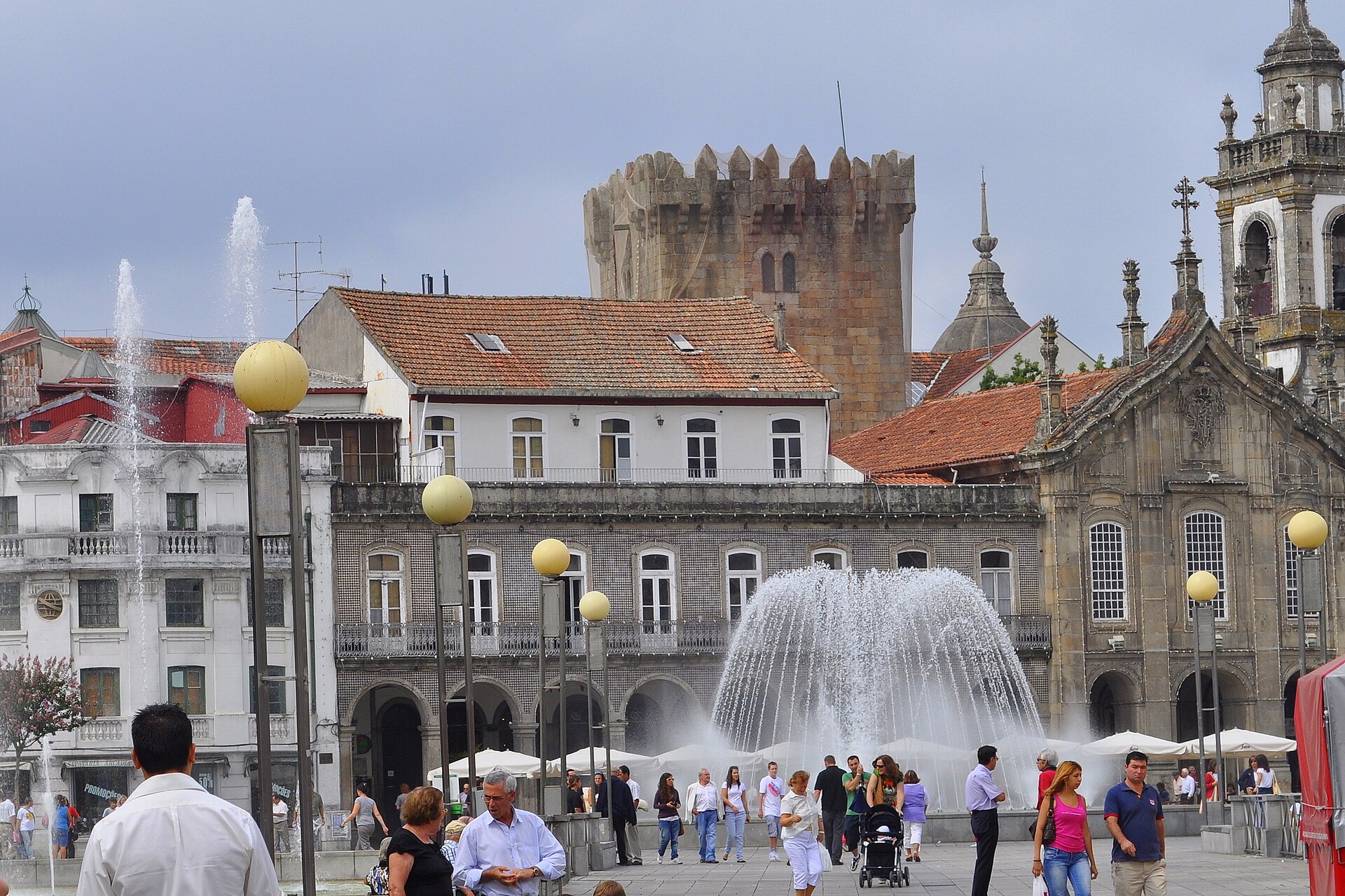
The Castle of Braga was a medieval defensive fortification located in the city of Braga, Portugal. Historically serving as a critical defensive node for the Archdiocese of Braga, the castle played a significant role in the consolidation of the Portuguese territory during the Reconquista and the subsequent development of the city as an ecclesiastical power center.
Today, only fragments of the original structure remain, most notably the keep (Torre de Menagem). These remnants serve as a testament to the city's medieval military architecture and its strategic importance as a fortified administrative hub during the Middle Ages.
Key Facts
- Materials
- Granite
- Civilization
- Portuguese
- Accessibility
- Exterior accessible to the public
- Date(s)
- 11th - 14th century
- Condition
- Partially ruined; keep preserved
- Original Function
- Defensive fortification and residence
- Key Figures
- Dinis of Portugal, Fernando I of Portugal
Origins and Early Defense
11th CenturyThe initial fortifications were established to protect the ecclesiastical seat of Braga. These early structures were integrated into the city's defensive walls, which were essential for safeguarding the region against potential incursions.
Expansion and Reinforcement
14th CenturyUnder the reign of King Dinis, the castle underwent significant expansion. The construction of the keep (Torre de Menagem) provided a stronger defensive position and served as a symbol of royal and archiepiscopal authority over the city.
Decline and Modern Preservation
16th Century - PresentAs the military necessity for the castle diminished, the structure fell into disrepair. Much of the wall system was dismantled to accommodate urban growth. The surviving keep was classified as a National Monument in the 20th century, ensuring its protection as a historical landmark.
Cultural Significance
The Castle of Braga represents the intersection of religious and military authority in medieval Portugal. It stands as a physical manifestation of the power held by the Archbishops of Braga, who were among the most influential figures in the kingdom's history. The site remains a focal point for understanding the urban evolution of Braga from a fortified medieval town to a modern city.
Interpretive Notes
Scholarly debates and areas of uncertainty
There is ongoing academic discussion regarding the exact layout of the original curtain walls and the extent to which the castle functioned as a primary residence for the Archbishops versus a purely military garrison.
Visiting Information
Entry Rules
The site is located in an urban area and is accessible to the public at all times. No entry fee is required to view the exterior of the remaining keep.
Best Times to Visit
Daylight hours are recommended for viewing the architectural details of the granite masonry.
Photography
None; the site is located in a public urban space.
Preservation Notes
The structure is protected as a national monument. Visitors are advised to respect the integrity of the masonry and avoid climbing on the ruins.
Nearby POIs
11 shownSources & Further Reading
- [1]
- [2]História de Braga: A Idade Média — A. de Almeida Fernandes. Câmara Municipal de Braga (1995)
Key Facts
- Materials
- Granite
- Civilization
- Portuguese
- Accessibility
- Exterior accessible to the public
- Date(s)
- 11th - 14th century
- Condition
- Partially ruined; keep preserved
- Original Function
- Defensive fortification and residence
- Key Figures
- Dinis of Portugal, Fernando I of Portugal