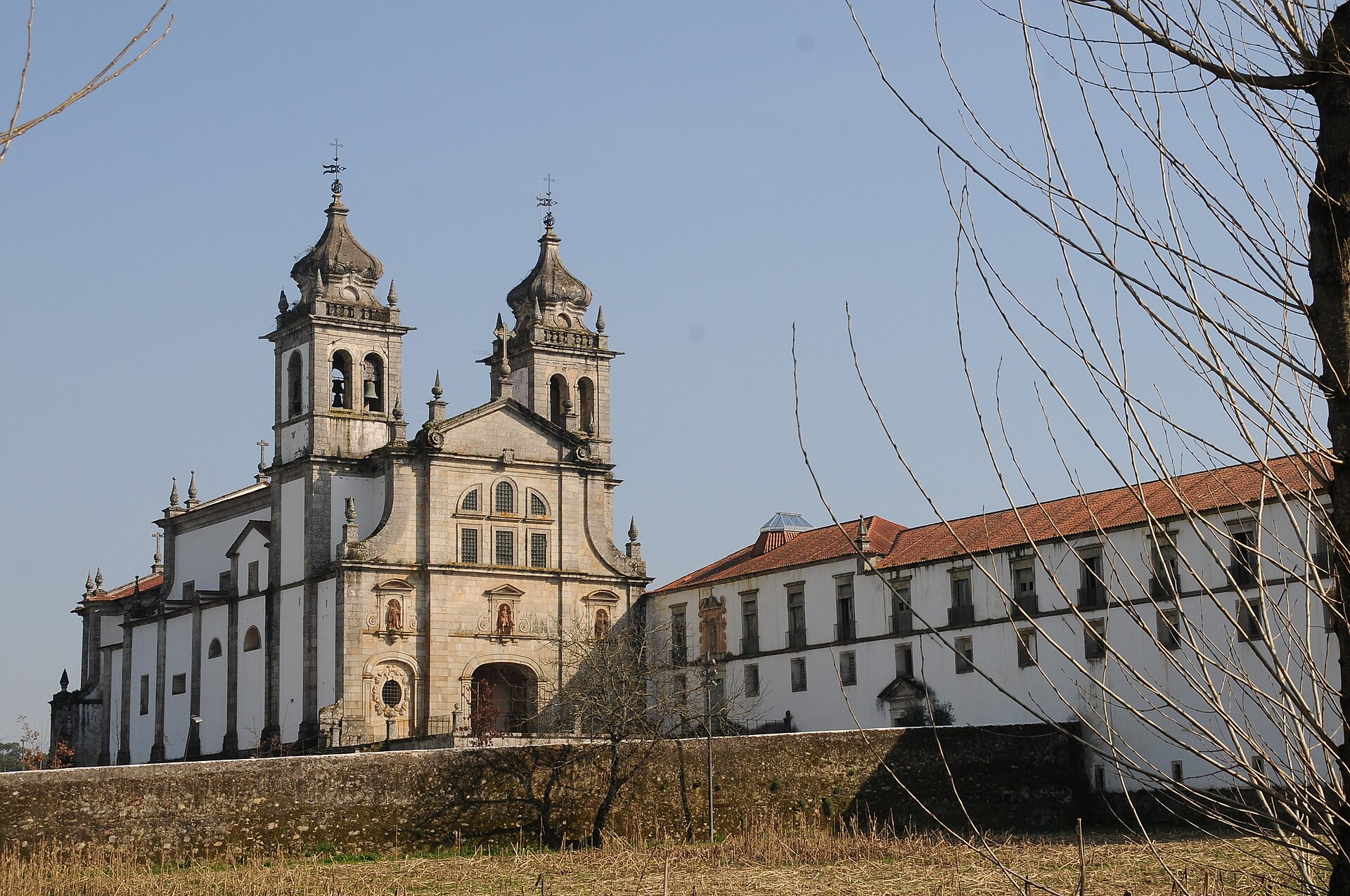
The Monastery of São Martinho de Tibães served as the mother house of the Benedictine Order in Portugal and Brazil. Founded in the 11th century, it grew to become one of the most influential monastic institutions in the Iberian Peninsula, acting as a major center for spiritual, administrative, and economic life for centuries.
The current complex is a significant example of Portuguese Baroque architecture, featuring an ornate church interior characterized by extensive gilded woodcarving (talha dourada). Following the dissolution of religious orders in Portugal in 1834, the monastery fell into decline, but it has since been acquired by the state and undergone extensive restoration to preserve its architectural and artistic heritage.
Key Facts
- Materials
- Granite, Gilded wood, Azulejos
- Civilization
- Portuguese
- Accessibility
- Partially accessible; some areas involve stairs
- Date(s)
- 11th century (original), 17th-18th century (current structure)
- Condition
- Restored and open as a cultural site
- Original Function
- Benedictine Monastery
- Key Figures
- Benedictine Order, João de Ruena
Foundation and Medieval Growth
11th - 15th centuryThe monastery was established in the 11th century and quickly became a powerful landholder in the Braga region. It served as the headquarters for the Benedictine congregation in Portugal, exerting significant influence over the religious and social organization of the territory.
Baroque Expansion
17th - 18th centuryDuring the 17th and 18th centuries, the monastery underwent a massive reconstruction program. The church was rebuilt in the Baroque style, incorporating elaborate gilded woodcarvings and decorative tile work that reflected the wealth and prestige of the order during the Portuguese Golden Age.
Dissolution and Decline
19th centuryThe Liberal Revolution and the subsequent 1834 decree suppressing religious orders in Portugal led to the closure of the monastery. The property was sold at auction, and the buildings suffered from neglect and looting, leading to the loss of many original furnishings and artworks.
Restoration and Modern Era
20th century - presentIn the late 20th century, the Portuguese state acquired the site. A comprehensive restoration project was initiated to stabilize the structures and preserve the remaining artistic elements, transforming the monastery into a museum and cultural center.
Cultural Significance
The monastery represents the historical nexus of the Benedictine order's influence in the Portuguese-speaking world. Its role in land management and agricultural development in the Minho region was foundational to the local economy for centuries.
Today, it serves as a vital repository of Portuguese Baroque art. The site is recognized for its contribution to the study of monastic life and the preservation of religious architectural heritage in Northern Portugal.
Interpretive Notes
Scholarly debates and areas of uncertainty
Debates exist regarding the extent of the original medieval structure that remains hidden beneath the Baroque-era renovations. Archaeological investigations continue to uncover foundations that challenge previous assumptions about the monastery's early layout.
Visiting Information
Entry Rules
Open Tuesday to Sunday. Tickets are required for entry to the monastery and the surrounding gardens. Modest dress is requested as a sign of respect for the site's religious history.
Best Times to Visit
Spring and early autumn offer the best conditions for exploring the extensive monastery gardens and the surrounding woodland.
Photography
Photography is permitted for personal use without flash. Tripods and professional equipment require prior authorization from the administration.
Preservation Notes
Visitors are asked to refrain from touching the gilded woodcarvings and historical surfaces. Please remain on designated paths within the gardens to protect the landscape.
Nearby POIs
11 shownSources & Further Reading
- [1]Mosteiro de Tibães: História e Arte — José Eduardo de Sá. Direção-Geral do Património Cultural (2015)View
- [2]The Benedictine Order in Portugal — Maria Helena da Cruz Coelho. University of Coimbra Press (2010)
Key Facts
- Materials
- Granite, Gilded wood, Azulejos
- Civilization
- Portuguese
- Accessibility
- Partially accessible; some areas involve stairs
- Date(s)
- 11th century (original), 17th-18th century (current structure)
- Condition
- Restored and open as a cultural site
- Original Function
- Benedictine Monastery
- Key Figures
- Benedictine Order, João de Ruena