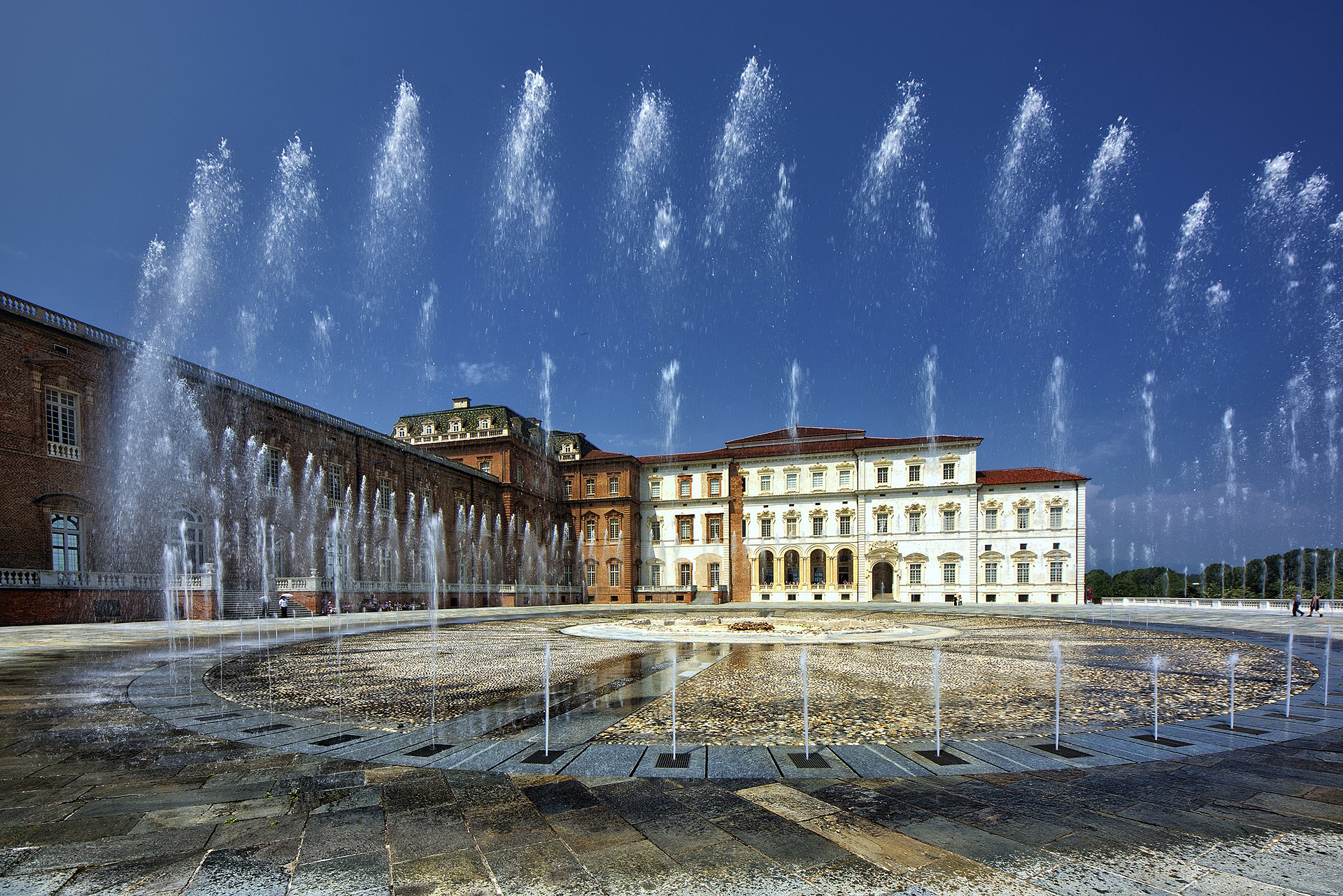
The Reggia di Venaria Reale is a monumental Baroque complex located near Turin, commissioned by Duke Charles Emmanuel II of Savoy in 1658. Designed by architect Amedeo di Castellamonte, the palace was intended to serve as a grand hunting lodge and a symbol of the House of Savoy's prestige, situated within a vast estate that integrated architecture with the surrounding landscape.
Following a period of military use and subsequent decline in the 19th and 20th centuries, the palace underwent one of the most extensive restoration projects in European history, reopening to the public in 2007. Today, it is recognized as a UNESCO World Heritage Site, celebrated for its opulent interiors, including the Hall of Diana and the Great Gallery, as well as its expansive formal gardens.
Key Facts
- Materials
- Brick, Stucco, Marble, Gold leaf
- Civilization
- Savoyard
- Accessibility
- Fully accessible with elevators and ramps
- Date(s)
- 1658-1679
- Condition
- Fully restored and open as a museum
- Original Function
- Hunting lodge and royal residence
- Key Figures
- Charles Emmanuel II of Savoy, Amedeo di Castellamonte, Michelangelo Garove, Filippo Juvarra
Origins and Construction
1658-1679Commissioned by Duke Charles Emmanuel II, the project was designed to rival the grandeur of Versailles. Amedeo di Castellamonte oversaw the initial construction, creating a 'theatre' of hunting and courtly life.
Expansion and Baroque Refinement
18th centuryArchitects Michelangelo Garove and later Filippo Juvarra expanded the complex, adding the Great Gallery and the Stables, which represent the pinnacle of Piedmontese Baroque architecture.
Military Use and Decline
19th-20th centuryFollowing the Napoleonic Wars, the palace was converted into a barracks and military depot. This period saw significant structural damage and the loss of many original furnishings.
Restoration and Modern Era
1999-2007The Italian Ministry of Culture launched a massive restoration effort to recover the palace and its gardens. The site was reopened in 2007, becoming a major cultural hub and museum.
Cultural Significance
The Reggia di Venaria Reale stands as a testament to the political ambitions of the House of Savoy. It represents the 'Crown of Delights,' a network of royal residences surrounding Turin that solidified the dynasty's status among European powers. The site is a primary example of the integration of Baroque architecture with natural landscapes, influencing urban planning in the region.
Interpretive Notes
Scholarly debates and areas of uncertainty
Debates persist regarding the extent to which the restoration prioritized aesthetic appeal over the preservation of the palace's military-era history. Some scholars argue that the removal of 19th-century military modifications obscures the site's complex multi-functional past.
Visiting Information
Entry Rules
Open Tuesday through Sunday. Tickets are required for entry to the palace and gardens. Modest dress is recommended. Large bags must be left in the cloakroom.
Best Times to Visit
Spring and early autumn are ideal for exploring the extensive gardens. Weekdays offer significantly fewer crowds than weekends.
Photography
Personal photography is permitted without flash or tripods. Commercial photography requires prior authorization from the Consorzio delle Residenze Reali Sabaude.
Preservation Notes
Visitors are requested not to touch the tapestries or gilded surfaces. Stay on marked paths in the gardens to protect the restored landscape.
Nearby POIs
11 shown- Juventus Museum2.8 km
- Museo d'Arte Orientale, MAO8.1 km
- Porta Palatina8.3 km
- Palazzo Reale di Torino8.6 km
- Palazzo Madama8.7 km
- Museo Egizio8.9 km
- Palazzo Carignano8.9 km
- Museo Nazionale del Cinema9.2 km
- Chiesa della Gran Madre di Dio10.1 km
- Chiesa di Santa Maria del Monte dei Cappuccini10.3 km
- Borgo Medioevale10.8 km
Sources & Further Reading
- [1]
- [2]La Venaria Reale: The Restoration of a Masterpiece — Consorzio delle Residenze Reali Sabaude. Allemandi (2007)
Key Facts
- Materials
- Brick, Stucco, Marble, Gold leaf
- Civilization
- Savoyard
- Accessibility
- Fully accessible with elevators and ramps
- Date(s)
- 1658-1679
- Condition
- Fully restored and open as a museum
- Original Function
- Hunting lodge and royal residence
- Key Figures
- Charles Emmanuel II of Savoy, Amedeo di Castellamonte, Michelangelo Garove, Filippo Juvarra
Nearby POIs
11 shown- Juventus Museum2.8 km
- Museo d'Arte Orientale, MAO8.1 km
- Porta Palatina8.3 km
- Palazzo Reale di Torino8.6 km
- Palazzo Madama8.7 km
- Museo Egizio8.9 km
- Palazzo Carignano8.9 km
- Museo Nazionale del Cinema9.2 km
- Chiesa della Gran Madre di Dio10.1 km
- Chiesa di Santa Maria del Monte dei Cappuccini10.3 km
- Borgo Medioevale10.8 km