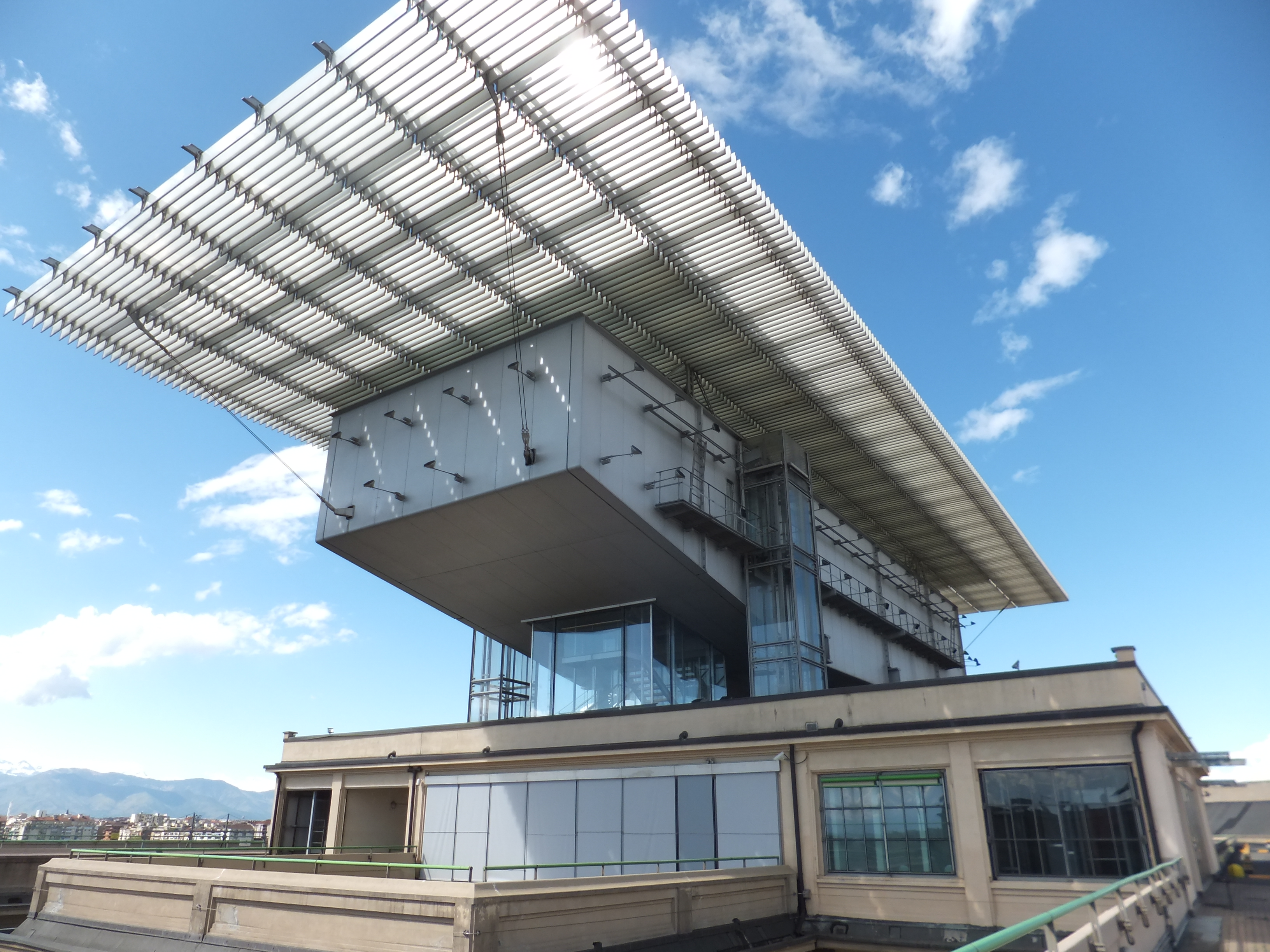
The Pinacoteca Giovanni e Marella Agnelli is an art gallery located in the Lingotto district of Turin, Italy. Housed in a structure designed by Renzo Piano, the building is famously known as the 'Scrigno' (the Casket), a glass-and-steel 'spaceship' suspended on the roof of the former Fiat factory, echoing the site's industrial heritage while providing a modern exhibition space.
The gallery displays a permanent collection of paintings and sculptures curated from the private holdings of Gianni and Marella Agnelli. The selection features significant works ranging from the 18th century to the mid-20th century, including masterpieces by Canaletto, Picasso, Matisse, and Modigliani, presented within a minimalist architectural environment.
Key Facts
- Materials
- Steel, Glass, Aluminum
- Civilization
- Italian
- Accessibility
- Fully wheelchair accessible with elevator access to the roof level
- Date(s)
- 2002
- Condition
- Active
- Original Function
- Private art gallery
- Key Figures
- Renzo Piano, Gianni Agnelli, Marella Agnelli
The Lingotto Context
1920s-1980sThe gallery is situated atop the historic Lingotto factory, once the heart of Fiat's automotive production. Following the factory's closure in the 1980s, the complex underwent a massive urban regeneration project led by architect Renzo Piano to convert the industrial space into a multi-functional center.
Design and Construction
2000-2002Renzo Piano designed the 'Scrigno' as a floating structure on the factory roof, utilizing a sophisticated system of light-filtering glass to protect the artworks. The project was commissioned by the Agnelli family to house their personal collection and opened to the public in 2002.
Modern Operations
2002-PresentSince its inauguration, the Pinacoteca has served as a cultural landmark in Turin. It continues to manage the permanent collection while hosting temporary exhibitions, educational programs, and cultural events, maintaining its status as a key institution for modern and classical art.
Cultural Significance
The Pinacoteca serves as a bridge between Turin's industrial past and its contemporary cultural identity. By placing a high-art collection atop the former Fiat factory, the site symbolizes the transformation of the city from a manufacturing hub into a center for design, art, and innovation.
It remains a testament to the patronage of the Agnelli family, whose influence on the economic and cultural life of Turin is profound. The gallery is recognized not only for its collection but as a significant example of adaptive reuse architecture in the 21st century.
Interpretive Notes
Scholarly debates and areas of uncertainty
Discussions often center on the architectural dialogue between the 'Scrigno' and the industrial vernacular of the Lingotto factory. Some critics argue the high-tech, detached nature of the gallery creates a stark contrast with the historic factory floor, while others praise the intervention as a masterclass in preserving industrial heritage through modern architectural insertion.
Visiting Information
Entry Rules
Open Tuesday to Sunday. Tickets can be purchased at the entrance or online. Visitors are requested to leave large bags in the cloakroom.
Best Times to Visit
Weekday mornings are generally quieter. The gallery offers unique views of the Alps and the city, which are best enjoyed on clear days.
Photography
Personal photography is permitted for non-commercial use without flash. Tripods and selfie sticks are prohibited.
Preservation Notes
The gallery utilizes a specialized climate control system to protect the paintings. Visitors are asked to maintain a respectful distance from the artworks and avoid touching any surfaces.
Nearby POIs
11 shown- Museo Nazionale dell'Automobile0.6 km
- Borgo Medioevale2.3 km
- Chiesa di Santa Maria del Monte dei Cappuccini3.9 km
- Chiesa della Gran Madre di Dio4.2 km
- Museo Egizio4.2 km
- Palazzo Carignano4.3 km
- Villa della Regina4.3 km
- Palazzo Madama4.5 km
- Museo Nazionale del Cinema4.5 km
- Palazzo Reale di Torino4.7 km
- Museo d'Arte Orientale, MAO4.8 km
Sources & Further Reading
- [1]Renzo Piano Building Workshop: Pinacoteca Giovanni e Marella Agnelli — Renzo Piano. RPBW Architects (2002)View
- [2]The Lingotto: From Factory to Cultural Center — Giulia C. M. Rossi. Journal of Urban Regeneration (2015)
Key Facts
- Materials
- Steel, Glass, Aluminum
- Civilization
- Italian
- Accessibility
- Fully wheelchair accessible with elevator access to the roof level
- Date(s)
- 2002
- Condition
- Active
- Original Function
- Private art gallery
- Key Figures
- Renzo Piano, Gianni Agnelli, Marella Agnelli
Nearby POIs
11 shown- Museo Nazionale dell'Automobile0.6 km
- Borgo Medioevale2.3 km
- Chiesa di Santa Maria del Monte dei Cappuccini3.9 km
- Chiesa della Gran Madre di Dio4.2 km
- Museo Egizio4.2 km
- Palazzo Carignano4.3 km
- Villa della Regina4.3 km
- Palazzo Madama4.5 km
- Museo Nazionale del Cinema4.5 km
- Palazzo Reale di Torino4.7 km
- Museo d'Arte Orientale, MAO4.8 km