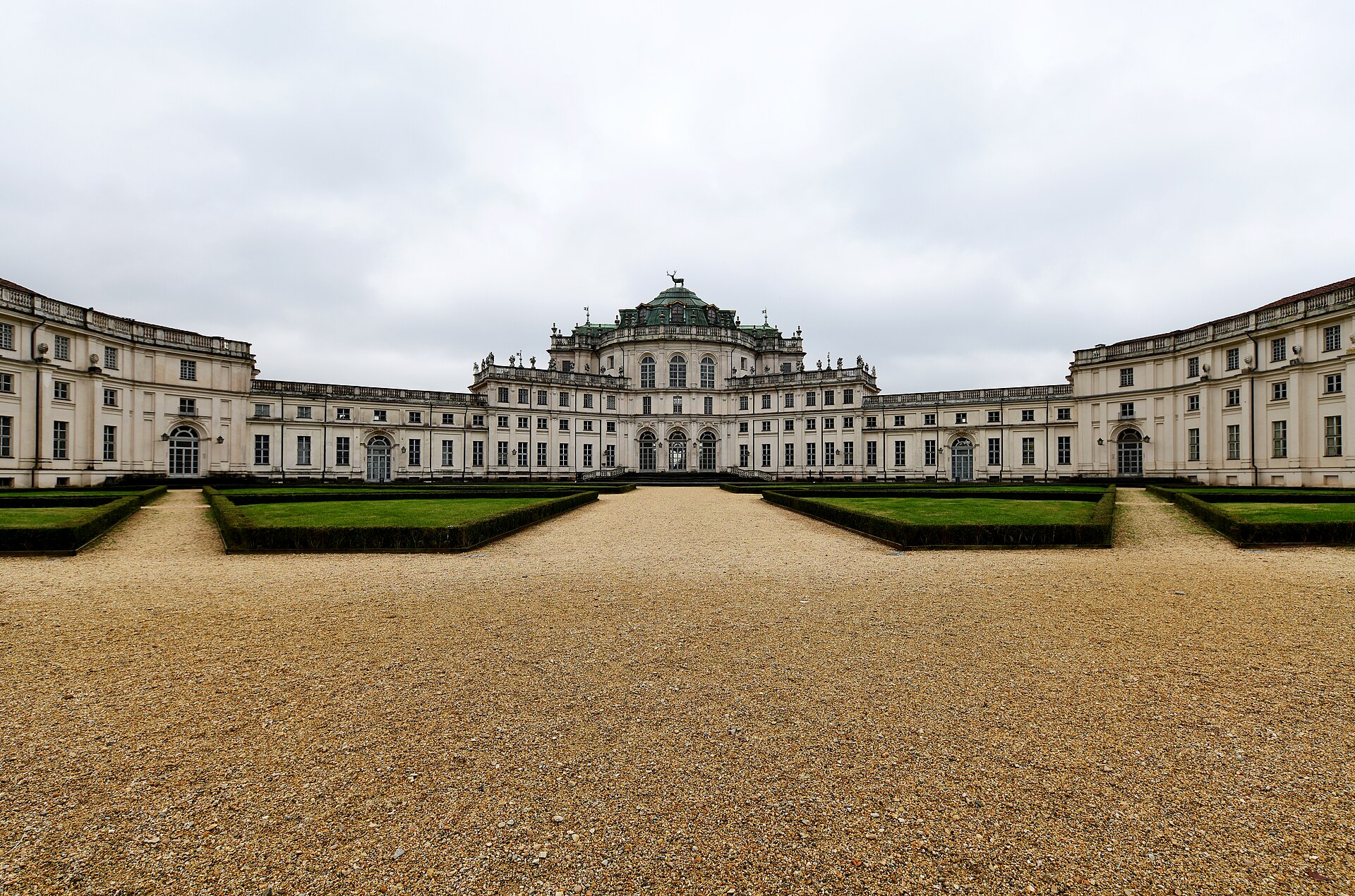
The Palazzina di Caccia di Stupinigi is a former royal hunting lodge located in the municipality of Nichelino, near Turin. Designed by the architect Filippo Juvarra and commissioned by King Victor Amadeus II of Sardinia in 1729, the structure served as a primary residence for the House of Savoy during hunting expeditions and court festivities.
The palace is celebrated for its innovative floor plan, featuring a central elliptical hall from which four wings extend, creating a dynamic spatial arrangement. The interiors are renowned for their elaborate Rococo decoration, featuring frescoes, gilded stuccowork, and original furniture that exemplify the refined craftsmanship of the 18th-century Piedmontese court.
Key Facts
- Materials
- Brick, Stucco, Marble, Gilded wood
- Civilization
- Kingdom of Sardinia
- Accessibility
- Partially accessible; some areas require stairs
- Date(s)
- 1729 - 1733
- Condition
- Restored and open as a museum
- Original Function
- Royal hunting lodge
- Key Figures
- Filippo Juvarra, Victor Amadeus II, Charles Emmanuel III
Commission and Design
1729King Victor Amadeus II commissioned Filippo Juvarra to design a hunting lodge that would reflect the prestige of the House of Savoy. Juvarra's design departed from traditional hunting lodges, opting for a grand, theatrical layout centered on a massive oval hall.
Expansion and Decoration
1733 - 1780Following the initial construction, the palace was expanded under the direction of Benedetto Alfieri. During this period, the interior decoration reached its peak, with artists like Giovanni Battista Crosato and Domenico Valinotti contributing the frescoes and stuccowork that define the Rococo aesthetic of the rooms.
Royal Residence and Decline
19th centuryThe palace remained a favored residence for the Savoy family throughout the 18th century. However, its use declined during the 19th century as the court shifted its focus to other royal residences, leading to a period of reduced maintenance.
Modern Preservation
20th century - presentIn 1997, the Palazzina di Caccia di Stupinigi was inscribed as a UNESCO World Heritage Site as part of the Residences of the Royal House of Savoy. Extensive restoration projects have since been undertaken to preserve the delicate stucco and fresco work for public viewing.
Cultural Significance
Stupinigi represents the pinnacle of Piedmontese Baroque and Rococo architecture, serving as a physical manifestation of the political and social power of the House of Savoy. It was designed not merely for hunting, but as a stage for courtly life, hosting royal weddings and diplomatic events that shaped the history of the region.
Today, it stands as a vital cultural landmark, housing the Museum of Art and Furniture. It is central to the regional identity of Turin and serves as a primary example of how 18th-century royal residences integrated architecture, landscape, and interior design to create a unified artistic experience.
Interpretive Notes
Scholarly debates and areas of uncertainty
There is ongoing academic discussion regarding the extent of Filippo Juvarra's original vision versus the modifications implemented by his successor, Benedetto Alfieri. Scholars debate how much of the final interior layout reflects Juvarra's initial theatrical intent versus the evolving needs of the court during the mid-18th century.
Visiting Information
Entry Rules
Open to the public Tuesday through Sunday. Tickets can be purchased at the entrance or online. Visitors are required to follow marked paths and refrain from touching the historic furnishings and wall decorations.
Best Times to Visit
Spring and early autumn offer the best conditions for viewing the surrounding parklands. Weekdays are recommended to avoid weekend crowds.
Photography
Personal photography is permitted without flash or tripods. Professional or commercial photography requires prior authorization from the management.
Preservation Notes
The site is highly sensitive to humidity and light. Visitors must adhere to strict climate-controlled zones and avoid using flash, which can damage the historic pigments and textiles.
Nearby POIs
11 shown- Pinacoteca Giovanni e Marella Agnelli6.3 km
- Museo Nazionale dell'Automobile6.7 km
- Borgo Medioevale8.6 km
- Chiesa di Santa Maria del Monte dei Cappuccini10.1 km
- Museo Egizio10.2 km
- Palazzo Carignano10.3 km
- Chiesa della Gran Madre di Dio10.5 km
- Palazzo Madama10.5 km
- Museo d'Arte Orientale, MAO10.6 km
- Villa della Regina10.7 km
- Museo Nazionale del Cinema10.7 km
Sources & Further Reading
- [1]Filippo Juvarra: The Architect of the House of Savoy — Cristina Ruggero. Centro Studi Juvarriani (2014)
- [2]
Key Facts
- Materials
- Brick, Stucco, Marble, Gilded wood
- Civilization
- Kingdom of Sardinia
- Accessibility
- Partially accessible; some areas require stairs
- Date(s)
- 1729 - 1733
- Condition
- Restored and open as a museum
- Original Function
- Royal hunting lodge
- Key Figures
- Filippo Juvarra, Victor Amadeus II, Charles Emmanuel III
Nearby POIs
11 shown- Pinacoteca Giovanni e Marella Agnelli6.3 km
- Museo Nazionale dell'Automobile6.7 km
- Borgo Medioevale8.6 km
- Chiesa di Santa Maria del Monte dei Cappuccini10.1 km
- Museo Egizio10.2 km
- Palazzo Carignano10.3 km
- Chiesa della Gran Madre di Dio10.5 km
- Palazzo Madama10.5 km
- Museo d'Arte Orientale, MAO10.6 km
- Villa della Regina10.7 km
- Museo Nazionale del Cinema10.7 km