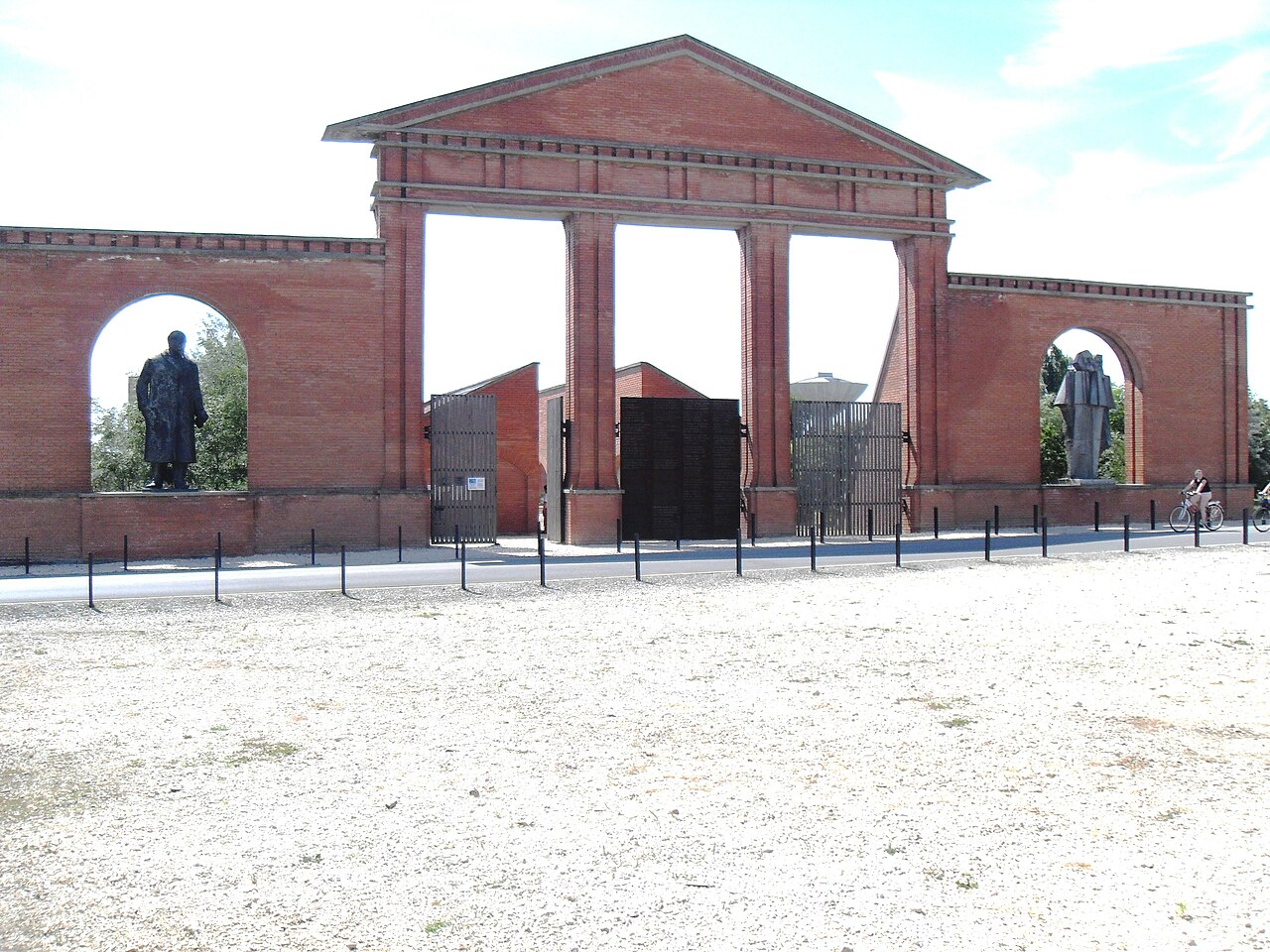
Memento Park is an open-air museum located in Budapest, Hungary, dedicated to the monumental statues and plaques removed from the city's public spaces following the collapse of the Communist regime in 1989. The park serves as a historical repository for the aesthetic and ideological symbols of the Hungarian People's Republic, featuring works by prominent socialist-era sculptors.
The collection includes 42 pieces, ranging from massive statues of Vladimir Lenin, Karl Marx, and Friedrich Engels to monuments honoring Hungarian Communist leaders and the 'Republic of Councils.' Designed by architect Ákos Eleőd, the park is laid out in a way that emphasizes the transition from totalitarianism to democracy, framing the statues not as objects of veneration, but as historical artifacts of a bygone political era.
Key Facts
- Materials
- Bronze, Stone, Concrete
- Civilization
- Hungarian
- Accessibility
- Ground level, gravel paths
- Date(s)
- 1993
- Condition
- Well-preserved, open-air exhibition
- Original Function
- Public display of political monuments
- Key Figures
- Ákos Eleőd, Imre Nagy
The Fall of Communism
1989-1990Following the democratic transition in Hungary, the new government faced the question of what to do with the ubiquitous symbols of the previous regime. Rather than destroying the statues, the Budapest General Assembly decided to relocate them to a dedicated site.
Design and Opening
1993Architect Ákos Eleőd won the competition to design the park. He envisioned the space as a 'dictatorship-themed' park that would allow visitors to reflect on the nature of the previous regime without the statues exerting their original political influence.
Modern Status
2000s-PresentThe park has become a significant site for historical education and tourism. It continues to host temporary exhibitions and serves as a venue for discussing the legacy of the Cold War in Central Europe.
Cultural Significance
Memento Park is a unique example of how a nation can process a traumatic political past by recontextualizing its symbols. By removing the statues from their original pedestals in the city center and placing them in a peripheral, curated environment, the park strips the monuments of their power to intimidate and instead turns them into objects of critical historical inquiry.
It remains a focal point for debates regarding the memory of the Socialist era in Hungary, balancing the need to preserve historical evidence with the desire to distance the nation from the ideology the statues once represented.
Interpretive Notes
Scholarly debates and areas of uncertainty
There is ongoing academic discussion regarding the 'neutralization' of these statues. Some scholars argue that by placing them in a park, the state has successfully 'de-fanged' the symbols, while others suggest that the park risks turning the history of political oppression into a form of kitsch or entertainment for tourists.
Visiting Information
Entry Rules
Open daily from 10:00 to 18:00 (or until sunset). Tickets are required for entry. Visitors are encouraged to respect the historical nature of the site.
Best Times to Visit
Spring and autumn offer the most comfortable temperatures for walking the outdoor grounds. Weekdays are generally quieter than weekends.
Photography
Personal photography is permitted. Commercial photography and filming require prior authorization from the park management.
Preservation Notes
The statues are exposed to the elements; please do not climb on or deface the monuments. Stay on the designated paths to protect the landscaping.
Nearby POIs
11 shownSources & Further Reading
- [1]The Politics of Memory: The Case of Memento Park — Duncan, A.. Journal of European Studies (2005)View
- [2]Statue Parks and the Politics of the Past — Kovács, Z.. Budapest Historical Review (2012)
Key Facts
- Materials
- Bronze, Stone, Concrete
- Civilization
- Hungarian
- Accessibility
- Ground level, gravel paths
- Date(s)
- 1993
- Condition
- Well-preserved, open-air exhibition
- Original Function
- Public display of political monuments
- Key Figures
- Ákos Eleőd, Imre Nagy