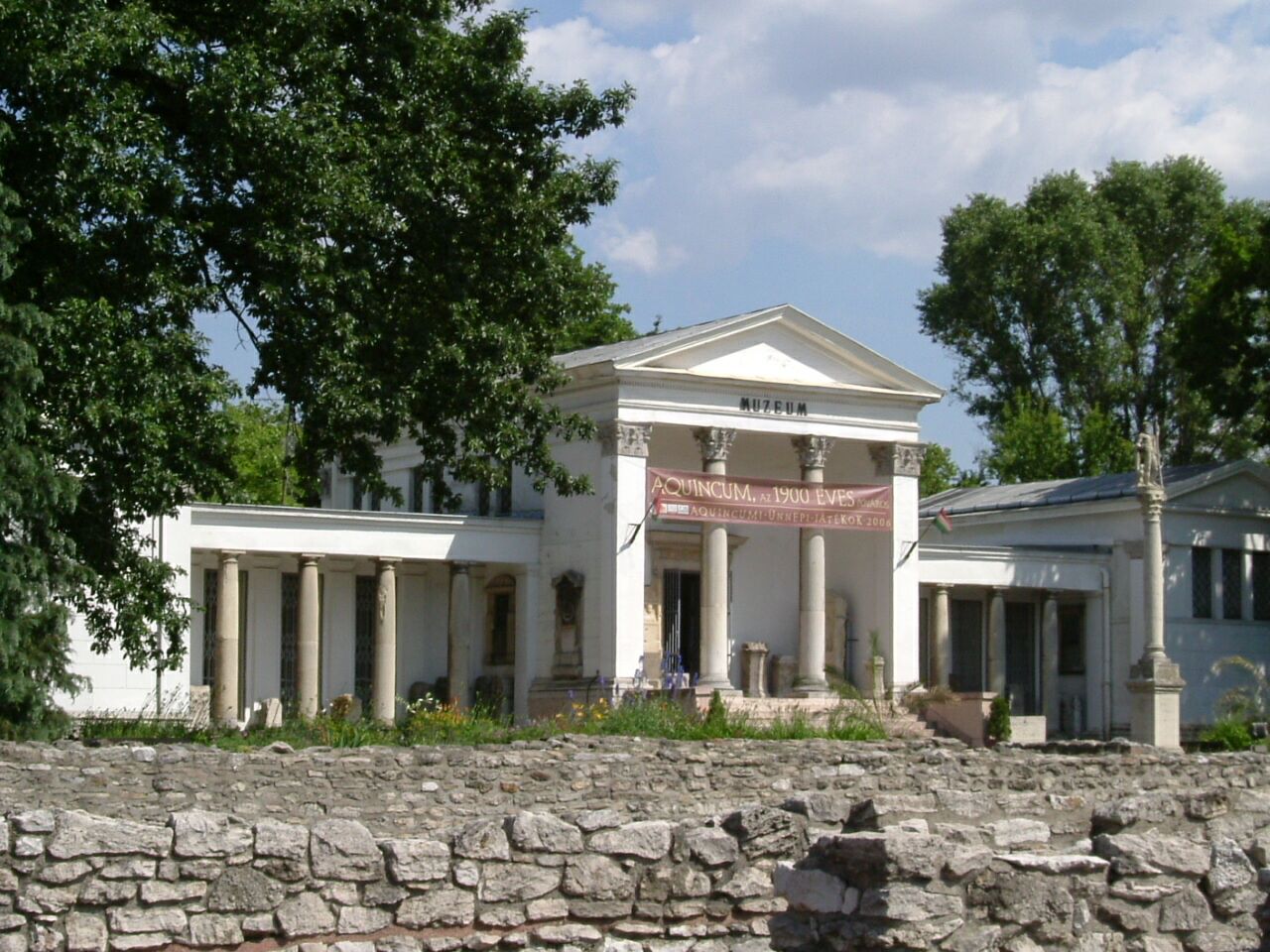
The Aquincum Museum is an archaeological site and museum located in Budapest, Hungary, preserving the remains of the ancient Roman city of Aquincum. Once the capital of the province of Pannonia Inferior, the site features extensive ruins including residential quarters, public baths, and a marketplace, providing a comprehensive view of urban life on the Roman Empire's Danubian frontier.
The museum complex houses a significant collection of artifacts recovered from the site, including intricate mosaics, stone carvings, and items from the local mithraeum. The outdoor archaeological park allows visitors to walk through the excavated street grid and foundations of the ancient city, while the indoor galleries display the daily tools, jewelry, and religious objects that define the Roman presence in the region.
Key Facts
- Materials
- Stone, Brick, Mortar, Ceramic
- Civilization
- Roman
- Accessibility
- Partially accessible; some uneven terrain in the outdoor park
- Date(s)
- 1st - 4th century CE
- Condition
- Excavated archaeological park and museum
- Original Function
- Provincial capital and military settlement
- Key Figures
- Emperor Hadrian, Emperor Septimius Severus
Establishment of the Frontier
1st century CEAquincum began as a Roman military camp (castrum) established to secure the Danube frontier. It gradually expanded into a civilian settlement, eventually gaining the status of a municipium under Emperor Hadrian.
Provincial Capital
2nd - 3rd century CEThe city reached its zenith as the capital of Pannonia Inferior. During this time, it featured advanced infrastructure, including public baths, an amphitheater, and a sophisticated water supply system.
Decline and Abandonment
4th - 5th century CEFollowing the economic and political instability of the late Roman Empire and increasing pressure from migrating tribes, the city's population dwindled, leading to its eventual abandonment.
Discovery and Preservation
19th century - presentSystematic excavations began in the late 19th century, revealing the well-preserved foundations of the city. The museum was established to protect these findings and currently serves as a primary center for Roman studies in Hungary.
Cultural Significance
Aquincum serves as the most important Roman archaeological site in Hungary, acting as a bridge between the classical Mediterranean world and the history of the Carpathian Basin. It is a vital site for understanding the integration of local populations into the Roman administrative and cultural framework.
For modern Budapest, the museum represents a foundational layer of the city's identity, illustrating the long-standing urban history of the region. It remains a key educational resource for the study of Roman provincial life and military logistics along the Limes Germanicus.
Interpretive Notes
Scholarly debates and areas of uncertainty
The exact extent of the civilian city versus the military camp remains a subject of ongoing archaeological survey. Additionally, the specific religious practices within the local mithraeum and their syncretism with local Pannonian cults continue to be analyzed through the recovered votive inscriptions.
Visiting Information
Entry Rules
Open Tuesday to Sunday. Tickets can be purchased at the entrance. The site is closed on Mondays. Visitors are encouraged to wear comfortable walking shoes for the outdoor park.
Best Times to Visit
Spring and autumn offer the most comfortable temperatures for exploring the outdoor ruins. Weekday mornings are generally quieter than weekends.
Photography
Personal photography is permitted. Tripods and commercial photography require prior authorization from the museum administration.
Preservation Notes
Do not climb on or sit on ancient stone ruins. Stay on designated paths to protect fragile archaeological layers. The site is subject to seasonal maintenance.
Nearby POIs
11 shownSources & Further Reading
- [1]Aquincum: The Roman City on the Danube — Klára Póczy. Budapest History Museum (2004)
- [2]The Roman Frontier in Central Europe — Zsolt Visy. Pécs University Press (2003)
Key Facts
- Materials
- Stone, Brick, Mortar, Ceramic
- Civilization
- Roman
- Accessibility
- Partially accessible; some uneven terrain in the outdoor park
- Date(s)
- 1st - 4th century CE
- Condition
- Excavated archaeological park and museum
- Original Function
- Provincial capital and military settlement
- Key Figures
- Emperor Hadrian, Emperor Septimius Severus