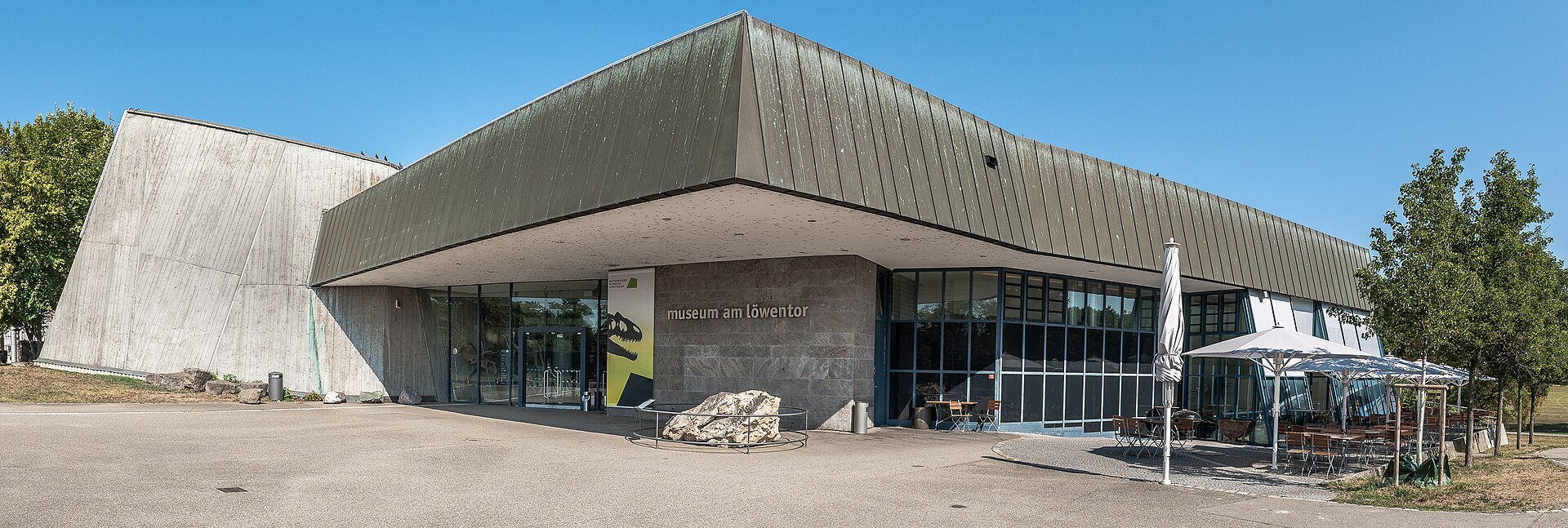
The State Museum of Natural History Stuttgart (Staatliches Museum für Naturkunde Stuttgart) is one of the most significant natural history institutions in Germany. Housed across two locations in the Rosenstein Park—the Museum am Löwentor and the Schloss Rosenstein—the institution manages a vast collection of over 11 million specimens. It serves as a major center for research in paleontology, biology, and geology.
The Museum am Löwentor is particularly renowned for its extensive collection of Triassic fossils from southwestern Germany, including world-class displays of marine reptiles and dinosaurs. Schloss Rosenstein, located in a historic 19th-century palace, focuses on modern biology, ecology, and the diversity of life, providing a comprehensive overview of natural history through interactive and systematic exhibits.
Key Facts
- Materials
- Concrete, Glass, Steel
- Civilization
- German
- Accessibility
- Fully wheelchair accessible
- Date(s)
- 1985 (Museum am Löwentor)
- Condition
- Active, well-maintained
- Original Function
- Natural history research and public exhibition
- Key Figures
- Georg Friedrich von Jäger, Eberhard Fraas
Founding and Early Collections
1791The museum's origins trace back to the natural history cabinet of the Dukes of Württemberg, established in 1791. These early collections formed the nucleus of what would become a state-wide scientific institution.
Expansion and Relocation
19th-20th centuryThroughout the 19th and early 20th centuries, the collection grew significantly through systematic regional research. Following the destruction of previous facilities during World War II, the museum underwent a major reorganization.
Modern Era
1985-PresentThe opening of the Museum am Löwentor in 1985 provided a dedicated space for the museum's massive paleontological holdings. Today, the institution continues to integrate public education with ongoing taxonomic and evolutionary research.
Cultural Significance
The museum plays a vital role in the scientific and cultural life of Baden-Württemberg. By preserving the geological and biological heritage of the region, it provides a unique window into the evolutionary history of Central Europe. It is a key educational resource for schools and universities, fostering public engagement with environmental science and evolutionary theory.
Interpretive Notes
Scholarly debates and areas of uncertainty
Ongoing research debates focus on the taxonomic classification of specific Triassic vertebrate fossils found in the Muschelkalk and Keuper formations. Additionally, the institution participates in broader discussions regarding the digitization of natural history collections and the ethics of historical specimen acquisition.
Visiting Information
Entry Rules
Open Tuesday through Sunday. Tickets can be purchased on-site or via the official website. Concessions are available for students and groups.
Best Times to Visit
Weekday mornings are generally quieter. The museum is a popular destination for families on weekends and during school holidays.
Photography
Non-commercial photography is permitted without flash or tripods. Professional photography requires prior authorization.
Preservation Notes
Please refrain from touching display cases or specimens. Flash photography is prohibited to protect light-sensitive materials.
Nearby POIs
11 shownKey Facts
- Materials
- Concrete, Glass, Steel
- Civilization
- German
- Accessibility
- Fully wheelchair accessible
- Date(s)
- 1985 (Museum am Löwentor)
- Condition
- Active, well-maintained
- Original Function
- Natural history research and public exhibition
- Key Figures
- Georg Friedrich von Jäger, Eberhard Fraas