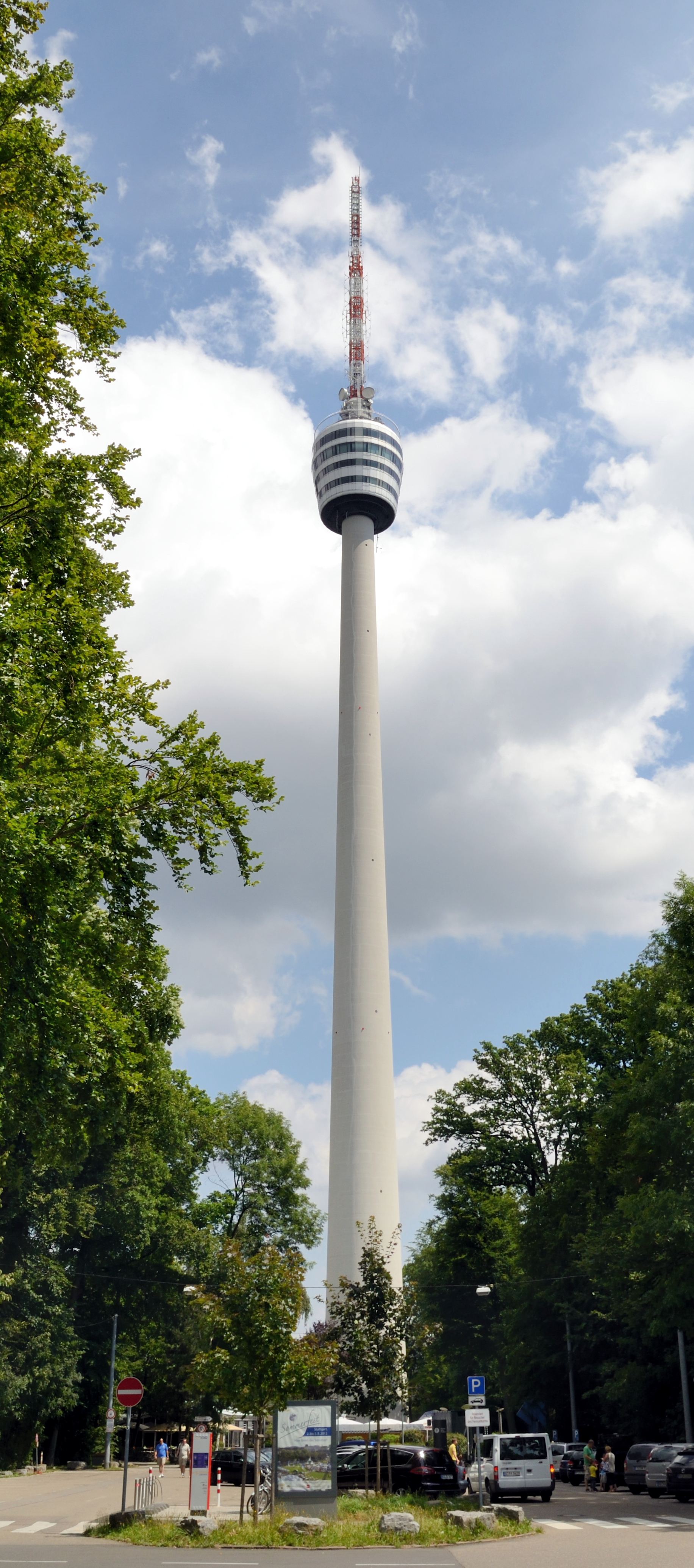
The Fernsehturm Stuttgart, completed in 1956, stands as the world's first reinforced concrete telecommunications tower. Designed by engineer Fritz Leonhardt, it pioneered a new architectural typology for broadcasting infrastructure, replacing the traditional steel lattice masts of the era with a slender, aesthetic concrete shaft.
Rising to a height of 217 meters, the tower serves both as a functional transmission hub and a public observation platform. Its innovative design, which balances structural stability with a minimalist profile, established the blueprint for countless television towers constructed globally throughout the 20th century.
Key Facts
- Materials
- Reinforced concrete, Steel, Glass
- Civilization
- Modern Germany
- Accessibility
- Elevator access to observation deck
- Date(s)
- 1954-1956
- Condition
- Active, well-maintained
- Original Function
- Telecommunications and observation
- Key Figures
- Fritz Leonhardt
Conception and Design
1950sFritz Leonhardt proposed the concrete design to the Süddeutscher Rundfunk as a more durable and visually appealing alternative to steel masts. The project faced initial skepticism regarding its stability but was eventually approved due to its efficient use of space and height.
Construction
1954-1956Construction began in January 1954. The tower was built using a climbing formwork system, a technique that allowed for the rapid and precise pouring of the concrete shaft. It was completed in just 20 months.
Global Influence
Late 20th CenturyFollowing its inauguration, the tower became an immediate architectural icon. Its success led to the 'Stuttgart type' of tower being replicated in cities across the world, cementing its status as the prototype for modern telecommunications architecture.
Cultural Significance
The Fernsehturm Stuttgart is a symbol of post-war German engineering prowess and the rapid modernization of the country. It transformed the skyline of Stuttgart and remains a beloved landmark that represents the intersection of industrial utility and public recreation.
Interpretive Notes
Scholarly debates and areas of uncertainty
Discussions often center on the tower's role in the evolution of structural expressionism, specifically whether its aesthetic form was a secondary consideration to its engineering efficiency or a deliberate attempt to create a new urban monument.
Visiting Information
Entry Rules
Open daily. Tickets are required for the observation deck. Visitors are subject to security checks upon entry.
Best Times to Visit
Clear days offer visibility as far as the Swabian Jura and the Black Forest. Weekdays are generally less crowded than weekends.
Photography
Personal photography is permitted. Commercial photography requires prior authorization from the tower management.
Preservation Notes
The tower is a protected historical monument. Ongoing maintenance focuses on the integrity of the concrete shaft and the modernization of telecommunications equipment.
Nearby POIs
11 shownSources & Further Reading
- [1]Fritz Leonhardt: Ingenieurbaukunst — Fritz Leonhardt. Deutsche Verlags-Anstalt (1984)
- [2]The Stuttgart TV Tower: A Pioneer of Modern Engineering — Süddeutscher Rundfunk Archive. Stuttgart City Records (2016)
Key Facts
- Materials
- Reinforced concrete, Steel, Glass
- Civilization
- Modern Germany
- Accessibility
- Elevator access to observation deck
- Date(s)
- 1954-1956
- Condition
- Active, well-maintained
- Original Function
- Telecommunications and observation
- Key Figures
- Fritz Leonhardt