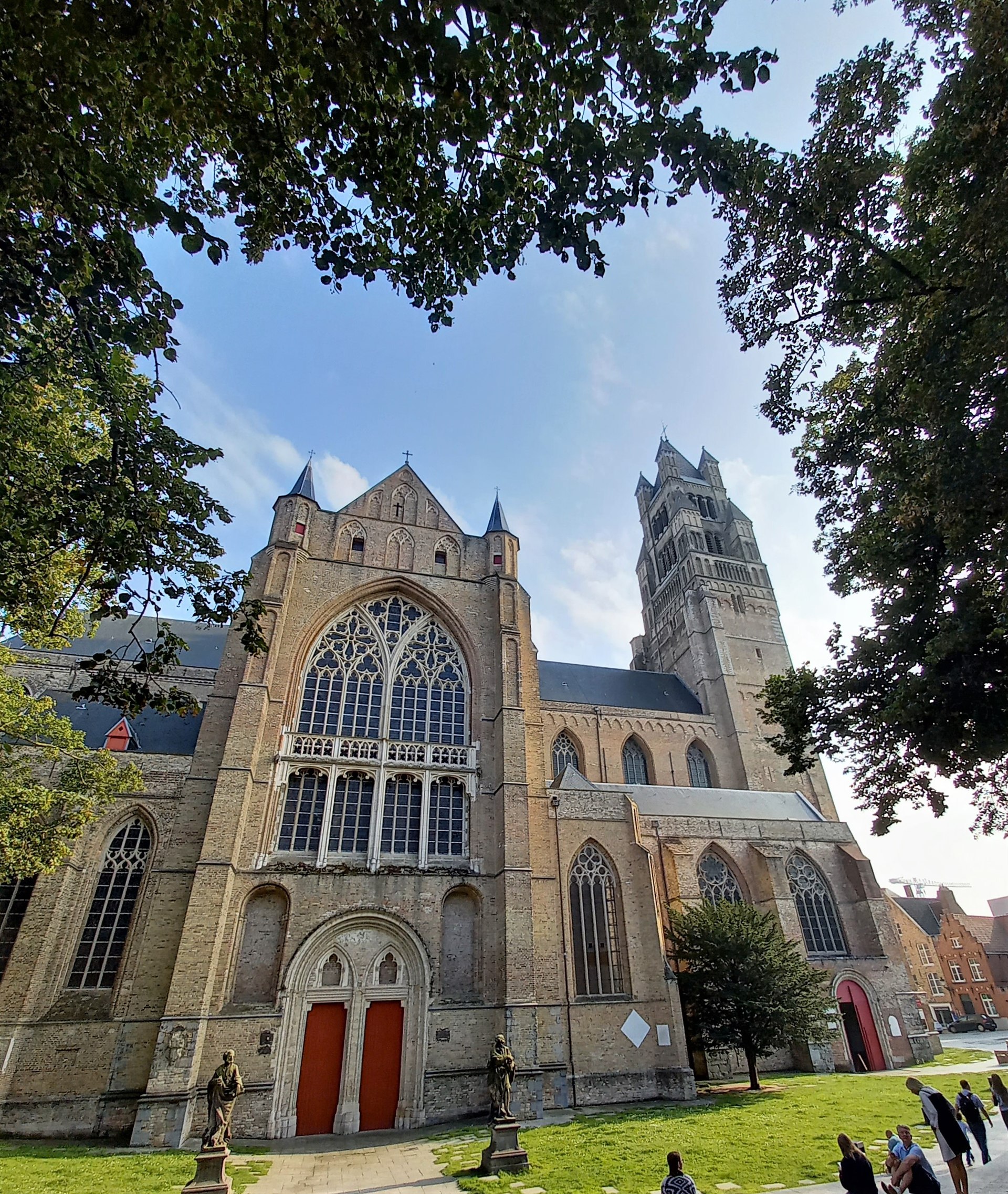
St. Salvator's Cathedral serves as the oldest parish church in Bruges and has functioned as the city's cathedral since 1834. The structure is primarily characterized by its imposing West Tower, which features a robust Romanesque base dating to the 12th century, topped by later Gothic additions. The interior reflects centuries of ecclesiastical history, housing a significant collection of Flemish art and historical artifacts.
The cathedral is renowned for its rich interior decoration, including 17th-century Brussels tapestries and 14th-century choir stalls. These stalls are particularly notable for displaying the heraldic coats of arms of the Knights of the Golden Fleece, reflecting the site's historical connection to the Burgundian court.
Key Facts
- Materials
- Brick, Sandstone
- Civilization
- Flemish
- Accessibility
- Ground level accessible
- Date(s)
- 12th - 19th century
- Condition
- Active cathedral
- Original Function
- Parish Church
- Key Figures
- Knights of the Golden Fleece
Origins and Romanesque Foundations
12th centuryThe earliest parts of the structure, specifically the lower sections of the western tower, date back to the 12th century. Originally built as a parish church, it served the growing population of medieval Bruges.
Gothic Expansion
13th - 15th centuryThe church underwent significant expansion in the Gothic style during the 13th century. This period saw the construction of the choir and the nave, establishing the cathedral's current architectural footprint.
Burgundian Influence
15th centuryThe cathedral became closely linked to the Burgundian dukes. The installation of the choir stalls, featuring the coats of arms of the Knights of the Golden Fleece, solidified the church's status as a site of high political and religious importance.
Elevation to Cathedral
19th centuryFollowing the destruction of the original St. Donatian's Cathedral during the French Revolution, St. Salvator's was elevated to the status of a cathedral in 1834. The tower was subsequently completed with a Neo-Gothic spire.
Cultural Significance
St. Salvator's Cathedral is a cornerstone of Bruges' religious and cultural heritage. It serves as a repository for the city's artistic history, bridging the gap between the medieval period and the modern era. The presence of the Golden Fleece heraldry highlights the city's former role as a center of European power and chivalric tradition.
As a UNESCO World Heritage site, the cathedral is integral to the preservation of the historic center of Bruges. It continues to function as a place of worship while serving as a major site for the study of Flemish ecclesiastical art and architecture.
Interpretive Notes
Scholarly debates and areas of uncertainty
There is ongoing academic discussion regarding the exact sequence of the Romanesque tower's construction and the extent to which the 19th-century Neo-Gothic modifications altered the original medieval aesthetic intent of the structure.
Visiting Information
Entry Rules
Open daily to the public. Entry is free, though donations are encouraged. Visitors are requested to maintain silence and respect ongoing religious services. Modest attire is expected.
Best Times to Visit
Weekday mornings are generally quieter. Avoid visiting during Sunday mass times to ensure full access to the interior.
Photography
Photography is permitted for personal use without flash. Tripods and professional equipment require prior authorization.
Preservation Notes
The cathedral is subject to ongoing conservation efforts to protect its 17th-century tapestries and medieval woodwork. Please refrain from touching any artifacts or historical surfaces.
Nearby POIs
10 shownSources & Further Reading
- [1]The Cathedral of St. Salvator in Bruges — Ludo Vandamme. Bruges City Archives (2015)
- [2]Gothic Architecture in the Low Countries — Paul Vandenbroeck. Flemish Heritage Institute (2018)
Key Facts
- Materials
- Brick, Sandstone
- Civilization
- Flemish
- Accessibility
- Ground level accessible
- Date(s)
- 12th - 19th century
- Condition
- Active cathedral
- Original Function
- Parish Church
- Key Figures
- Knights of the Golden Fleece