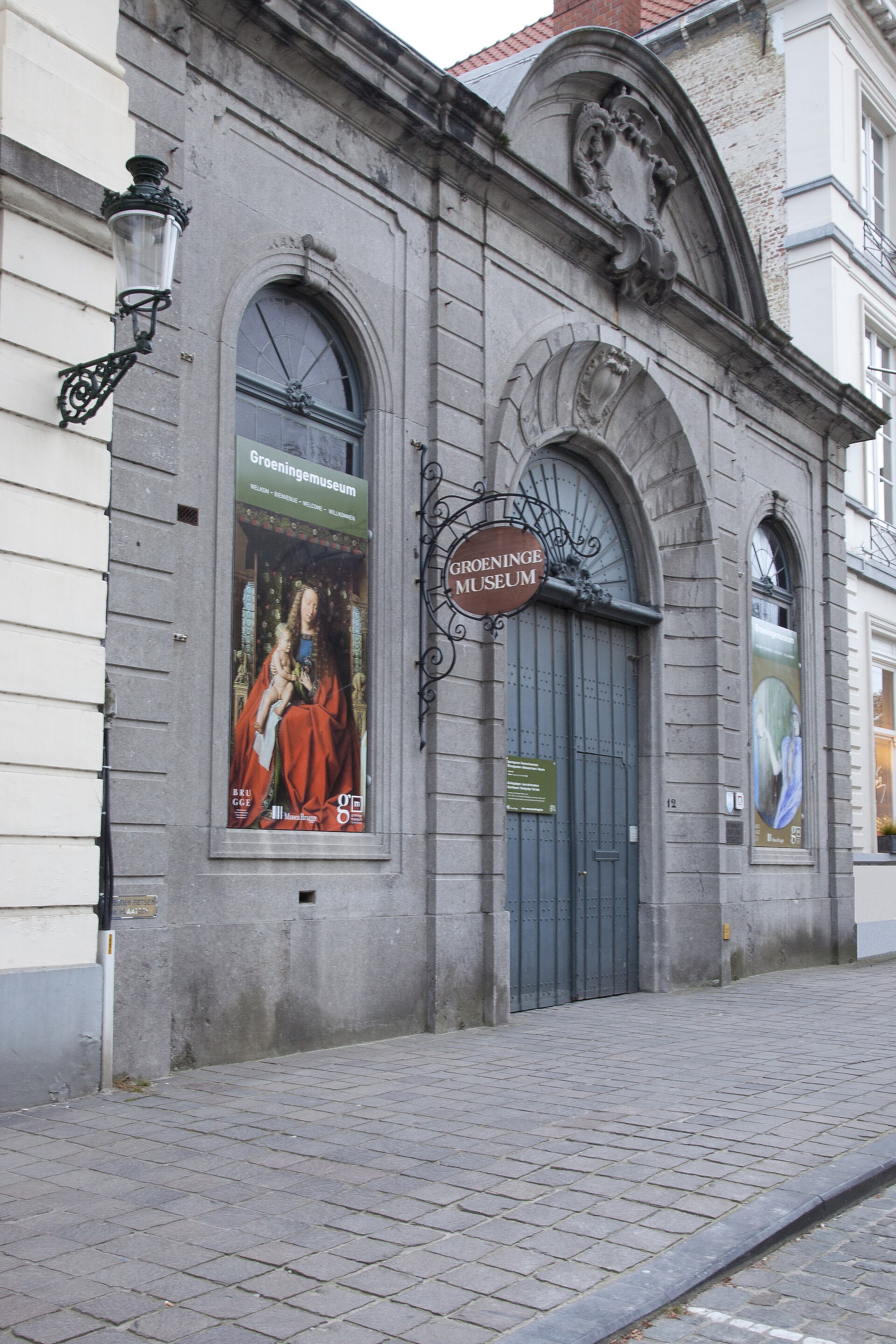
The Groeningemuseum is a municipal fine arts museum located in Bruges, Belgium, housing an extensive collection of Flemish and Belgian paintings spanning six centuries. It is internationally recognized for its collection of Flemish Primitives, which includes seminal works by masters such as Jan van Eyck, Hans Memling, and Hugo van der Goes.
Beyond its medieval holdings, the museum features a diverse range of artistic movements, including 18th-century neoclassicism, 19th-century romanticism, and 20th-century Flemish expressionism. The museum serves as a primary repository for the artistic heritage of the region, documenting the evolution of painting from the late Middle Ages to the modern era.
Key Facts
- Materials
- Brick, Concrete, Glass
- Civilization
- Belgian
- Accessibility
- Fully wheelchair accessible
- Date(s)
- 1930
- Condition
- Active
- Original Function
- Art Museum
- Key Figures
- Jan van Eyck, Hans Memling, Gerard David
Establishment
1930The museum was established in 1930 to house the municipal collection of fine arts, which had previously been dispersed across various locations in Bruges.
Collection Development
20th CenturyThroughout the 20th century, the museum expanded its holdings significantly, integrating major works of Flemish Primitives and acquiring important pieces of modern Belgian art, particularly from the expressionist movement.
Modern Status
21st CenturyToday, the museum functions as a central cultural institution in Bruges, undergoing periodic renovations to improve climate control and display standards for its fragile medieval panel paintings.
Cultural Significance
The Groeningemuseum is central to the identity of Bruges as a historical hub of European art. Its collection of Flemish Primitives is essential for understanding the development of oil painting techniques and the religious iconography of the 15th-century Low Countries. The museum plays a vital role in local education and international art historical research.
Interpretive Notes
Scholarly debates and areas of uncertainty
Debates often center on the attribution of specific anonymous works within the Flemish Primitive collection and the ongoing conservation challenges associated with preserving 15th-century wooden panel paintings in a humid climate.
Visiting Information
Entry Rules
Open Tuesday to Sunday. Tickets can be purchased online or at the museum entrance. Bags larger than A4 size must be stored in lockers.
Best Times to Visit
Weekday mornings are generally quieter. The museum is busiest during the summer tourist season and holiday weekends.
Photography
Non-commercial photography is permitted without flash or tripods. Video recording is prohibited.
Preservation Notes
Maintain distance from artworks. Do not touch surfaces. The museum maintains strict climate control; please follow staff instructions regarding proximity to displays.
Nearby POIs
10 shownSources & Further Reading
- [1]The Flemish Primitives: Catalogue of the Groeningemuseum — Till-Holger Borchert. Ludion (2005)
- [2]Bruges and the Renaissance — Maximiliaan P.J. Martens. Ludion (1998)
Key Facts
- Materials
- Brick, Concrete, Glass
- Civilization
- Belgian
- Accessibility
- Fully wheelchair accessible
- Date(s)
- 1930
- Condition
- Active
- Original Function
- Art Museum
- Key Figures
- Jan van Eyck, Hans Memling, Gerard David