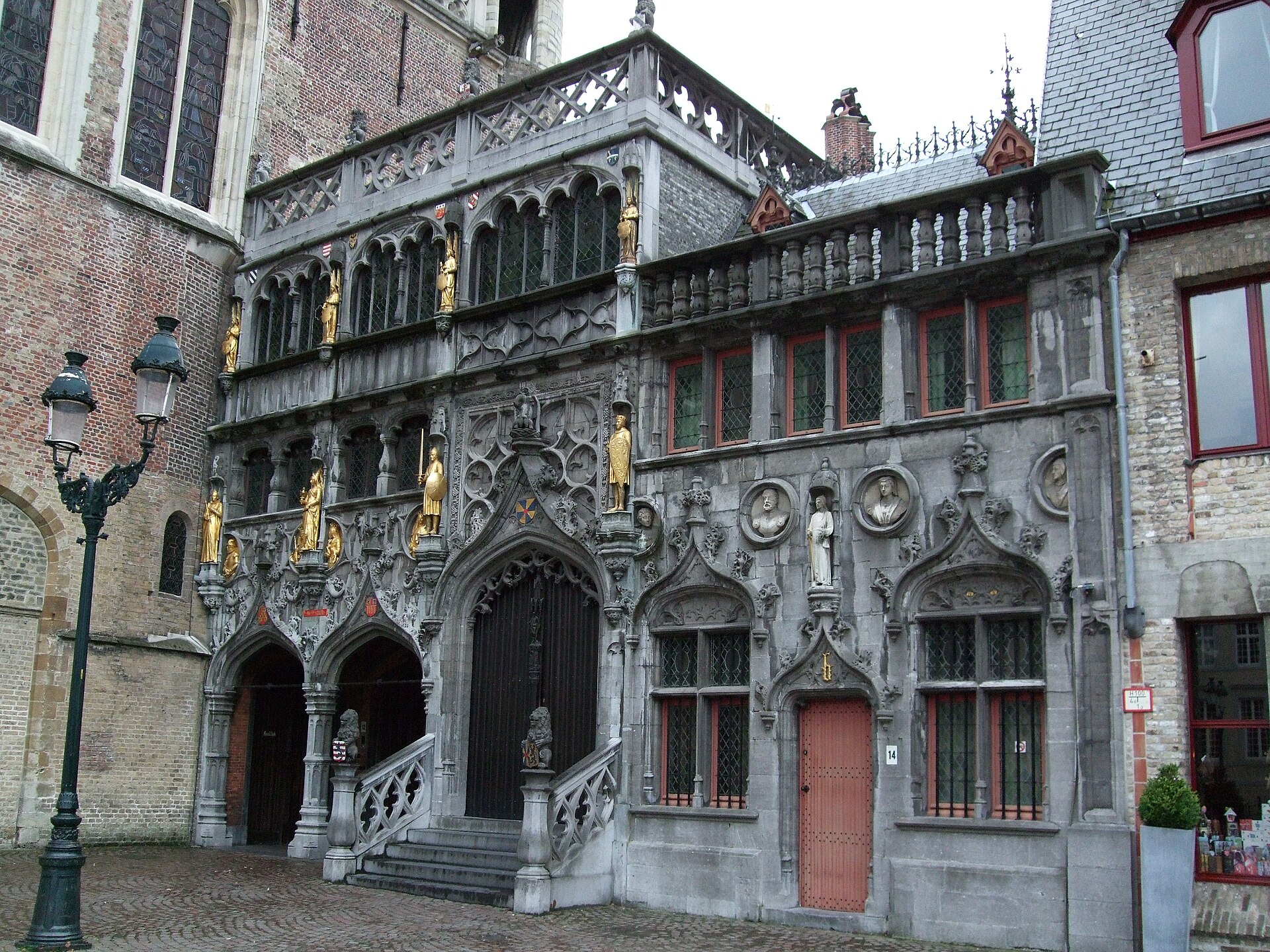
The Basilica of the Holy Blood is a double-chapel located in the Burg square of Bruges, Belgium. The structure consists of the Romanesque Chapel of St. Basil on the lower level, dating to the 12th century, and the upper Chapel of the Holy Blood, which was rebuilt in the Gothic style during the 15th and 16th centuries.
The basilica is primarily known for housing a venerated relic, a crystal phial said to contain the blood of Jesus Christ. The relic has been documented in Bruges since 1150 and serves as the focal point for the annual Procession of the Holy Blood, a significant religious and cultural event in the city.
Key Facts
- Materials
- Stone, Brick, Stained glass
- Civilization
- Flemish
- Accessibility
- Lower chapel is accessible; upper chapel requires climbing stairs
- Date(s)
- 1134-1157 (Lower Chapel); 15th-16th century (Upper Chapel)
- Condition
- Well-preserved, active religious site
- Original Function
- Private chapel for the Count of Flanders
- Key Figures
- Thierry of Alsace, Diederik van de Elzas
Origins and Foundation
12th centuryThe lower chapel, dedicated to St. Basil, was constructed between 1134 and 1157 as a private chapel for the Count of Flanders, Thierry of Alsace. It was built to house the relic of the Holy Blood, which the Count reportedly brought back from the Second Crusade.
Gothic Expansion
15th-16th centuryThe upper chapel was significantly renovated and expanded in the Gothic style during the 15th and 16th centuries to accommodate the growing number of pilgrims and the increasing importance of the relic in local religious life.
French Revolution and Restoration
18th-19th centuryDuring the French Revolution, the basilica was damaged and the relic was hidden for safety. In the 19th century, the building underwent extensive neo-Gothic restoration to repair damage and restore its medieval aesthetic.
Cultural Significance
The basilica is central to the identity of Bruges, primarily through the Procession of the Holy Blood. This annual event, which dates back to the 13th century, involves the transport of the relic through the city streets and is recognized by UNESCO as an Intangible Cultural Heritage of Humanity. The site represents the intersection of medieval piety and the civic pride of the Flemish merchant class.
Interpretive Notes
Scholarly debates and areas of uncertainty
The provenance of the relic remains a subject of historical discussion. While the tradition maintains it was brought from the Holy Land by the Count of Flanders, some scholars suggest the relic's history may be more closely tied to the aftermath of the Fourth Crusade and the sack of Constantinople in 1204.
Visiting Information
Entry Rules
Open daily to the public. Entry to the basilica is free, though there is a small fee to visit the treasury museum. Visitors are expected to maintain silence and dress modestly.
Best Times to Visit
Early morning or late afternoon to avoid peak tourist crowds. The site is most significant during the annual Procession of the Holy Blood held on Ascension Day.
Photography
Photography is permitted in the lower chapel, but strictly prohibited in the upper chapel where the relic is displayed.
Preservation Notes
The basilica is a protected monument. Visitors should refrain from touching the historic stonework and respect the ongoing religious functions of the space.
Nearby POIs
10 shownSources & Further Reading
- [1]
- [2]Bruges: The History of a Medieval City — Andrew Brown and Jan Dumolyn. Cambridge University Press (2005)
Key Facts
- Materials
- Stone, Brick, Stained glass
- Civilization
- Flemish
- Accessibility
- Lower chapel is accessible; upper chapel requires climbing stairs
- Date(s)
- 1134-1157 (Lower Chapel); 15th-16th century (Upper Chapel)
- Condition
- Well-preserved, active religious site
- Original Function
- Private chapel for the Count of Flanders
- Key Figures
- Thierry of Alsace, Diederik van de Elzas