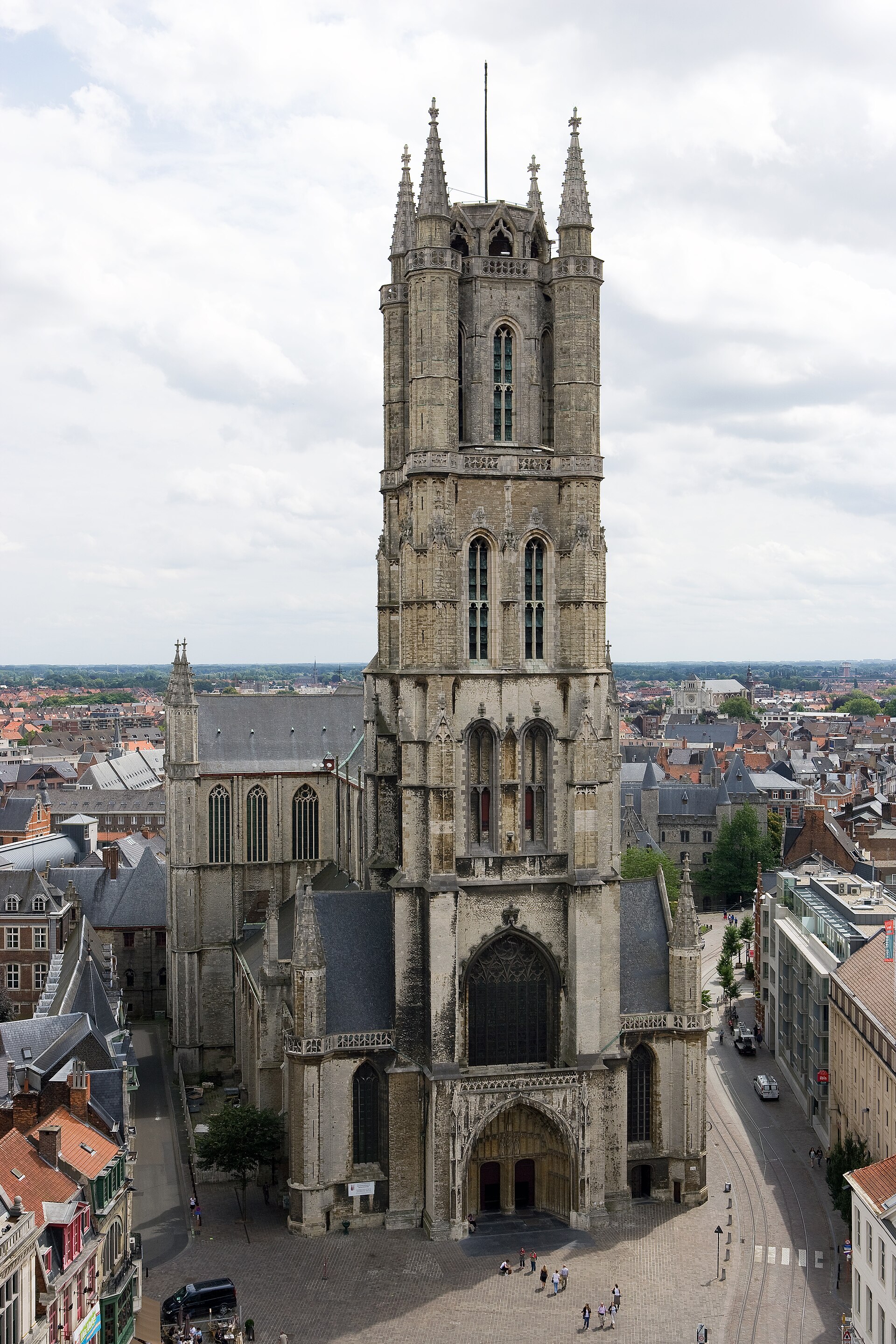
Saint Bavo's Cathedral, located in the heart of Ghent, Belgium, is a prominent example of Gothic architecture. The current structure, which replaced the earlier Romanesque Chapel of Saint John the Baptist, was built in stages between the 14th and 16th centuries. Its tower, rising 89 meters, serves as a defining feature of the city's skyline.
The cathedral is internationally renowned for housing the 'Adoration of the Mystic Lamb,' a complex multi-panel altarpiece painted by Hubert and Jan van Eyck in 1432. This masterpiece is widely regarded as one of the most influential works in the history of Western art, marking a pivotal transition in the Northern Renaissance.
Key Facts
- Materials
- Brick, Tournai limestone, Sandstone
- Civilization
- Flemish
- Accessibility
- Wheelchair accessible
- Date(s)
- 1300 - 1569 CE
- Condition
- Well-preserved, active place of worship
- Original Function
- Cathedral
- Key Figures
- Jan van Eyck, Hubert van Eyck, Charles V
Origins and Romanesque Roots
942 - 12th CenturyThe site originally housed the Chapel of Saint John the Baptist, consecrated in 942. By the 12th century, this was replaced by a Romanesque church, of which the crypt remains the only surviving portion today.
Gothic Expansion
14th - 16th CenturyConstruction of the current Gothic cathedral began in the 14th century. The choir was completed in 1462, and the tower was finished in 1569. The building evolved through various phases, incorporating the choir, ambulatory, and radiating chapels.
The Van Eyck Masterpiece
1432The Ghent Altarpiece, or 'Adoration of the Mystic Lamb,' was commissioned for the cathedral's Vijd Chapel. Its completion in 1432 revolutionized oil painting techniques and remains the cathedral's most significant cultural asset.
Modern Preservation
20th Century - PresentThe cathedral has undergone extensive restoration, particularly concerning the altarpiece, which was meticulously cleaned and restored between 2012 and 2020 to reveal the original brilliance of the Van Eyck brothers' work.
Cultural Significance
Saint Bavo's Cathedral is the spiritual and cultural anchor of Ghent. It represents the wealth and artistic ambition of the medieval Flemish merchant class, who funded the construction and commissioned world-class art to adorn the interior.
The presence of the 'Adoration of the Mystic Lamb' makes the cathedral a site of global pilgrimage for art historians and tourists alike. The work is deeply embedded in Flemish identity, symbolizing the technical mastery and humanistic shift of the Northern Renaissance.
Interpretive Notes
Scholarly debates and areas of uncertainty
The exact division of labor between Hubert and Jan van Eyck on the Ghent Altarpiece remains a subject of intense academic debate. While the inscription suggests Hubert began the work and Jan finished it, the extent of Hubert's contribution is difficult to isolate due to the lack of other documented works by his hand.
Visiting Information
Entry Rules
Open daily to the public. Entry to the cathedral is free, but there is a fee to view the 'Adoration of the Mystic Lamb' in the dedicated visitor center. Modest dress is requested as it is an active place of worship.
Best Times to Visit
Weekday mornings are generally quieter for visitors. The cathedral is busiest during summer months and weekends.
Photography
Photography is permitted in the cathedral without flash. Photography of the 'Adoration of the Mystic Lamb' is strictly prohibited within the viewing area.
Preservation Notes
Maintain silence within the cathedral. Do not touch the artworks or historical stonework. Follow all signage regarding the viewing of the altarpiece.
Nearby POIs
11 shownSources & Further Reading
- [1]The Ghent Altarpiece: The Truth is Revealed — Bart Fransen. Hannibal Books (2020)
- [2]Van Eyck: An Early Netherlandish Master — Till-Holger Borchert. Taschen (2020)
Key Facts
- Materials
- Brick, Tournai limestone, Sandstone
- Civilization
- Flemish
- Accessibility
- Wheelchair accessible
- Date(s)
- 1300 - 1569 CE
- Condition
- Well-preserved, active place of worship
- Original Function
- Cathedral
- Key Figures
- Jan van Eyck, Hubert van Eyck, Charles V