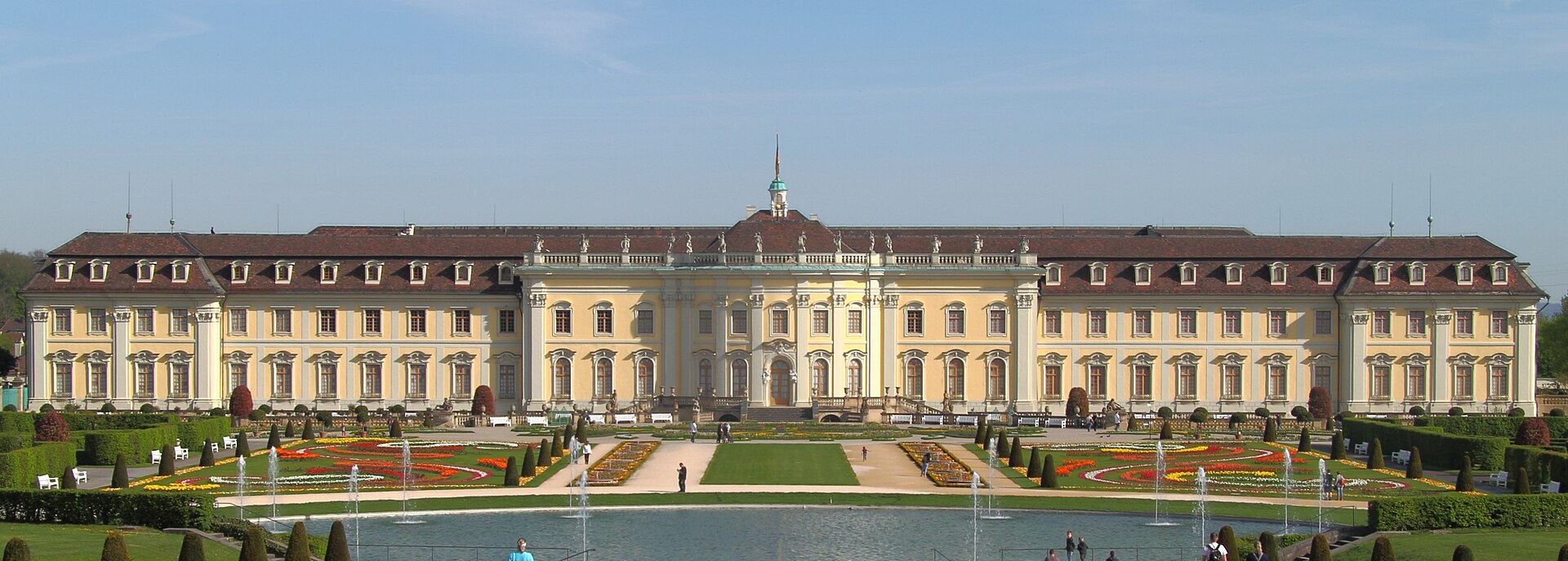
Ludwigsburg Palace, often referred to as the 'Versailles of Swabia,' is one of the largest remaining Baroque palaces in Europe. Commissioned by Duke Eberhard Ludwig of Württemberg in 1704, the complex was designed to serve as a grand residence and a symbol of the Duchy's rising political power. The estate encompasses 452 rooms spread across 18 buildings, arranged around a massive central courtyard.
The interior reflects a transition of styles, moving from the heavy ornamentation of the Baroque period to the lighter, more decorative Rococo and later Neoclassical Empire styles. The palace grounds include extensive gardens, known as 'Blooming Baroque,' which feature a unique blend of formal French-style landscaping and later botanical additions, making it a significant example of 18th-century courtly architecture.
Key Facts
- Materials
- Sandstone, Stucco, Marble, Gold leaf
- Civilization
- Duchy of Württemberg
- Accessibility
- Partially accessible; some areas require stairs
- Date(s)
- 1704-1733
- Condition
- Well-preserved, museum and public venue
- Original Function
- Residential palace and seat of government
- Key Figures
- Duke Eberhard Ludwig, Carl Eugen, Duke of Württemberg, Donato Giuseppe Frisoni
Founding and Early Construction
1704-1718Duke Eberhard Ludwig laid the foundation stone in 1704. Initially intended as a modest hunting lodge, the project expanded significantly as the Duke sought to establish a residence that could rival the major courts of Europe. Architect Donato Giuseppe Frisoni was instrumental in the early design phases.
Expansion and Court Life
1730-1793Under Duke Carl Eugen, the palace became the center of a vibrant and extravagant court life. The interior was extensively remodeled to incorporate the latest Rococo fashions, and the palace became a hub for theater, opera, and lavish social events.
Modern Era and Preservation
19th century - presentFollowing the dissolution of the monarchy, the palace transitioned into a state-owned museum. Extensive restoration efforts in the 20th century focused on preserving the original stucco work and period furnishings, ensuring the site remains a primary destination for architectural history.
Cultural Significance
Ludwigsburg Palace serves as a primary monument to the absolutist ambitions of the Württemberg dynasty. It represents the height of Baroque court culture in Southern Germany and remains a focal point for regional identity and historical tourism in Baden-Württemberg.
The palace is also culturally significant for its role in the development of European theater and music, having hosted numerous performances and festivals throughout its history. Today, it continues to function as a venue for cultural events, maintaining its historical relevance beyond its role as a museum.
Interpretive Notes
Scholarly debates and areas of uncertainty
There is ongoing academic discussion regarding the extent to which the palace's design was influenced by the Palace of Versailles. While the 'Versailles of Swabia' moniker is popular, scholars debate the degree of direct architectural imitation versus the adaptation of local Swabian building traditions.
Visiting Information
Entry Rules
Open daily for guided tours. Tickets are required for interior access. Visitors must follow designated paths and are prohibited from touching historical furnishings or wall coverings.
Best Times to Visit
Spring and summer are ideal for visiting the 'Blooming Baroque' gardens. Weekdays offer significantly smaller crowds for interior palace tours compared to weekends.
Photography
Non-commercial photography is permitted in most areas without flash or tripods. Professional photography requires prior authorization from the palace administration.
Preservation Notes
The palace is a protected historical monument. Visitors are requested to refrain from using large bags or backpacks inside the staterooms to prevent accidental damage to the historic interiors.
Nearby POIs
11 shownSources & Further Reading
- [1]Ludwigsburg Palace: The Versailles of Swabia — Staatliche Schlösser und Gärten Baden-Württemberg. Official State Heritage Publication (2021)View
- [2]Baroque Architecture in Southern Germany — Norbert Lieb. Prestel Publishing (1995)
Key Facts
- Materials
- Sandstone, Stucco, Marble, Gold leaf
- Civilization
- Duchy of Württemberg
- Accessibility
- Partially accessible; some areas require stairs
- Date(s)
- 1704-1733
- Condition
- Well-preserved, museum and public venue
- Original Function
- Residential palace and seat of government
- Key Figures
- Duke Eberhard Ludwig, Carl Eugen, Duke of Württemberg, Donato Giuseppe Frisoni