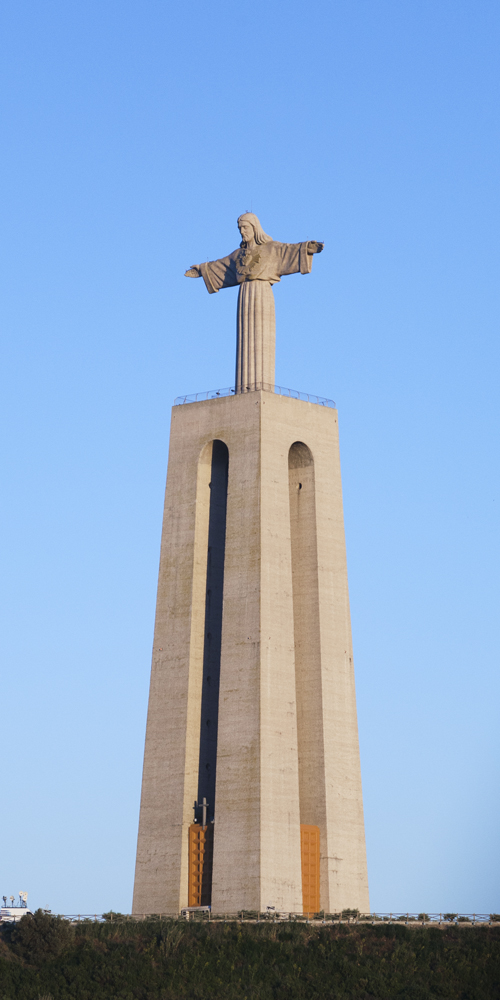
The Santuario de Cristo Rei is a monumental statue and shrine located in Almada, overlooking the city of Lisbon and the Tagus River. Inspired by the Christ the Redeemer statue in Rio de Janeiro, the monument was inaugurated in 1959. It consists of a massive pedestal topped by a 28-meter tall statue of Christ with arms outstretched, facing the capital.
The project was conceived as a votive offering to express gratitude for Portugal being spared the direct destruction of World War II. The site serves as both a religious pilgrimage destination and a prominent viewpoint, offering panoramic vistas of the 25 de Abril Bridge and the surrounding metropolitan area.
Key Facts
- Materials
- Reinforced concrete, Stone
- Civilization
- Portuguese
- Accessibility
- Elevator access to the observation deck
- Date(s)
- 1949-1959
- Condition
- Well-preserved and active
- Original Function
- Votive monument and religious shrine
- Key Figures
- Cardinal Manuel Gonçalves Cerejeira, António Lino
Conception and Vow
1934-1940The idea for the monument originated during a visit by the Cardinal Patriarch of Lisbon to Rio de Janeiro in 1934. Following the outbreak of World War II, the Portuguese episcopate made a formal vow to build the monument if Portugal remained neutral and avoided the direct devastation of the conflict.
Construction
1949-1959Construction began in 1949 under the direction of architect António Lino. The pedestal was designed to be 82 meters high, supporting the 28-meter statue of Christ. The monument was officially inaugurated on May 17, 1959, in the presence of the Portuguese leadership and thousands of pilgrims.
Modern Era
1999-PresentIn 1999, the sanctuary underwent significant renovations to modernize its facilities and improve visitor access. Today, it remains one of the most visited religious and tourist sites in the Lisbon region, functioning as a center for prayer and a landmark of the Almada skyline.
Cultural Significance
The monument is a symbol of national gratitude and religious devotion in 20th-century Portugal. It represents the intersection of the Estado Novo regime's religious policies and the collective relief of a nation that avoided the horrors of the Second World War. It remains a focal point for Catholic pilgrimage and a defining feature of the Lisbon landscape.
Interpretive Notes
Scholarly debates and areas of uncertainty
Debates often center on the monument's architectural relationship to the Christ the Redeemer statue in Brazil and its role as a political instrument of the Salazar regime, with some scholars analyzing how the monument was used to reinforce the 'spiritual' identity of the Portuguese state during the mid-20th century.
Visiting Information
Entry Rules
Open daily. Access to the sanctuary grounds is free, while a ticket is required to ascend the elevator to the observation deck. Modest dress is requested as it is a place of worship.
Best Times to Visit
Late afternoon for sunset views over the Tagus River and the 25 de Abril Bridge. Weekdays are generally less crowded than weekends.
Photography
Personal photography is permitted. Commercial photography requires prior authorization from the sanctuary administration.
Preservation Notes
The site is well-maintained. Visitors are asked to respect the silence of the sanctuary areas and follow posted safety guidelines regarding the observation deck.
Nearby POIs
11 shownSources & Further Reading
- [1]Santuário de Cristo Rei: História e Significado — Diocese de Setúbal. Santuário de Cristo Rei Official Archives (2020)View
- [2]The Estado Novo and the Construction of National Identity — António Costa Pinto. Cambridge University Press (2000)
Key Facts
- Materials
- Reinforced concrete, Stone
- Civilization
- Portuguese
- Accessibility
- Elevator access to the observation deck
- Date(s)
- 1949-1959
- Condition
- Well-preserved and active
- Original Function
- Votive monument and religious shrine
- Key Figures
- Cardinal Manuel Gonçalves Cerejeira, António Lino