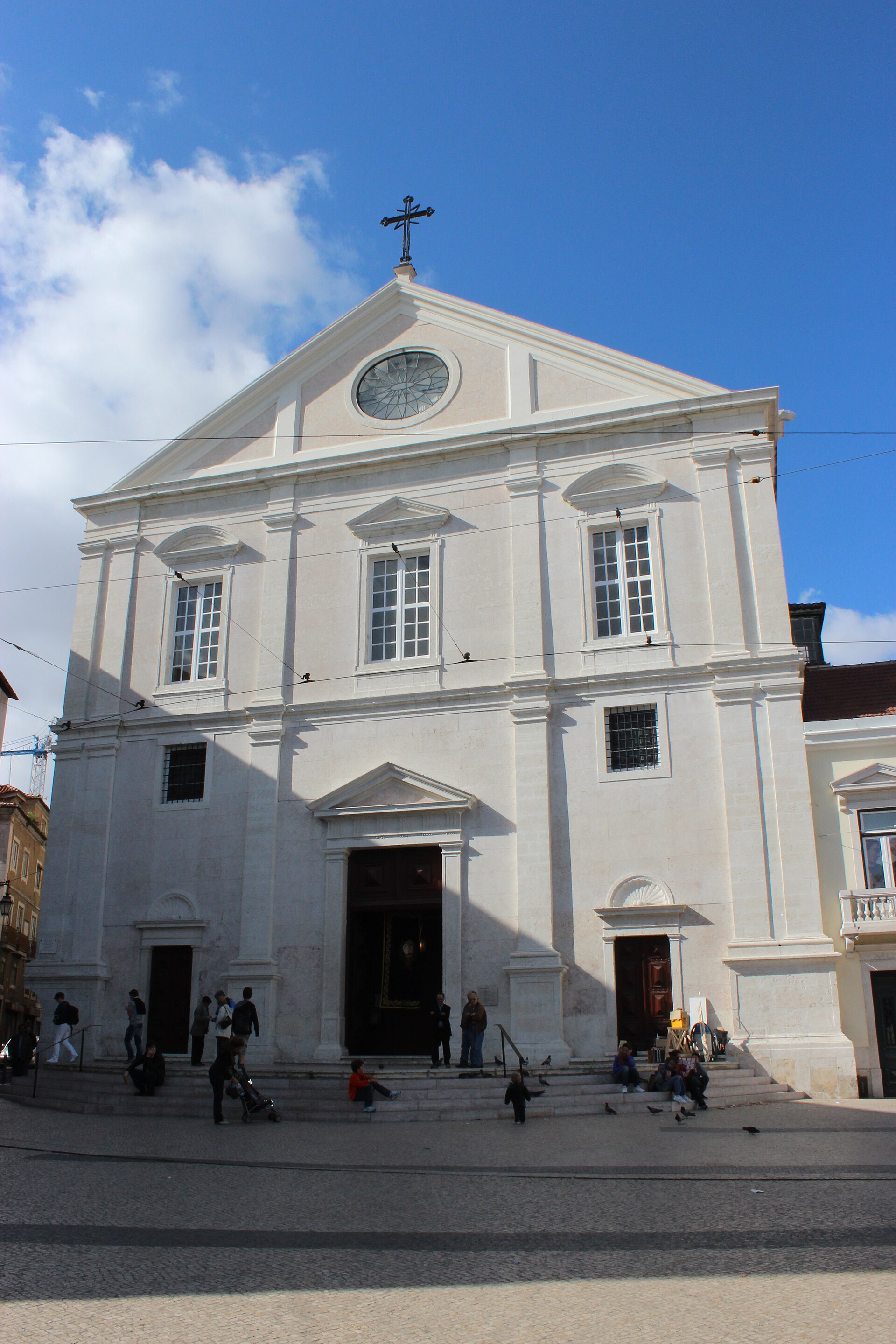
The Igreja de São Roque is a Roman Catholic church in Lisbon, serving as the first Jesuit church in Portugal and one of the earliest Jesuit churches worldwide. Constructed in the late 16th century, the building features a relatively austere Mannerist facade that contrasts sharply with its interior, which is renowned for its elaborate decoration and artistic wealth.
The interior is organized into a series of side chapels commissioned by the Society of Jesus and wealthy patrons, showcasing a transition from Mannerist restraint to the opulent Baroque style. Notable among these is the Chapel of St. John the Baptist, a mid-18th-century masterpiece commissioned by King John V, which was constructed in Rome using precious materials before being dismantled and transported to Lisbon.
Key Facts
- Materials
- Stone, Marble, Gilded wood, Azulejos
- Civilization
- Portuguese
- Accessibility
- Ground level access, limited mobility access in some chapels
- Date(s)
- 1566-1573
- Condition
- Well-preserved, active religious site
- Original Function
- Jesuit Church
- Key Figures
- King John V, Filippo Juvarra, Luigi Vanvitelli
Foundation and Jesuit Influence
16th CenturyThe church was built on the site of a former plague shrine dedicated to Saint Roch. Following the arrival of the Jesuits in Lisbon, the site was granted to the order, and construction of the new church began in 1566 under the design of Afonso Álvares.
Counter-Reformation Aesthetics
17th CenturyDuring the 17th century, the interior was enriched with extensive wood carving, gilding, and azulejo tiles. These additions were intended to reflect the Counter-Reformation's emphasis on visual splendor to inspire religious devotion.
The Chapel of St. John the Baptist
18th CenturyIn 1742, King John V commissioned a lavish chapel dedicated to St. John the Baptist. Designed by Italian architects, the chapel was built in Rome, consecrated by the Pope, and then disassembled and shipped to Lisbon to be reassembled inside the church.
Modern Preservation
20th Century - PresentFollowing the suppression of the Jesuits, the church and its adjacent residence were transferred to the Santa Casa da Misericórdia de Lisboa. Today, the site functions as both an active church and a museum, housing significant religious art and artifacts.
Cultural Significance
The Igreja de São Roque serves as a primary example of the global reach of the Jesuit order during the Age of Discovery. Its artistic commissions reflect the wealth of the Portuguese Empire and the specific theological priorities of the Counter-Reformation, emphasizing the role of visual art in Catholic liturgy.
Beyond its religious function, the church is a repository of European decorative arts. The Chapel of St. John the Baptist is particularly significant as a symbol of the diplomatic and artistic ties between the Portuguese monarchy and the Papal States in the 18th century.
Interpretive Notes
Scholarly debates and areas of uncertainty
Debate exists regarding the extent to which the church's interior design was influenced by specific Jesuit pedagogical goals versus the personal prestige-seeking of the wealthy patrons who funded the individual side chapels.
Visiting Information
Entry Rules
Open daily. Entry to the church is free; the adjacent Museum of São Roque requires a ticket. Modest dress is requested as it is an active place of worship.
Best Times to Visit
Weekday mornings are generally quieter. Avoid visiting during scheduled mass times if you wish to explore the interior architecture in detail.
Photography
Photography is permitted without flash. Tripods and professional equipment require prior authorization.
Preservation Notes
The gilded wood and marble surfaces are fragile. Please refrain from touching the altarpieces or decorative elements.
Nearby POIs
11 shown- Arco da Rua Augusta0.8 km
- Sao Jorge Castle0.9 km
- Se de Lisboa1 km
- Mosteiro de Sao Vicente de Fora1.4 km
- Estrela Basilica1.5 km
- Church of Santa Engracia1.6 km
- Museu Nacional de Arte Antiga1.9 km
- Calouste Gulbenkian Museum2.8 km
- Museu Nacional do Azulejo2.8 km
- Santuario de Cristo Rei4.6 km
- Palace of Ajuda4.8 km
Sources & Further Reading
- [1]The Chapel of St. John the Baptist in the Church of São Roque — Maria João Vilhena de Carvalho. Santa Casa da Misericórdia de Lisboa (2012)
- [2]Jesuit Architecture in Portugal — Walter C. Leedy. Journal of the Society of Architectural Historians (1995)
Key Facts
- Materials
- Stone, Marble, Gilded wood, Azulejos
- Civilization
- Portuguese
- Accessibility
- Ground level access, limited mobility access in some chapels
- Date(s)
- 1566-1573
- Condition
- Well-preserved, active religious site
- Original Function
- Jesuit Church
- Key Figures
- King John V, Filippo Juvarra, Luigi Vanvitelli
Nearby POIs
11 shown- Arco da Rua Augusta0.8 km
- Sao Jorge Castle0.9 km
- Se de Lisboa1 km
- Mosteiro de Sao Vicente de Fora1.4 km
- Estrela Basilica1.5 km
- Church of Santa Engracia1.6 km
- Museu Nacional de Arte Antiga1.9 km
- Calouste Gulbenkian Museum2.8 km
- Museu Nacional do Azulejo2.8 km
- Santuario de Cristo Rei4.6 km
- Palace of Ajuda4.8 km