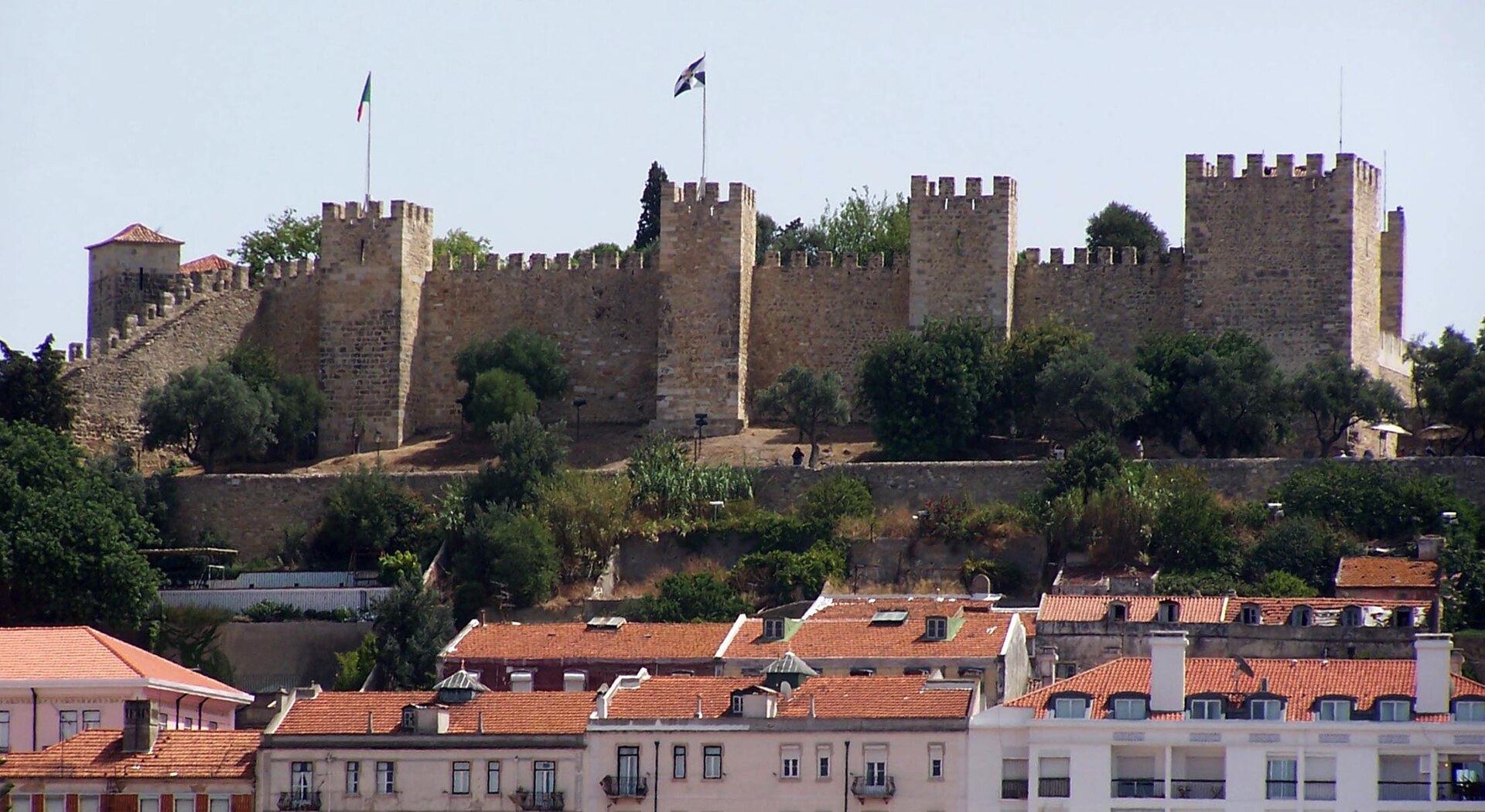
São Jorge Castle is a historic fortification situated on the highest hill in the Alfama district of Lisbon, overlooking the city and the Tagus River. The site has been occupied since at least the 8th century BCE, with successive layers of Phoenician, Carthaginian, Roman, and Moorish fortifications defining its structural evolution. The current castle complex primarily dates to the medieval period, following the 1147 Siege of Lisbon when Afonso Henriques captured the citadel from the Moors.
Throughout the centuries, the castle served as a royal palace, a military barracks, and the repository for the Torre do Tombo National Archive. Following the devastating 1755 Lisbon earthquake, the site fell into a period of neglect and decay. Extensive restoration efforts in the 1940s transformed the ruins into a prominent national monument, and it currently functions as a museum and public park, offering panoramic views of the Portuguese capital.
Key Facts
- Materials
- Limestone, Granite, Mortar
- Civilization
- Moorish, Portuguese
- Accessibility
- Partially accessible; steep inclines and uneven stone paths
- Date(s)
- 11th century (current structure)
- Condition
- Restored, active museum and public monument
- Original Function
- Citadel and defensive fortification
- Key Figures
- Afonso Henriques, King Dinis, King Manuel I
Early Foundations
8th century BCE - 10th century CEThe hilltop served as a strategic defensive position for successive civilizations, including the Phoenicians, Romans, and Visigoths. The most significant early fortifications were constructed by the Moors during the 11th century to protect the city's administrative center.
Christian Reconquest
1147During the Second Crusade, the castle was besieged and captured by King Afonso Henriques with the assistance of northern European crusaders. The victory marked a pivotal moment in the formation of the Portuguese kingdom.
Royal Residence
13th - 16th centuryThe castle reached its peak as a royal residence during the Middle Ages. It was expanded and renovated by various monarchs, serving as the seat of power until the royal court moved to the Ribeira Palace in the 16th century.
Decline and Restoration
1755 - 1940sThe 1755 earthquake caused significant structural damage to the castle. It remained in a state of disrepair for nearly two centuries until a major restoration project in the 1940s stabilized the walls and towers for public access.
Cultural Significance
São Jorge Castle is a central symbol of Lisbon's historical identity and the Reconquista in Portugal. It represents the transition of the city from an Islamic administrative center to the capital of the Portuguese monarchy. Today, it serves as a primary cultural venue, hosting educational programs and exhibitions that highlight the diverse archaeological heritage of the site.
Interpretive Notes
Scholarly debates and areas of uncertainty
There is ongoing academic discussion regarding the extent of the original Moorish architectural influence versus the modifications made by the Portuguese monarchy during the 14th and 15th centuries. Additionally, the 1940s restoration is frequently debated by historians for its 'romanticized' approach, which some argue prioritized aesthetic appeal over strict archaeological accuracy.
Visiting Information
Entry Rules
Open daily. Tickets can be purchased at the entrance or online. Visitors are encouraged to wear comfortable walking shoes due to the steep, uneven terrain within the castle walls.
Best Times to Visit
Early morning or late afternoon to avoid peak tourist crowds and midday heat. Weekdays generally offer a quieter experience than weekends.
Photography
Personal photography is permitted throughout the grounds. Commercial photography requires prior authorization from the castle administration.
Preservation Notes
Visitors are requested to stay on designated paths and refrain from climbing on the historic walls or battlements. The site is subject to ongoing maintenance to preserve the integrity of the masonry.
Nearby POIs
11 shown- Se de Lisboa0.5 km
- Mosteiro de Sao Vicente de Fora0.5 km
- Arco da Rua Augusta0.7 km
- Church of Santa Engracia0.8 km
- Igreja de Sao Roque0.9 km
- Museu Nacional do Azulejo2.1 km
- Estrela Basilica2.4 km
- Museu Nacional de Arte Antiga2.6 km
- Calouste Gulbenkian Museum3.2 km
- Santuario de Cristo Rei5.1 km
- Palace of Ajuda5.6 km
Sources & Further Reading
- [1]Lisbon: A History — Jason Webster. Signal Books (2010)
- [2]The Castles of Portugal — Mário Barroca. IPPAR (2001)
Key Facts
- Materials
- Limestone, Granite, Mortar
- Civilization
- Moorish, Portuguese
- Accessibility
- Partially accessible; steep inclines and uneven stone paths
- Date(s)
- 11th century (current structure)
- Condition
- Restored, active museum and public monument
- Original Function
- Citadel and defensive fortification
- Key Figures
- Afonso Henriques, King Dinis, King Manuel I
Nearby POIs
11 shown- Se de Lisboa0.5 km
- Mosteiro de Sao Vicente de Fora0.5 km
- Arco da Rua Augusta0.7 km
- Church of Santa Engracia0.8 km
- Igreja de Sao Roque0.9 km
- Museu Nacional do Azulejo2.1 km
- Estrela Basilica2.4 km
- Museu Nacional de Arte Antiga2.6 km
- Calouste Gulbenkian Museum3.2 km
- Santuario de Cristo Rei5.1 km
- Palace of Ajuda5.6 km