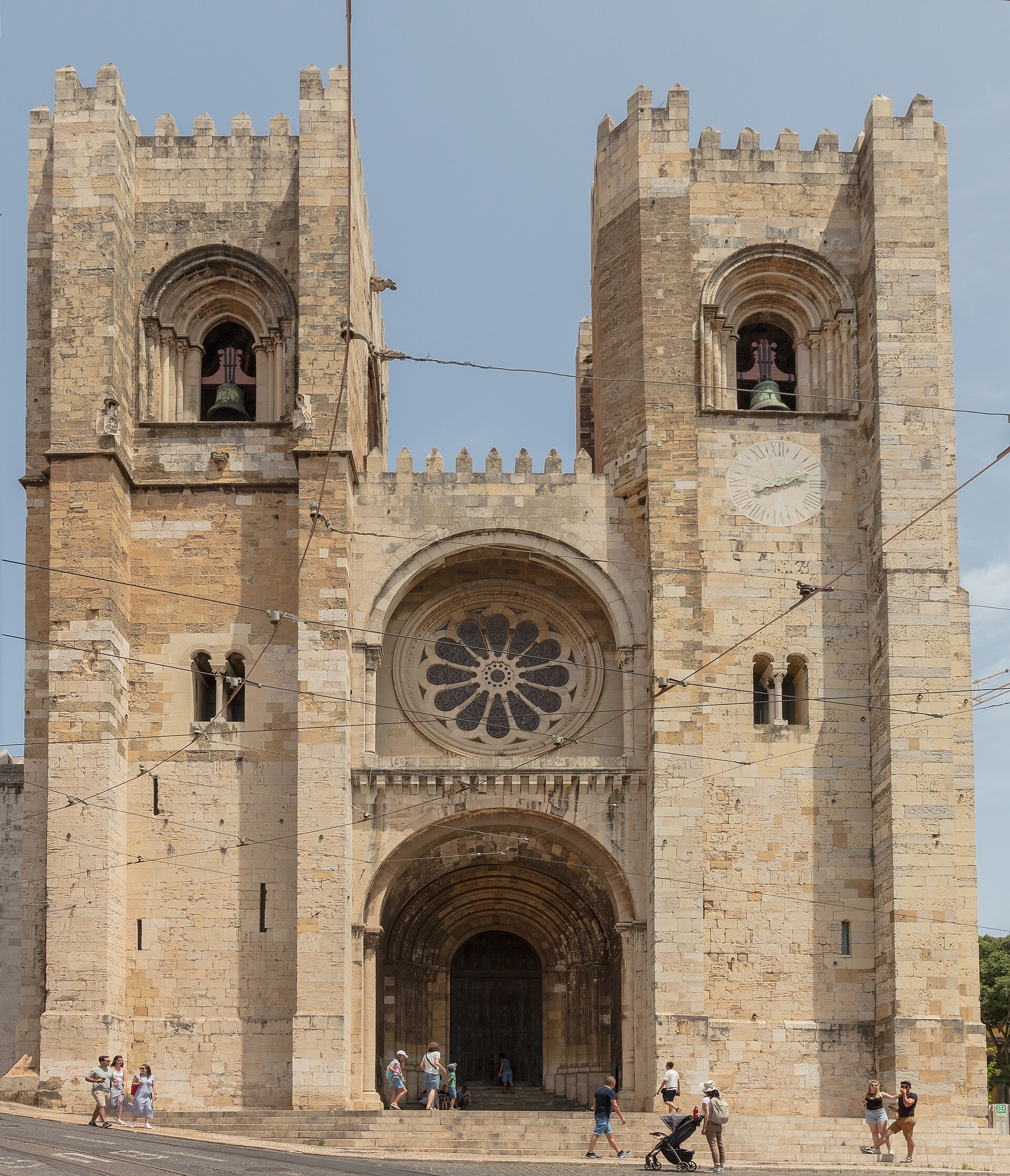
The Lisbon Cathedral, known as Sé de Lisboa, is the oldest church in the city and serves as the seat of the Patriarchate of Lisbon. Construction began in 1147 under the direction of King Afonso Henriques, the first King of Portugal, following the city's reconquest from the Moors. The structure was built on the site of a former mosque, reflecting the transition of power and religious authority during the Reconquista.
Architecturally, the cathedral is a blend of styles due to numerous modifications necessitated by frequent seismic activity, most notably the devastating 1755 Lisbon earthquake. While the original Romanesque fortress-like facade remains, the interior and various additions reflect Gothic, Baroque, and Neoclassical influences. It remains an active place of worship and a central landmark of Lisbon's historical heritage.
Key Facts
- Materials
- Limestone, Stone masonry
- Civilization
- Portuguese
- Accessibility
- Ground floor accessible, cloister access limited
- Date(s)
- 1147 - 13th century
- Condition
- Active, well-preserved
- Original Function
- Cathedral
- Key Figures
- Afonso Henriques, Saint Vincent of Saragossa
Foundations and Reconquest
1147Following the capture of Lisbon from the Moors, King Afonso Henriques ordered the construction of a new cathedral to replace the existing mosque. The building was designed to serve as both a religious center and a defensive structure.
Gothic Expansion
13th - 14th centuryDuring the reign of King Dinis, the cathedral underwent significant expansion, including the construction of a Gothic cloister. These additions reflected the growing wealth and influence of the Portuguese monarchy.
Seismic Impact and Reconstruction
1755The 1755 earthquake caused severe damage to the cathedral, destroying the main chapel and the royal pantheon. Subsequent reconstruction efforts in the late 18th century introduced Baroque and Neoclassical elements to the interior.
Modern Restoration
20th centuryExtensive restoration work was carried out in the early 20th century to remove later decorative additions and restore the cathedral's original Romanesque character, particularly the facade and the rose window.
Cultural Significance
The Sé de Lisboa is a symbol of the Portuguese Reconquista and the establishment of the Christian kingdom. It houses the relics of Saint Vincent of Saragossa, the patron saint of Lisbon, which were brought to the city in 1173. The cathedral remains a focal point for religious processions and national identity.
Interpretive Notes
Scholarly debates and areas of uncertainty
There is ongoing academic discussion regarding the extent of the original mosque's influence on the cathedral's foundation. While archaeological excavations have confirmed the presence of Islamic-era structures beneath the cathedral, the exact layout and scale of the preceding mosque remain subjects of interpretation.
Visiting Information
Entry Rules
Open daily. Entry to the main nave is free. Access to the cloister and the treasury requires a paid ticket. Modest dress is requested as it is an active place of worship.
Best Times to Visit
Early morning or late afternoon to avoid peak tourist crowds and cruise ship traffic. Weekday mornings are generally quieter.
Photography
Photography is permitted without flash. Tripods are prohibited. Commercial photography requires prior authorization from the church administration.
Preservation Notes
The structure is subject to ongoing monitoring due to its age and the seismic nature of the region. Visitors are asked to respect silence and avoid touching historical stonework.
Nearby POIs
11 shown- Arco da Rua Augusta0.4 km
- Sao Jorge Castle0.5 km
- Mosteiro de Sao Vicente de Fora0.7 km
- Church of Santa Engracia0.9 km
- Igreja de Sao Roque1 km
- Museu Nacional do Azulejo2.3 km
- Estrela Basilica2.4 km
- Museu Nacional de Arte Antiga2.6 km
- Calouste Gulbenkian Museum3.6 km
- Santuario de Cristo Rei4.8 km
- Palace of Ajuda5.7 km
Sources & Further Reading
- [1]The Cathedral of Lisbon: Architecture and History — José Mattoso. Editorial Estampa (1998)
- [2]Lisbon: A History of the City — Jorge Gaspar. Lisbon Municipal Archives (2015)
Key Facts
- Materials
- Limestone, Stone masonry
- Civilization
- Portuguese
- Accessibility
- Ground floor accessible, cloister access limited
- Date(s)
- 1147 - 13th century
- Condition
- Active, well-preserved
- Original Function
- Cathedral
- Key Figures
- Afonso Henriques, Saint Vincent of Saragossa
Nearby POIs
11 shown- Arco da Rua Augusta0.4 km
- Sao Jorge Castle0.5 km
- Mosteiro de Sao Vicente de Fora0.7 km
- Church of Santa Engracia0.9 km
- Igreja de Sao Roque1 km
- Museu Nacional do Azulejo2.3 km
- Estrela Basilica2.4 km
- Museu Nacional de Arte Antiga2.6 km
- Calouste Gulbenkian Museum3.6 km
- Santuario de Cristo Rei4.8 km
- Palace of Ajuda5.7 km