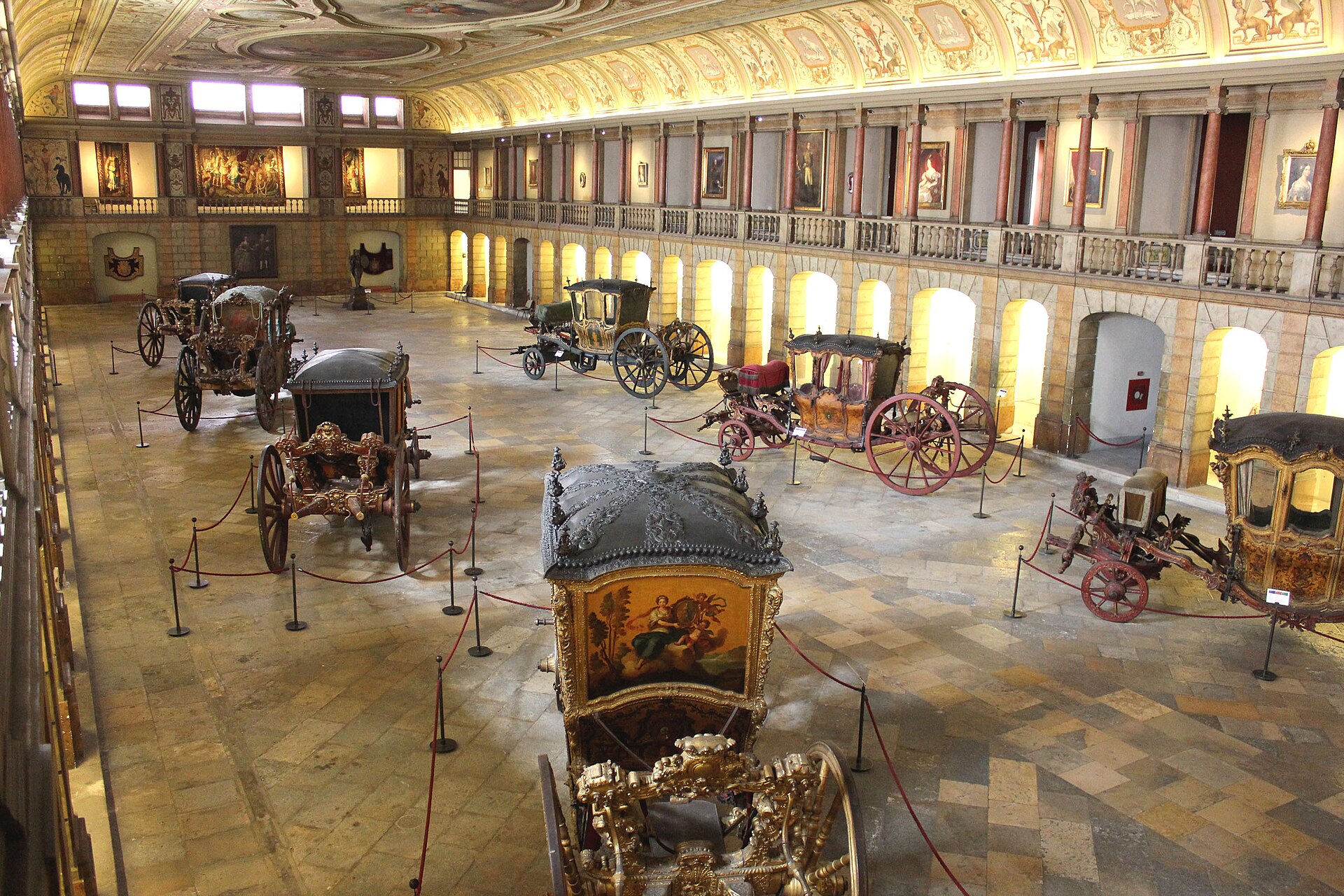
The National Coach Museum (Museu Nacional dos Coches) in Lisbon houses one of the world's most significant collections of historical horse-drawn vehicles. Originally established in 1905 by Queen Amélia of Orléans, the museum was first located in the former Royal Riding Arena of the Belém Palace. It showcases the evolution of transport through ceremonial coaches, gala carriages, and equestrian accessories used by the Portuguese royal family and the nobility from the 17th to the 19th centuries.
In 2015, the museum expanded into a modern, purpose-built facility designed by architect Paulo Mendes da Rocha. This new building provides a climate-controlled environment for the preservation of the delicate wood, leather, and gilded carvings of the collection, while the original riding arena remains part of the museum complex, offering a glimpse into the historical context of the royal stables.
Key Facts
- Materials
- Wood, Leather, Gold leaf, Velvet, Iron
- Civilization
- Portuguese
- Accessibility
- Fully wheelchair accessible
- Date(s)
- 1905 (founding), 2015 (new building)
- Condition
- Well-preserved, active museum
- Original Function
- Royal Riding Arena / Museum
- Key Figures
- Queen Amélia of Orléans, Paulo Mendes da Rocha
Royal Origins
18th-19th centuryThe collection originated from the royal stables, where carriages were commissioned from master craftsmen in Portugal, Italy, and France to serve as symbols of power and status during state ceremonies and diplomatic visits.
Museum Foundation
1905Queen Amélia of Orléans founded the museum to preserve the royal heritage following the decline of the monarchy. It was inaugurated in the Royal Riding Arena, which provided a grand setting for the display of the vehicles.
Modern Expansion
2015To accommodate the growing collection and ensure better conservation standards, a new, contemporary museum building was constructed in Belém, allowing for a more comprehensive display of the carriages and related artifacts.
Cultural Significance
The museum serves as a primary repository of Portuguese royal history and craftsmanship. The collection reflects the diplomatic and social history of the Portuguese court, highlighting the intricate artistry of 18th-century coach-building and the ceremonial life of the monarchy.
It remains a central cultural institution in Lisbon, bridging the gap between the historical royal past and contemporary museum practices. The contrast between the historic riding arena and the modern architectural wing highlights the nation's commitment to preserving its heritage while embracing modern design.
Interpretive Notes
Scholarly debates and areas of uncertainty
Discussions often center on the conservation challenges of maintaining organic materials like leather and wood in a museum environment, as well as the architectural debate surrounding the construction of the modern wing in a historically sensitive area of Belém.
Visiting Information
Entry Rules
Open Tuesday to Sunday. Tickets can be purchased at the entrance or online. Modest behavior is expected as the site is a national monument.
Best Times to Visit
Weekday mornings are generally quieter. The museum is a popular destination for school groups, so visiting outside of peak morning hours is recommended.
Photography
Personal photography is permitted without flash or tripods. Professional photography requires prior authorization.
Preservation Notes
Do not touch the carriages or the display cases. Maintain a respectful distance from the exhibits to protect the fragile materials.
Nearby POIs
11 shownSources & Further Reading
- [1]
- [2]The Royal Carriages of Portugal — Maria de Fátima Rezende. Lisbon Heritage Press (2018)
Key Facts
- Materials
- Wood, Leather, Gold leaf, Velvet, Iron
- Civilization
- Portuguese
- Accessibility
- Fully wheelchair accessible
- Date(s)
- 1905 (founding), 2015 (new building)
- Condition
- Well-preserved, active museum
- Original Function
- Royal Riding Arena / Museum
- Key Figures
- Queen Amélia of Orléans, Paulo Mendes da Rocha