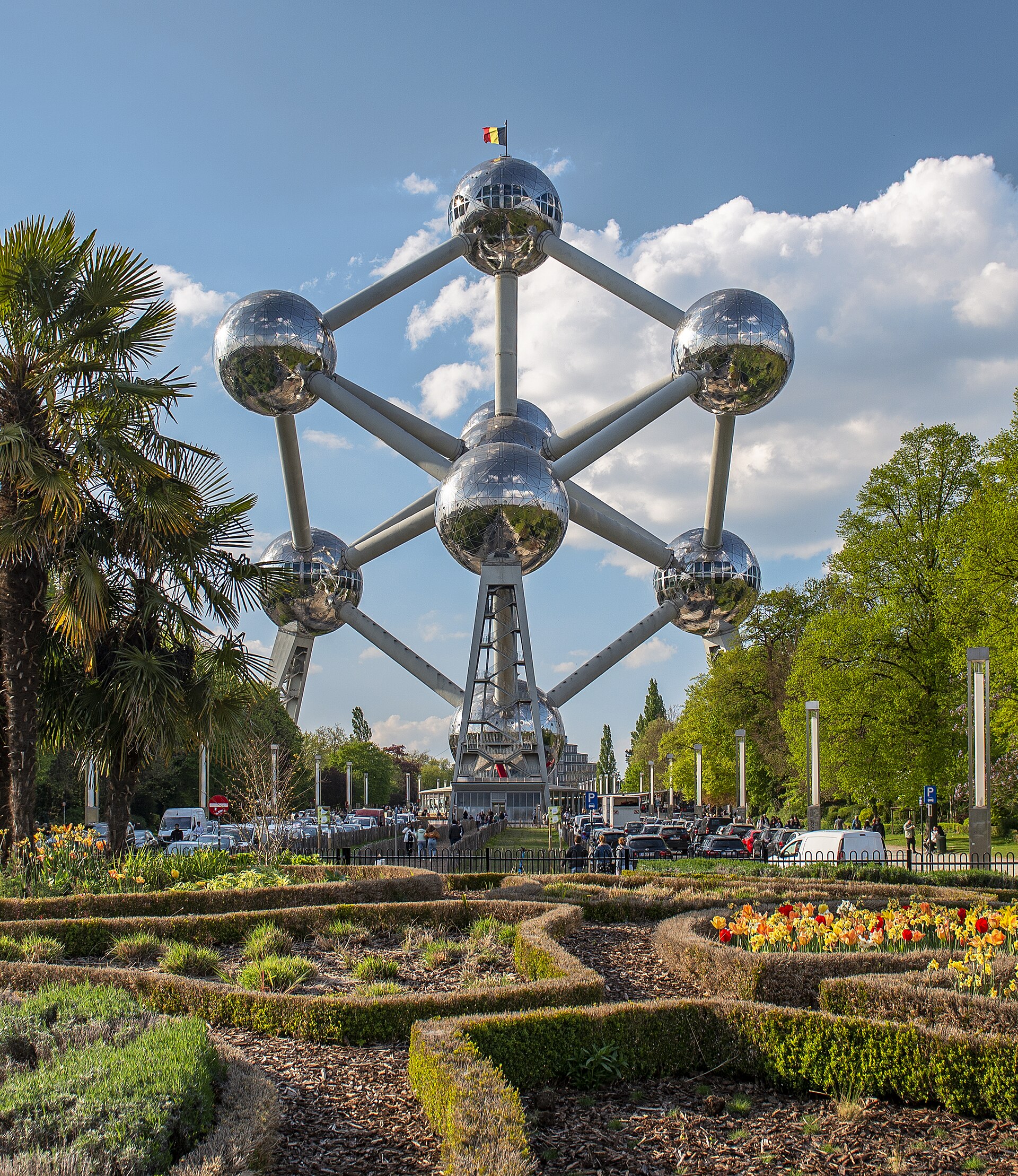
The Atomium is a landmark building originally constructed for the 1958 Brussels World's Fair (Expo 58). Designed by engineer André Waterkeyn and architects André and Jean Polak, the structure represents an iron crystal unit cell magnified 165 billion times. It stands 102 meters tall and consists of nine stainless steel-clad spheres connected by tubes containing escalators and stairs.
Initially intended to stand for only six months, the structure became a permanent fixture of the Brussels skyline. Following a major renovation between 2004 and 2006, the original aluminum cladding was replaced with stainless steel, and the interior was modernized to accommodate exhibitions, a panoramic restaurant, and public viewing areas.
Key Facts
- Materials
- Stainless steel, Steel, Aluminum, Glass
- Civilization
- Modern Belgium
- Accessibility
- Partially accessible; elevators serve the main spheres, but some areas require stairs
- Date(s)
- 1957-1958
- Condition
- Fully restored and operational as a museum and cultural venue
- Original Function
- Pavilion for Expo 58
- Key Figures
- André Waterkeyn, André Polak, Jean Polak
Conception for Expo 58
1957-1958The Atomium was commissioned as the centerpiece of the 1958 Brussels World's Fair. It was designed to symbolize the scientific progress of the atomic age and the peaceful use of nuclear energy, reflecting the optimism of the post-war era.
Post-Exhibition Survival
1959-2003Despite plans for demolition after the fair, the Atomium's popularity ensured its survival. Over the decades, it became a symbol of Brussels, though the original aluminum surfaces suffered from oxidation and weathering.
Renovation and Modernization
2004-2006A comprehensive restoration project replaced the aging aluminum with durable stainless steel and updated the interior infrastructure. The site reopened in 2006 with improved exhibition spaces and visitor facilities.
Cultural Significance
The Atomium serves as a primary symbol of Belgian identity and the mid-century fascination with science and technology. It represents the 'Space Age' aesthetic and remains one of the most recognizable architectural icons in Europe, bridging the gap between scientific modeling and public art.
Interpretive Notes
Scholarly debates and areas of uncertainty
Debates often center on the classification of the Atomium within architectural history, specifically whether it should be viewed primarily as a sculpture or as a functional building. Additionally, its status as a 'temporary' structure that became permanent has sparked discussions on the preservation of 20th-century ephemeral architecture.
Visiting Information
Entry Rules
Open daily. Tickets can be purchased online or at the entrance. Visitors are encouraged to book time slots in advance during peak tourist seasons.
Best Times to Visit
Weekdays during the off-season to avoid large school groups and tourist crowds. Late afternoon provides unique lighting for the stainless steel exterior.
Photography
Personal photography is permitted. Commercial photography and professional filming require prior authorization from the Atomium administration.
Preservation Notes
The structure is subject to ongoing maintenance due to its exposure to the elements. Visitors are requested to follow marked paths and respect the integrity of the exhibition spheres.
Nearby POIs
11 shownSources & Further Reading
- [1]The Atomium: A Symbol of the 1958 World's Fair — Henri Schreiber. Brussels Architectural Review (2008)
- [2]Expo 58: The Atomic Age in Belgium — Rika Devos. Mercatorfonds (2006)
Key Facts
- Materials
- Stainless steel, Steel, Aluminum, Glass
- Civilization
- Modern Belgium
- Accessibility
- Partially accessible; elevators serve the main spheres, but some areas require stairs
- Date(s)
- 1957-1958
- Condition
- Fully restored and operational as a museum and cultural venue
- Original Function
- Pavilion for Expo 58
- Key Figures
- André Waterkeyn, André Polak, Jean Polak