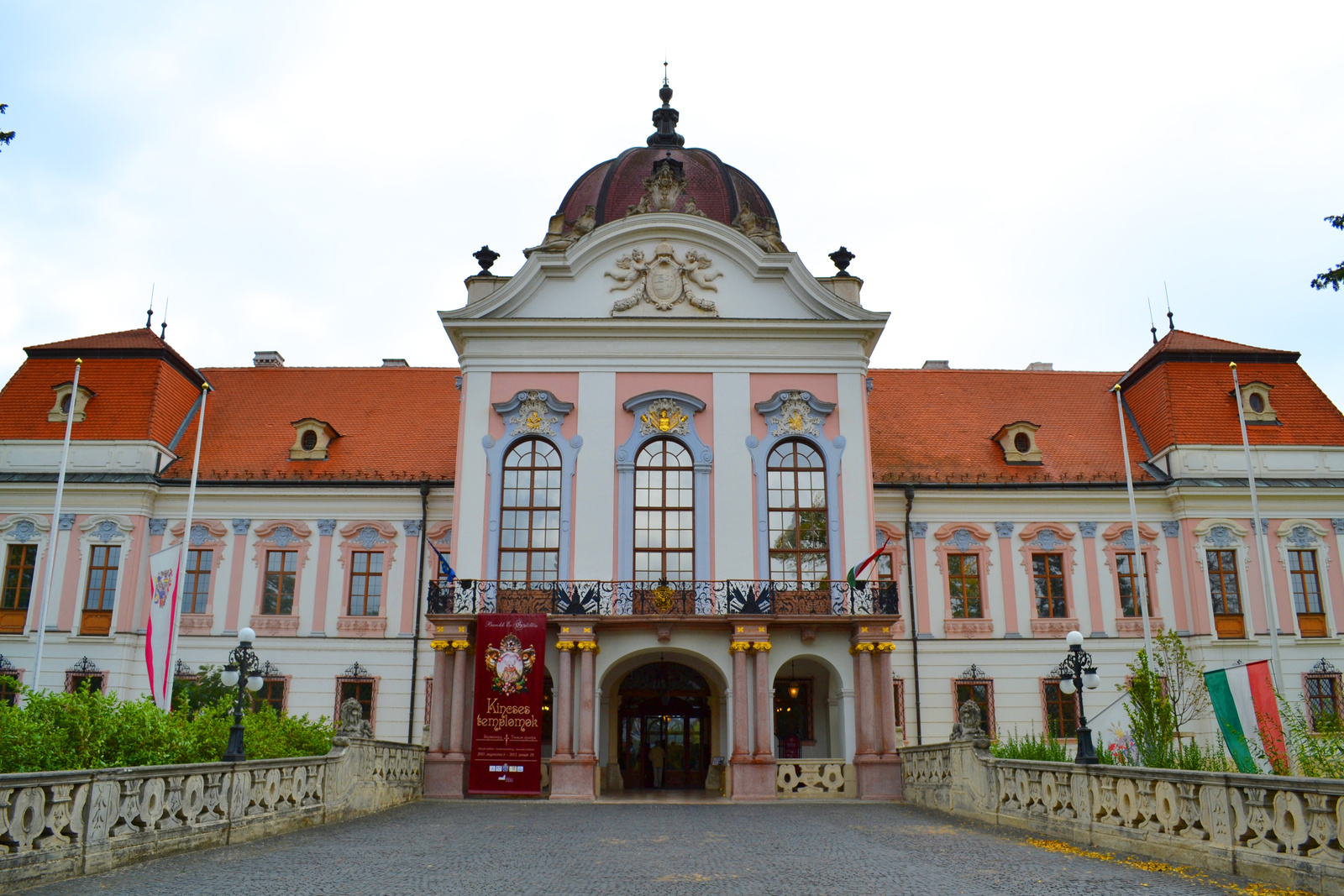
The Royal Palace of Gödöllő, also known as the Grassalkovich Palace, is one of the most significant examples of Hungarian Baroque architecture. Commissioned by Count Antal Grassalkovich I in the mid-18th century, the U-shaped complex served as a grand aristocratic residence before becoming a favored retreat for the Habsburg royal family.
Following the Austro-Hungarian Compromise of 1867, the palace was presented as a coronation gift to Emperor Franz Joseph I and Empress Elisabeth. It became a primary residence for the Empress, who spent significant time here away from the rigid protocol of the Viennese court. Today, the palace functions as a museum, showcasing restored royal suites and the historic Baroque theatre, while its extensive parkland remains a protected landscape.
Key Facts
- Materials
- Stone, Brick, Stucco, Wood
- Civilization
- Hungarian
- Accessibility
- Wheelchair accessible in main exhibition areas
- Date(s)
- 1733-1760
- Condition
- Restored and open as a museum
- Original Function
- Aristocratic residence
- Key Figures
- Antal Grassalkovich I, Franz Joseph I, Empress Elisabeth
Construction and Aristocratic Era
1733-1760Count Antal Grassalkovich I, a confidant of Empress Maria Theresa, commissioned the construction of the palace. Designed by András Mayerhoffer, it became the largest Baroque palace in Hungary, featuring a unique double-U floor plan and a private chapel.
The Royal Residence
1867-1916After the Austro-Hungarian Compromise, the Hungarian state purchased the estate as a coronation gift for the royal couple. Empress Elisabeth, known as Sisi, frequently resided here, finding solace in the palace's gardens and the surrounding countryside.
War and Decline
1918-1990Following the collapse of the Austro-Hungarian Empire, the palace served as a residence for Regent Miklós Horthy. During the Soviet occupation, the building was used as a barracks and a nursing home, leading to significant structural deterioration.
Restoration and Modern Use
1994-presentExtensive restoration efforts began in the 1990s to return the palace to its 19th-century appearance. The site was opened to the public in 1996 and now hosts cultural events, exhibitions, and international diplomatic functions.
Cultural Significance
The palace is a symbol of Hungarian national heritage and the complex relationship between the Hungarian nobility and the Habsburg monarchy. It is particularly celebrated for its association with Empress Elisabeth, who remains a central figure in Hungarian cultural memory and tourism.
Interpretive Notes
Scholarly debates and areas of uncertainty
Debates persist regarding the extent of the original Baroque interior versus the 19th-century modifications made during the royal era. Scholars continue to analyze the palace's role in the political architecture of the dual monarchy.
Visiting Information
Entry Rules
Open daily. Tickets are required for entry to the main palace exhibitions and the Baroque theatre. Guided tours are available in multiple languages.
Best Times to Visit
Spring and early autumn are ideal for exploring the extensive palace gardens. Weekdays are generally quieter than weekends.
Photography
Personal photography is permitted in most areas without flash. Professional or commercial photography requires prior authorization from the palace administration.
Preservation Notes
Visitors are requested to refrain from touching historical artifacts and furniture. Please remain on designated paths within the palace and the park.
Nearby POIs
11 shown- Hungarian Railway Museum19.7 km
- Vajdahunyad Castle21.9 km
- Budapest Hall of Art22.2 km
- Heroes' Square22.2 km
- Budapest Museum of Fine Arts22.2 km
- Aquincum Museum22.7 km
- Hungarian Natural History Museum23.4 km
- House of Terror Museum23.4 km
- Margaret Island23.7 km
- Hungarian National Museum24.4 km
- St. Stephen's Basilica24.5 km
Sources & Further Reading
- [1]The Royal Palace of Gödöllő: A History — Katalin Gönczi. Gödöllő Royal Palace Museum Press (2015)
- [2]Baroque Architecture in Hungary — József Sisa. Akadémiai Kiadó (2002)
Key Facts
- Materials
- Stone, Brick, Stucco, Wood
- Civilization
- Hungarian
- Accessibility
- Wheelchair accessible in main exhibition areas
- Date(s)
- 1733-1760
- Condition
- Restored and open as a museum
- Original Function
- Aristocratic residence
- Key Figures
- Antal Grassalkovich I, Franz Joseph I, Empress Elisabeth
Nearby POIs
11 shown- Hungarian Railway Museum19.7 km
- Vajdahunyad Castle21.9 km
- Budapest Hall of Art22.2 km
- Heroes' Square22.2 km
- Budapest Museum of Fine Arts22.2 km
- Aquincum Museum22.7 km
- Hungarian Natural History Museum23.4 km
- House of Terror Museum23.4 km
- Margaret Island23.7 km
- Hungarian National Museum24.4 km
- St. Stephen's Basilica24.5 km