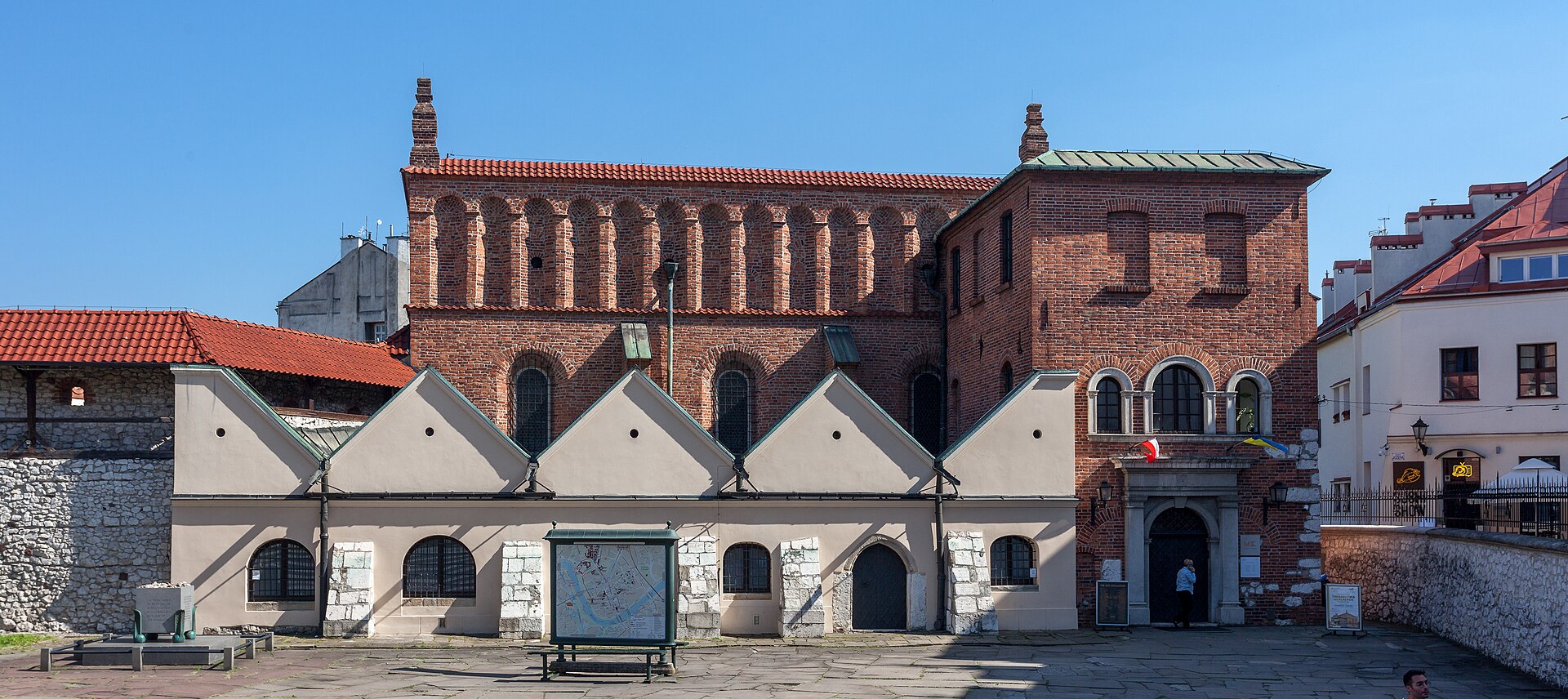
The Old Synagogue in Kraków, located in the Kazimierz district, is the oldest synagogue building still standing in Poland. Constructed in the late 15th century, it served as the religious and communal heart of the city's Jewish population for centuries. The structure is a prime example of a Polish fortress-style synagogue, characterized by its thick walls and defensive architectural elements.
Following significant damage during World War II, the building underwent extensive restoration in the post-war era. Today, it functions as a branch of the Museum of Kraków, housing a permanent exhibition dedicated to the history and culture of the Jews of Kraków. It remains a vital site for understanding the historical development of Jewish life in Central Europe.
Key Facts
- Materials
- Brick, Stone
- Civilization
- Polish-Jewish
- Accessibility
- Ground floor accessible
- Date(s)
- 1492-1507
- Condition
- Restored, functions as a museum
- Original Function
- Religious and communal center
- Key Figures
- Moses Isserles
Foundations
15th CenturyThe synagogue was built in the late 15th century, likely by architects from Nuremberg. It replaced an earlier wooden structure and was designed to serve the growing Jewish community in the Kazimierz district.
Expansion and Renaissance
16th CenturyIn 1557, the building was expanded and remodeled in the Renaissance style by the Italian architect Mateo Gucci. This period saw the addition of the iconic two-aisle prayer hall with its distinctive rib vaults.
World War II and Destruction
1939-1945During the German occupation of Poland, the synagogue was looted and severely damaged. The interior furnishings were destroyed, and the building was used as a warehouse by the occupying forces.
Post-War Restoration
1956-1959After the war, the building was saved from total collapse. A major restoration project was undertaken between 1956 and 1959, which returned the exterior to its historical appearance and prepared the interior for its new role as a museum.
Cultural Significance
The Old Synagogue is a symbol of the long-standing Jewish presence in Kraków and the resilience of the Kazimierz district. It represents the architectural synthesis of local Polish building traditions with the specific liturgical requirements of the Jewish community.
As a museum, it plays a crucial role in educating the public about the Holocaust and the vibrant cultural life that preceded it. It serves as a site of memory for the local community and international visitors alike.
Interpretive Notes
Scholarly debates and areas of uncertainty
There is ongoing academic discussion regarding the extent of the original 15th-century structure versus the 16th-century Renaissance additions. Scholars continue to analyze the influence of Italian architectural techniques on the development of Polish synagogue design during this period.
Visiting Information
Entry Rules
Open Tuesday through Sunday. Tickets are required for museum entry. Modest dress is requested out of respect for the site's history.
Best Times to Visit
Weekday mornings are generally quieter. The museum is closed on Mondays.
Photography
Personal photography is permitted without flash. Tripods and commercial equipment require prior museum authorization.
Preservation Notes
The building is a protected historical monument. Visitors are asked to refrain from touching the historic walls and to follow all museum signage regarding the preservation of artifacts.
Nearby POIs
11 shown- Krakow Pinball Museum0.6 km
- Zamek Krolewski na Wawelu1 km
- Museum of Contemporary Art in Krakow1 km
- Katedra Wawelska1 km
- Oskar Schindler's Enamel Factory1 km
- Bricks and Figs1.1 km
- Basilica of St. Francis of Assisi1.3 km
- Church of the Assumption of the Blessed Virgin Mary1.3 km
- Sukiennice1.4 km
- Rynek Underground1.4 km
- Town Hall Tower1.4 km
Sources & Further Reading
- [1]
- [2]Jewish Kazimierz: A History — Eugeniusz Duda. Kraków Heritage Series (2003)
Key Facts
- Materials
- Brick, Stone
- Civilization
- Polish-Jewish
- Accessibility
- Ground floor accessible
- Date(s)
- 1492-1507
- Condition
- Restored, functions as a museum
- Original Function
- Religious and communal center
- Key Figures
- Moses Isserles
Nearby POIs
11 shown- Krakow Pinball Museum0.6 km
- Zamek Krolewski na Wawelu1 km
- Museum of Contemporary Art in Krakow1 km
- Katedra Wawelska1 km
- Oskar Schindler's Enamel Factory1 km
- Bricks and Figs1.1 km
- Basilica of St. Francis of Assisi1.3 km
- Church of the Assumption of the Blessed Virgin Mary1.3 km
- Sukiennice1.4 km
- Rynek Underground1.4 km
- Town Hall Tower1.4 km