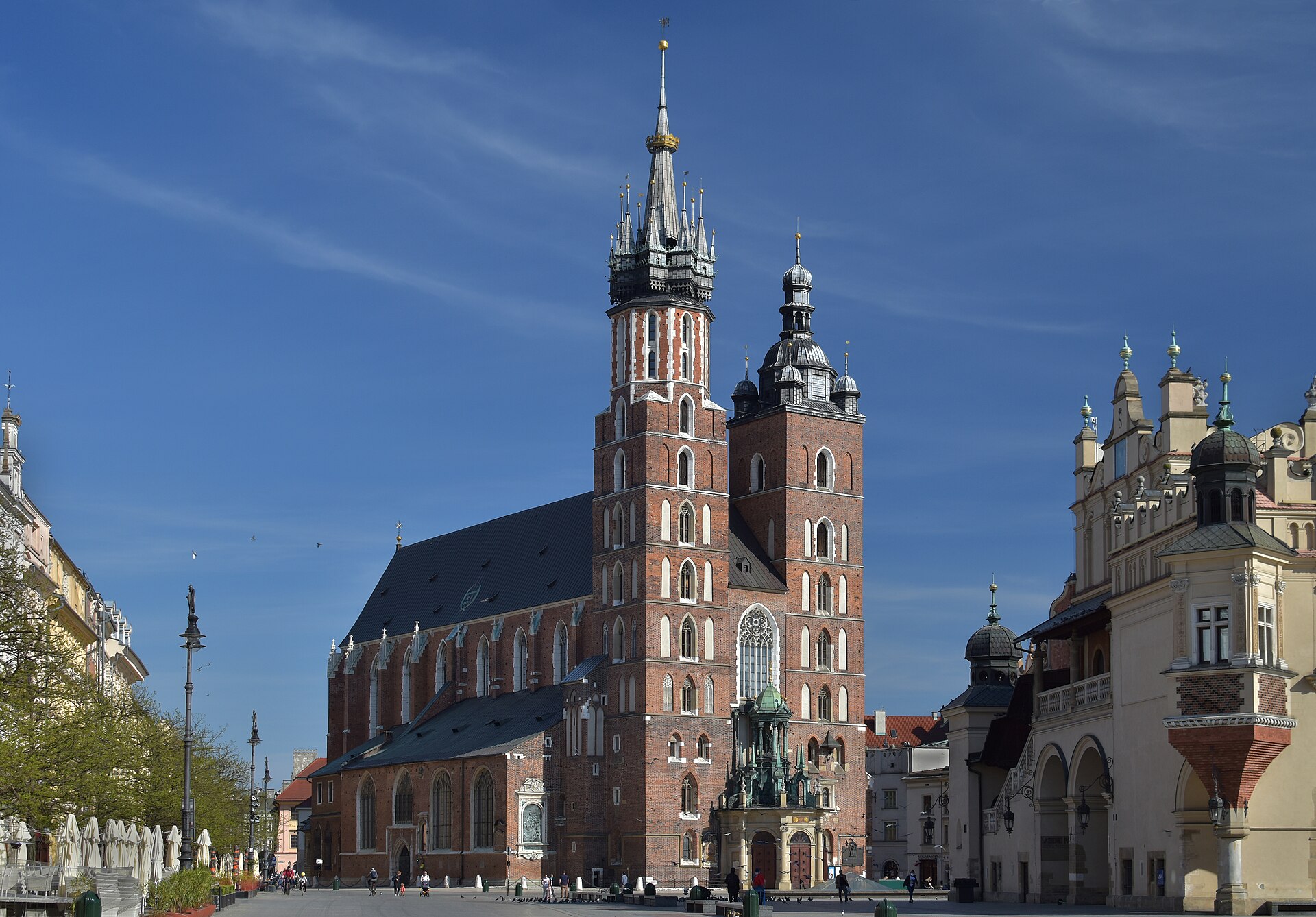
The Church of the Assumption of the Blessed Virgin Mary, commonly known as St. Mary's Basilica, is a Brick Gothic church situated on the edge of the Main Market Square in Kraków. Originally founded in the 13th century, the current structure was largely rebuilt in the 14th century, featuring two towers of unequal height that have become iconic symbols of the city skyline.
The interior is renowned for the Veit Stoss altarpiece, a monumental wooden masterpiece carved between 1477 and 1489. This triptych, containing over two hundred figures, is considered the largest Gothic altar of its kind in the world. The basilica also features a vibrant polychrome ceiling and stained glass windows that date back to the 14th century, reflecting the city's historical status as a major cultural and religious center.
Key Facts
- Materials
- Brick, Limestone, Oak wood
- Civilization
- Polish
- Accessibility
- Ground level accessible, limited access to upper choir
- Date(s)
- 1347-1397
- Condition
- Well-preserved, active basilica
- Original Function
- Parish church
- Key Figures
- Veit Stoss, King Casimir III the Great
Foundations
13th centuryThe original Romanesque church was founded in the early 13th century on the site of an even older parish church. This structure was largely destroyed during the Mongol invasions of Poland.
Gothic Reconstruction
14th centuryThe current Brick Gothic structure was commissioned in the mid-14th century, funded by the wealthy burghers of Kraków. The chancel was completed in 1355, and the nave was vaulted by the end of the century.
The Veit Stoss Altarpiece
1477-1489The sculptor Veit Stoss was commissioned to create the massive high altar. The work was completed over twelve years and remains one of the finest examples of late Gothic woodcarving in Europe.
Baroque Transformation
18th centuryIn the 18th century, the interior was extensively renovated in the Baroque style by Francesco Placidi, who added a new porch, altars, and furniture, significantly altering the medieval aesthetic.
Modern Restoration
19th century - presentMajor restoration efforts in the late 19th century sought to restore the Gothic character of the interior. The basilica was designated a UNESCO World Heritage site as part of the Historic Centre of Kraków in 1978.
Cultural Significance
St. Mary's Basilica is a cornerstone of Kraków's identity, serving as the city's primary parish church for centuries. The 'Hejnał Mariacki' (St. Mary's Trumpet Call), played hourly from the taller tower, is a national symbol of Poland, commemorating a legendary trumpeter who sounded the alarm during a Tatar invasion.
The church also serves as a repository of Polish art and history, housing the works of renowned artists and serving as a site for significant state ceremonies. Its presence on the Main Market Square underscores the historical influence of the merchant class in shaping the city's religious and architectural landscape.
Interpretive Notes
Scholarly debates and areas of uncertainty
Debates persist regarding the extent of the 18th-century Baroque modifications and whether subsequent 19th-century 'Gothicization' efforts were historically accurate or an idealized interpretation of the medieval period. Additionally, the provenance and original intended placement of certain secondary altarpieces within the church remain subjects of ongoing art historical research.
Visiting Information
Entry Rules
Open daily for visitors and worshippers. Tourists must purchase tickets to enter the main nave and view the Veit Stoss altar. Modest dress is required as it is an active place of worship. Access may be restricted during mass or religious holidays.
Best Times to Visit
Early morning or late afternoon to avoid the peak tourist crowds that gather in the Main Market Square. Visiting during the hourly trumpet call provides a unique cultural experience.
Photography
Photography is permitted for personal use without flash. Tripods and professional equipment require prior authorization from the parish office.
Preservation Notes
The wooden altarpiece is highly sensitive to humidity and temperature fluctuations. Visitors are requested to maintain a respectful distance and refrain from touching any surfaces or historical artifacts.
Nearby POIs
11 shownSources & Further Reading
- [1]
- [2]Kraków: A History — Adam Zamoyski. Hippocrene Books (1993)
Key Facts
- Materials
- Brick, Limestone, Oak wood
- Civilization
- Polish
- Accessibility
- Ground level accessible, limited access to upper choir
- Date(s)
- 1347-1397
- Condition
- Well-preserved, active basilica
- Original Function
- Parish church
- Key Figures
- Veit Stoss, King Casimir III the Great