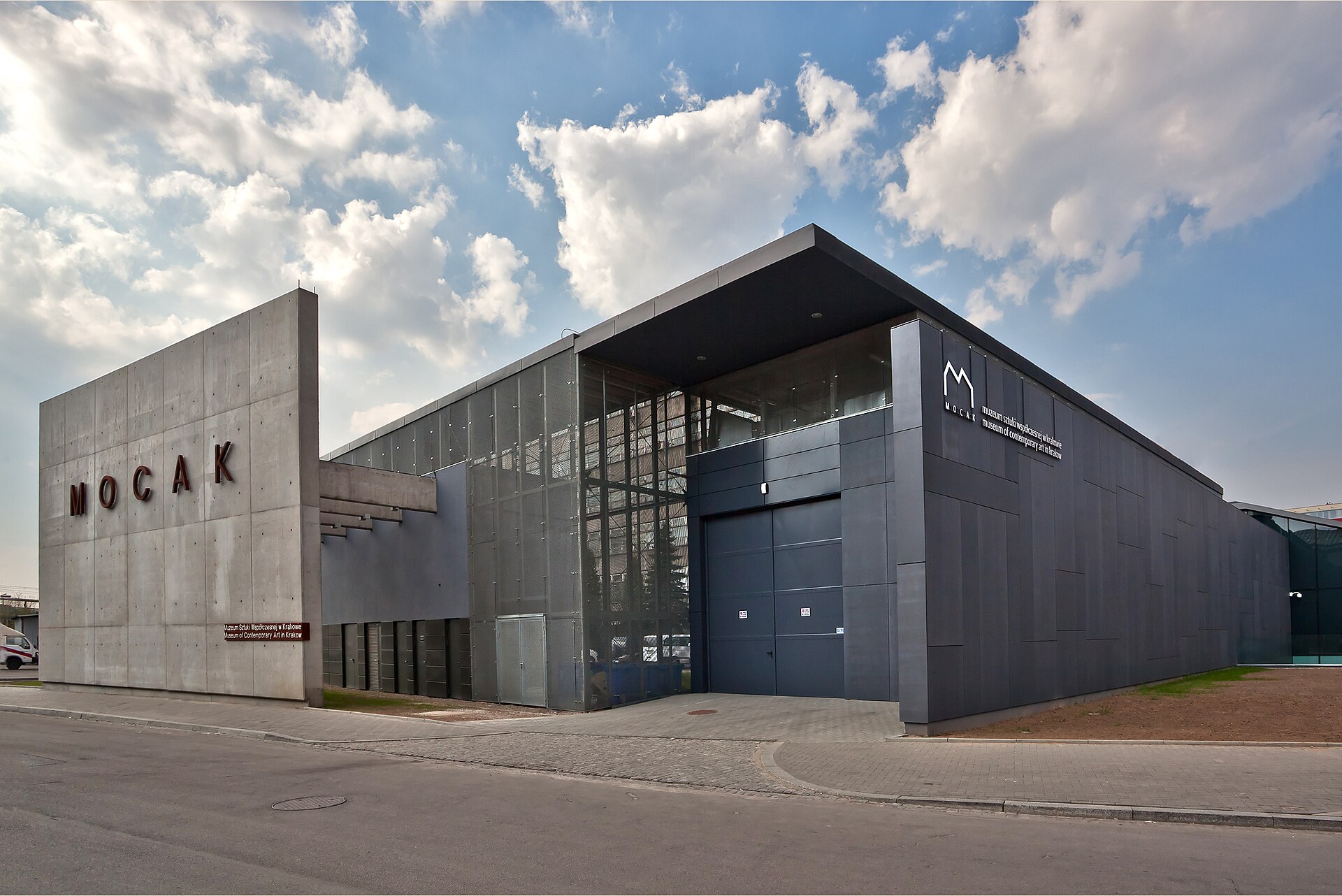
The Museum of Contemporary Art in Krakow (MOCAK) is a municipal cultural institution located in the Zabłocie district on the grounds of the former Oskar Schindler's Enamel Factory. Opened in 2011, the museum was designed by the architectural firm Claudio Nardi Architects to integrate modern exhibition spaces with the industrial heritage of the site.
The museum houses a collection of over five thousand works, focusing primarily on post-war avant-garde, conceptualism, and contemporary art. Its mission emphasizes the presentation of art from the last two decades while maintaining a strong research and educational program that explores the social and political contexts of modern artistic production.
Key Facts
- Materials
- Concrete, Glass, Steel
- Civilization
- Polish
- Accessibility
- Fully wheelchair accessible
- Date(s)
- 2011
- Condition
- Active
- Original Function
- Contemporary Art Museum
- Key Figures
- Claudio Nardi, Maria Anna Potocka
Establishment and Architecture
2005-2011The decision to establish the museum was made by the Krakow City Council in 2005. The site was chosen for its historical significance as part of the former Enamel Factory. Construction began in 2009, resulting in a complex that balances minimalist exhibition halls with the preserved industrial architecture of the surrounding area.
Inauguration and Growth
2011-PresentMOCAK officially opened to the public in May 2011. Since its inception, the museum has expanded its permanent collection significantly, focusing on international and Polish artists. It has become a central hub for contemporary art discourse in Central Europe, hosting numerous temporary exhibitions and international symposia.
Cultural Significance
MOCAK plays a vital role in the revitalization of the Zabłocie district, transforming a former industrial zone into a vibrant cultural center. It serves as a bridge between the historical memory of the site—linked to the Holocaust and the Second World War—and the forward-looking nature of contemporary artistic expression.
The museum is instrumental in promoting Polish contemporary art on the international stage while providing a platform for critical reflection on global social issues. Its presence has significantly influenced the cultural landscape of Krakow, fostering a dialogue between the city's rich historical past and its modern identity.
Interpretive Notes
Scholarly debates and areas of uncertainty
There is ongoing discussion regarding the museum's role in the 'gentrification' of the Zabłocie district. Scholars debate whether the institution's presence effectively preserves the industrial memory of the area or if it contributes to the displacement of the district's original working-class character.
Visiting Information
Entry Rules
Open Tuesday to Sunday. Tickets can be purchased at the entrance or online. Concessions are available for students and seniors. Visitors are requested to refrain from touching the exhibits.
Best Times to Visit
Weekday mornings are generally quieter. The museum is particularly busy during the annual Krakow Gallery Weekend.
Photography
Non-commercial photography is permitted without flash. Tripods and selfie sticks are prohibited in exhibition halls.
Preservation Notes
Maintain a safe distance from artworks. Large bags and backpacks must be stored in the cloakroom.
Nearby POIs
11 shown- Oskar Schindler's Enamel Factory0.1 km
- Bricks and Figs0.4 km
- Krakow Old Synagogue1 km
- Krakow Pinball Museum1.6 km
- Zamek Krolewski na Wawelu2 km
- Katedra Wawelska2 km
- Church of the Assumption of the Blessed Virgin Mary2.2 km
- Basilica of St. Francis of Assisi2.2 km
- Sukiennice2.3 km
- Rynek Underground2.3 km
- Town Hall Tower2.3 km
Sources & Further Reading
- [1]
- [2]Contemporary Art and the City: The Case of Krakow — Piotr Piotrowski. Journal of Contemporary European Studies (2015)
Key Facts
- Materials
- Concrete, Glass, Steel
- Civilization
- Polish
- Accessibility
- Fully wheelchair accessible
- Date(s)
- 2011
- Condition
- Active
- Original Function
- Contemporary Art Museum
- Key Figures
- Claudio Nardi, Maria Anna Potocka
Nearby POIs
11 shown- Oskar Schindler's Enamel Factory0.1 km
- Bricks and Figs0.4 km
- Krakow Old Synagogue1 km
- Krakow Pinball Museum1.6 km
- Zamek Krolewski na Wawelu2 km
- Katedra Wawelska2 km
- Church of the Assumption of the Blessed Virgin Mary2.2 km
- Basilica of St. Francis of Assisi2.2 km
- Sukiennice2.3 km
- Rynek Underground2.3 km
- Town Hall Tower2.3 km