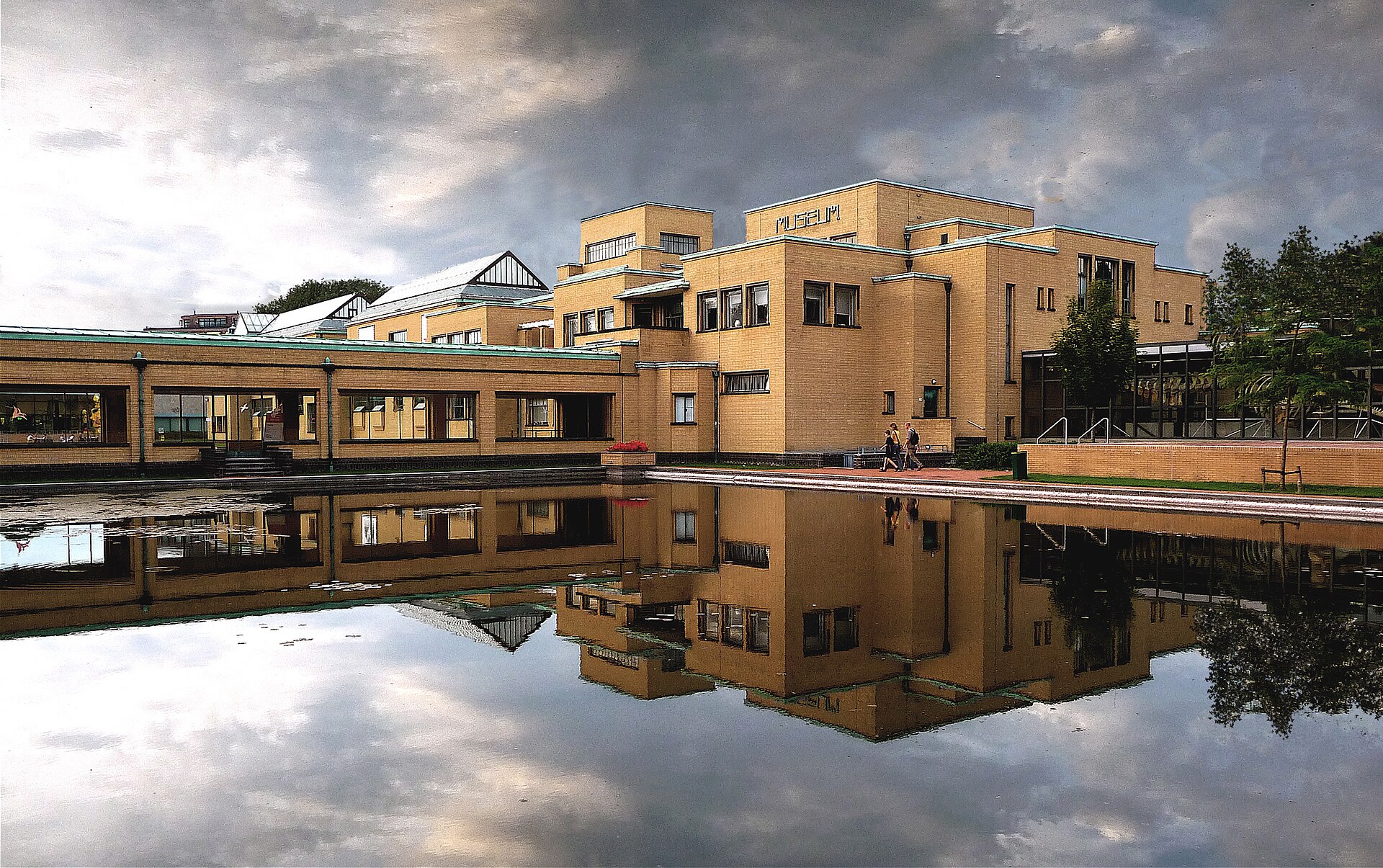
The Kunstmuseum Den Haag is a prominent art museum in The Hague, Netherlands, housed in a landmark building designed by the Dutch architect H.P. Berlage. Completed in 1935, the structure is widely considered a masterpiece of modern architecture, characterized by its use of light, geometric proportions, and a distinctive brick facade that integrates seamlessly with the surrounding parkland.
The museum holds an extensive collection of modern and contemporary art, with a particular focus on the development of Dutch art in the 19th and 20th centuries. It is internationally renowned for housing the world's largest collection of works by Piet Mondrian, tracing his artistic evolution from traditional landscapes to his iconic abstract neoplasticist compositions.
Key Facts
- Materials
- Brick, Concrete, Glass, Steel
- Civilization
- Dutch
- Accessibility
- Fully wheelchair accessible
- Date(s)
- 1931-1935
- Condition
- Well-preserved and active
- Original Function
- Municipal Museum of The Hague
- Key Figures
- H.P. Berlage, Piet Mondrian
Architectural Conception
1919-1935Architect H.P. Berlage was commissioned to design a new municipal museum. His vision was to create a 'museum of the future' where the architecture would not overwhelm the art, utilizing natural light and a modular floor plan.
Opening and Early Years
1935-1945The museum opened to the public in 1935. During the Second World War, the building survived largely intact, though parts of the collection were moved to secure locations to prevent damage or looting.
Modern Expansion and Renovation
1990s-PresentThe museum underwent significant renovations in the late 20th century to modernize climate control and visitor facilities. In 2019, the institution officially changed its name from Gemeentemuseum Den Haag to Kunstmuseum Den Haag to better reflect its international scope.
Cultural Significance
The Kunstmuseum serves as a cornerstone of Dutch cultural heritage, bridging the gap between 19th-century realism and the radical abstractions of the De Stijl movement. Its architecture is a primary subject of study for the influence of the Amsterdam School and the transition toward functionalist design in the Netherlands.
Beyond its permanent collection, the museum plays a vital role in the international art scene by hosting major temporary exhibitions. It remains a key site for the study of Piet Mondrian, providing the most comprehensive context for understanding his transition from figurative painter to a pioneer of geometric abstraction.
Interpretive Notes
Scholarly debates and areas of uncertainty
Debates often center on the balance between preserving the original 1935 architectural vision of Berlage and the practical requirements of a modern, high-traffic museum. Discussions frequently arise regarding the best methods for displaying Mondrian's works to ensure both conservation and optimal viewer engagement with his color theories.
Visiting Information
Entry Rules
Open Tuesday to Sunday. Tickets can be purchased online or at the entrance. Visitors are requested to store large bags in provided lockers.
Best Times to Visit
Weekday mornings are generally quieter. The museum is often busier during weekends and school holidays.
Photography
Non-commercial photography is permitted without flash or tripods. Professional photography requires prior written permission.
Preservation Notes
Do not touch the artworks. Maintain a respectful distance from all exhibits. Flash photography is strictly prohibited to protect light-sensitive pigments.
Nearby POIs
11 shownSources & Further Reading
- [1]H.P. Berlage: The Gemeentemuseum in The Hague — Sergio Polano. Electa Architecture (2002)
- [2]Mondrian: The Art of Destruction — Carel Blotkamp. Reaktion Books (1994)
Key Facts
- Materials
- Brick, Concrete, Glass, Steel
- Civilization
- Dutch
- Accessibility
- Fully wheelchair accessible
- Date(s)
- 1931-1935
- Condition
- Well-preserved and active
- Original Function
- Municipal Museum of The Hague
- Key Figures
- H.P. Berlage, Piet Mondrian