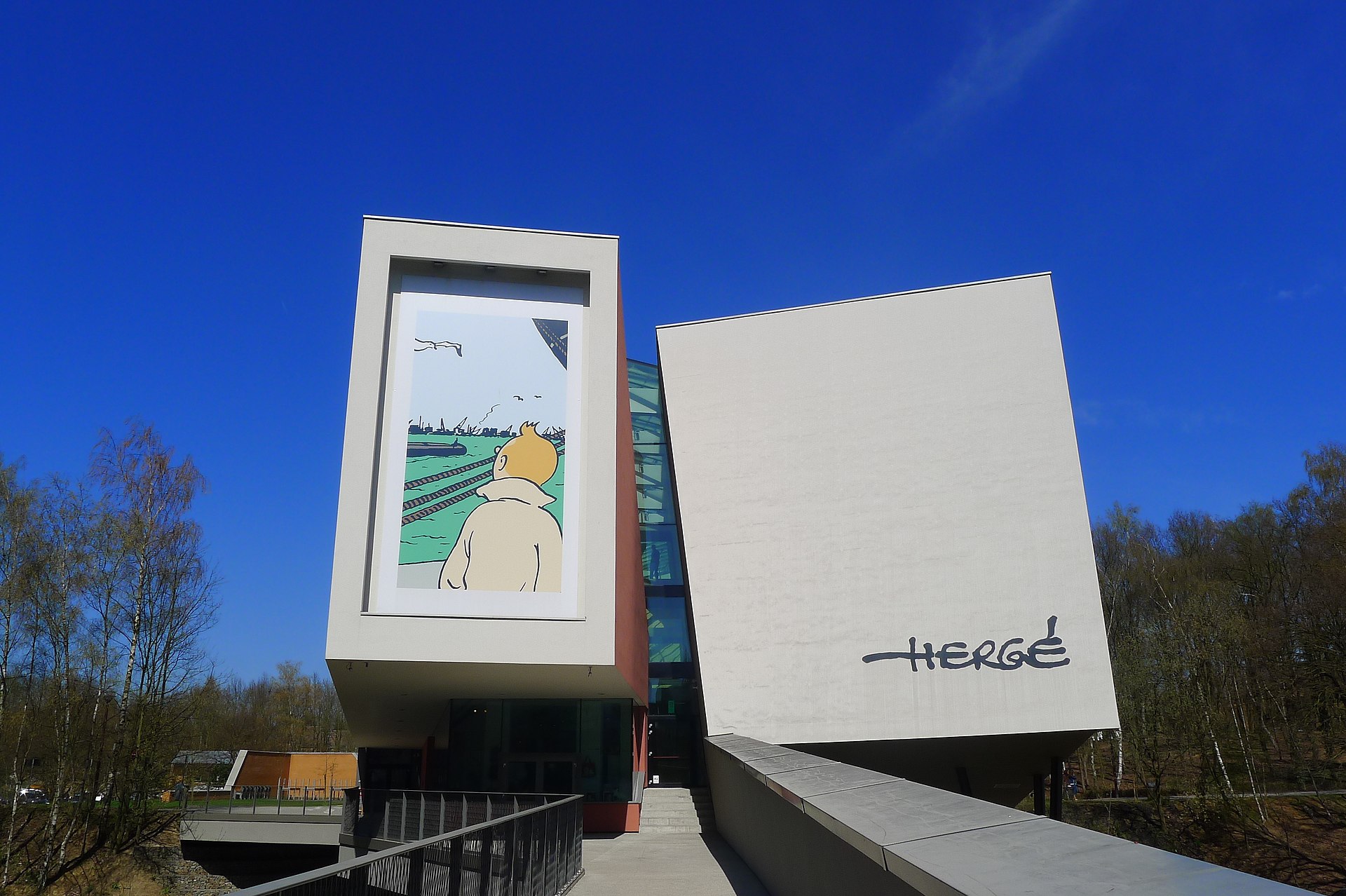
The Musée Hergé is a museum located in Louvain-la-Neuve, Belgium, dedicated to the life and work of the Belgian cartoonist Georges Remi, better known by his pen name Hergé. Opened in 2009, the museum is housed in a distinctive building designed by the French architect Christian de Portzamparc, which features a series of interconnected galleries that evoke the narrative style of the Tintin comics.
The collection spans the entirety of Hergé's career, showcasing original plates, sketches, and personal artifacts. It provides a comprehensive look at the development of his most famous creation, The Adventures of Tintin, while also highlighting his contributions to advertising, illustration, and the evolution of the ligne claire (clear line) drawing style.
Key Facts
- Materials
- Glass, Steel, Concrete
- Civilization
- Belgian
- Accessibility
- Fully wheelchair accessible
- Date(s)
- 2009
- Condition
- Active
- Original Function
- Museum
- Key Figures
- Hergé, Christian de Portzamparc, Fanny Rodwell
Conception and Design
2001-2009The project was initiated by Fanny Rodwell, Hergé's widow, to preserve and display the artist's extensive archives. Architect Christian de Portzamparc was commissioned to design a space that would reflect the whimsical yet structured nature of Hergé's work, resulting in a building that appears to float above the landscape.
Inauguration
2009The museum officially opened its doors on June 2, 2009. It was established in Louvain-la-Neuve, a university town, to provide a permanent home for the thousands of original drawings and documents that had previously been stored in private collections.
Modern Status
2010-PresentThe museum continues to serve as a global center for Tintin scholarship and exhibition. It regularly hosts temporary exhibitions that explore different facets of Hergé's artistic influence and the broader history of the Franco-Belgian comics tradition.
Cultural Significance
The Musée Hergé is a cornerstone of Belgian cultural heritage, celebrating the creator of Tintin, a character who has become a global icon of 20th-century literature. The museum serves as a pilgrimage site for fans of the ligne claire style and provides critical insight into the evolution of the graphic novel as a respected art form.
Beyond its artistic value, the museum plays a significant role in the identity of Louvain-la-Neuve, drawing international visitors and contributing to the academic and cultural discourse surrounding European comic art history.
Interpretive Notes
Scholarly debates and areas of uncertainty
Debates surrounding the museum often focus on the curation of Hergé's early works, particularly those created during the German occupation of Belgium in World War II. Scholars and critics frequently discuss how the museum balances the celebration of Hergé's artistic genius with the necessary historical context regarding his controversial political associations during that period.
Visiting Information
Entry Rules
Open Tuesday to Sunday. Tickets can be purchased online or at the entrance. Visitors are requested to refrain from touching the original plates and artifacts on display.
Best Times to Visit
Weekdays during the academic term offer the quietest experience. The museum is generally less crowded in the mornings.
Photography
Non-commercial photography is permitted in most areas without flash. Professional photography and video recording require prior authorization.
Preservation Notes
The museum maintains strict climate control to protect the original paper documents and ink drawings. Visitors are asked to keep bags in lockers to ensure the safety of the exhibits.
Nearby POIs
11 shown- Waterloo 1815 Memorial14.8 km
- Stoclet Palace22.9 km
- Autoworld24.3 km
- Brussels Museum of Natural Sciences24.8 km
- Royal Palace of Brussels26 km
- Palace of Justice of Brussels26.1 km
- BELvue Museum26.1 km
- Church of Our Lady of Victories at the Sablon26.1 km
- Royal Museums of Fine Arts of Belgium26.1 km
- Musical Instruments Museum26.2 km
- Mont des Arts26.4 km
Sources & Further Reading
- [1]Hergé: The Man Who Created Tintin — Pierre Assouline. Oxford University Press (2009)
- [2]Christian de Portzamparc: The Hergé Museum — Jean-Pierre Le Dantec. Archibooks (2010)
Key Facts
- Materials
- Glass, Steel, Concrete
- Civilization
- Belgian
- Accessibility
- Fully wheelchair accessible
- Date(s)
- 2009
- Condition
- Active
- Original Function
- Museum
- Key Figures
- Hergé, Christian de Portzamparc, Fanny Rodwell
Nearby POIs
11 shown- Waterloo 1815 Memorial14.8 km
- Stoclet Palace22.9 km
- Autoworld24.3 km
- Brussels Museum of Natural Sciences24.8 km
- Royal Palace of Brussels26 km
- Palace of Justice of Brussels26.1 km
- BELvue Museum26.1 km
- Church of Our Lady of Victories at the Sablon26.1 km
- Royal Museums of Fine Arts of Belgium26.1 km
- Musical Instruments Museum26.2 km
- Mont des Arts26.4 km