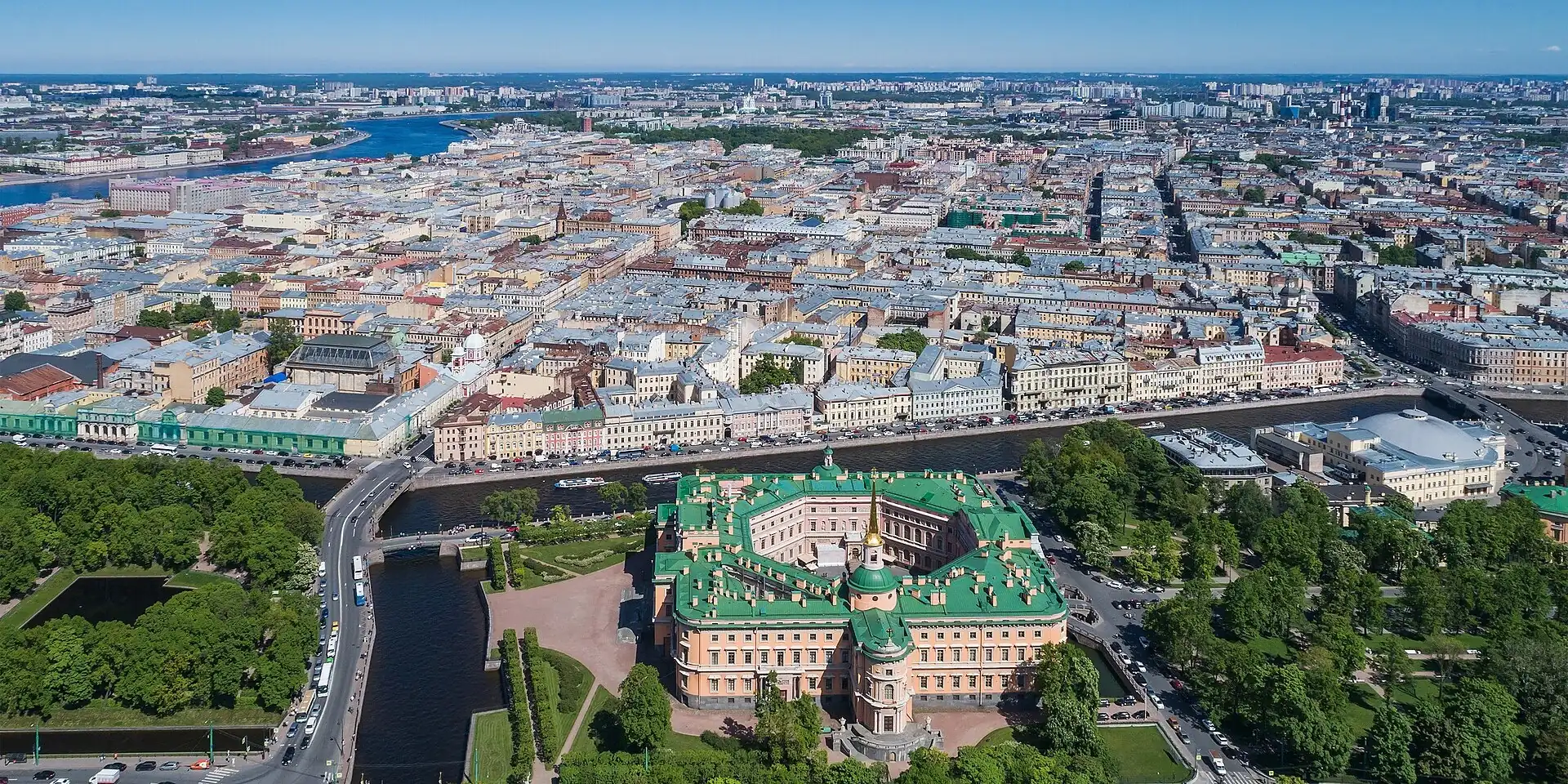
Saint Petersburg: Venice of the North and Imperial Jewel of the Neva
Immerse yourself in Peter the Great’s grand vision, where Baroque palaces, crisscrossing canals, gilded domes, and rich literary heritage create an extraordinary cultural landscape.
 Daniel Romanov
Saint Petersburg: Venice of the North and Imperial Jewel of the Neva
Saint Petersburg, the glittering cultural capital of Russia, is an architectural masterpiece built upon forty-two islands where the Neva River flows into the Gulf of Finland. Founded in 1703 by Tsar Peter the Great, the city was designed as Russia's window to Europe, blending Russian traditions with Western European architectural elegance.
Known through history as Petrograd and Leningrad, Saint Petersburg served as the imperial capital of the Russian Empire for over two centuries. Crisscrossed by romantic canals, lined with grand Baroque palaces, and crowned with golden domes, it remains one of the world's most beautiful cities.
Peter the Great's Vision and the Birth of a Capital
Tsar Peter the Great sought to modernize Russia and establish maritime power along the Baltic Sea. In 1703, he began construction of the Peter and Paul Fortress on Hare Island.
The fortress's cathedral, with its slender golden spire rising 122 meters above the Neva River, became the burial sanctuary for Russian emperors from Peter the Great to Nicholas II.
On Senate Square along the riverbanks stands the Bronze Horseman (Medny Vsadnik). Commissioned by Empress Catherine the Great and immortalized by poet Alexander Pushkin, this iconic equestrian statue of Peter the Great resting on a colossal granite pedestal symbolizes the force and ambition of the city's founder.
Imperial Palaces and the State Hermitage
Saint Petersburg boasts some of the world's grandest royal residences.
The centerpiece of imperial rule is the Winter Palace, designed by Italian architect Francesco Bartolomeo Rastrelli in the lush Elizabethan Baroque style. Serving as the official residence of Russian tsars, the turquoise-and-gold palace faces Palace Square, which is anchored at its center by the colossal Alexander Column.
Today, the Winter Palace forms part of the State Hermitage Museum, one of the largest and most prestigious art museums in the world, holding over three million works of art.
Along the Moika River stands Yusupov Palace, celebrated for its luxurious private theater, gilded reception rooms, and historical role as the site of Grigori Rasputin's assassination in 1916.
Architectural Masterpieces along Nevsky Prospekt
The main artery of Saint Petersburg is Nevsky Prospekt, a grand avenue lined with palaces, historic bookshops, and magnificent cathedrals.
Modeling the architecture of St. Peter's Basilica in Rome, the Cathedral of Our Lady of Kazan (Kazan Cathedral) features a sweeping semi-circular colonnade facing Nevsky Prospekt. It serves as a monument to Russia's victory over Napoleon in 1812.
Further along the Griboyedov Canal rises the breathtaking Church of the Savior on Blood (Church of the Resurrection of Jesus Christ). Built on the exact site where Emperor Alexander II was assassinated in 1881, its multi-colored onion domes and interior containing over 7,500 square meters of intricate mosaics make it one of Saint Petersburg's most recognizable landmarks.
Dominating the skyline with its massive golden dome is Saint Isaac's Cathedral. Designed by Auguste de Montferrand and built over forty years, its interior features monolithic granite columns, lapis lazuli, malachite, and grand religious artwork.
Imperial Suburbs: Fountains and Palaces
Outside the city center lie royal summer residences designed to equal the royal courts of Europe.
Petergof (Peterhof), built by Peter the Great on the Gulf of Finland, is famous as the Russian Versailles. Its Grand Cascade features dozens of golden fountains, statues, and water jets operating entirely without pumps via gravity.
In Tsarskoye Selo stands Ekaterina's Palace (Catherine Palace), famous for its spectacular blue-and-white Baroque façade and the legendary Amber Room, meticulously reconstructed with amber panels, gold leaf, and mirrors.
Tastes of Saint Petersburg
Saint Petersburg's dining scene reflects aristocratic European influences combined with traditional Russian flavors.
Popular dishes include stroganoff, beef Wellington, Pyshki (hot powdered sugar donuts from historic Soviet-era bakeries), salmon caviar served with thin pancakes, and refined Baltic seafood dishes.
The Magic of the White Nights
During midsummer, Saint Petersburg experiences the famous White Nights (Beliye Nochi), when the sun barely sets below the horizon. The city bursts into celebration with nocturnal boat tours under illuminated drawbridges, canal concerts, and romantic strolls along the Neva banks.
Saint Petersburg is a city of poetry, imperial grandeur, and timeless beauty. Its grand palaces, historic canals, and extraordinary artistic treasures create an unforgettable journey through Russian history and culture.