Istanbul: Where Continents Collide and Empires Converge
Discover the monumental city bridging Europe and Asia, where Byzantine domes, Ottoman minarets, and ancient waterways create a tapestry unlike any other.
 Daniel Romanov
Istanbul: Where Continents Collide and Empires Converge
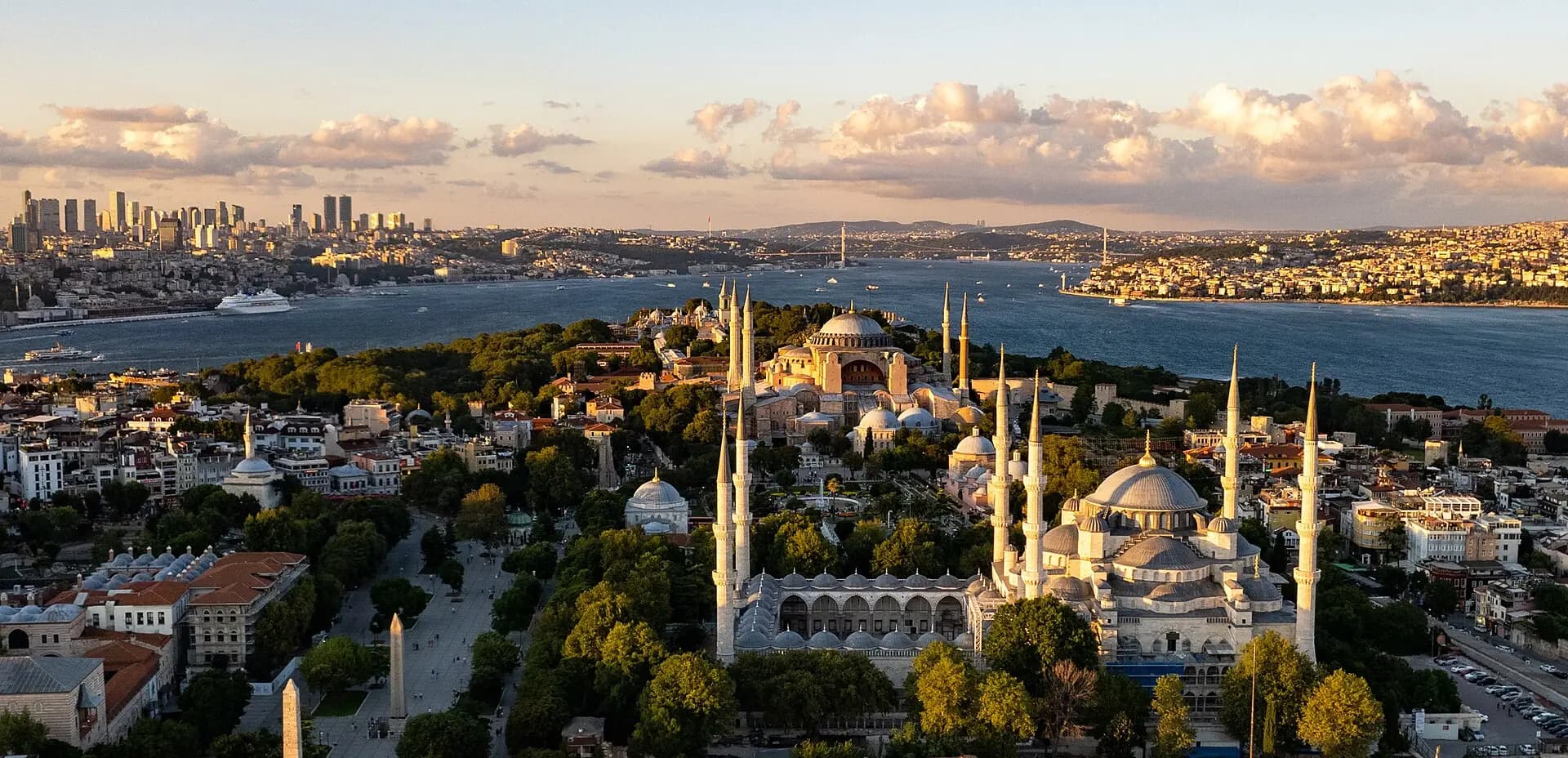
Istanbul, the extraordinary metropolis of Turkey, is the only city in the world spanning two continents: Europe and Asia. Straddling the Bosphorus Strait, Istanbul has served as the capital of three great empires: the Roman, Byzantine, and Ottoman Empires.
Known through history as Byzantium and Constantinople, Istanbul preserves a staggering cultural legacy. Dazzling Byzantine mosaics, soaring Ottoman minarets, grand imperial palaces, and bustling historic bazaars define an urban landscape where East meets West.
The Golden Age of Constantinople
Founded as Byzantium by Greek colonists, the city was transformed in AD 330 when Roman Emperor Constantine the Great designated it as the new capital of the Roman Empire, renaming it Constantinople.
For over a millennium, Constantinople stood as the wealthy capital of the Byzantine Empire and the fortress of Eastern Christendom. Its formidable defenses, including the multi-layered stone Walls of Constantinople built during the reign of Theodosius II, protected the city against centuries of sieges.
The Masterpiece of Byzantine Architecture
At the heart of historic Sultanahmet stands Hagia Sophia (Holy Wisdom). Commissioned by Byzantine Emperor Justinian I and completed in AD 537, Hagia Sophia revolutionized architecture with its colossal floating dome.
For nearly nine hundred years, Hagia Sophia served as the premier cathedral of Eastern Orthodoxy. Following the Ottoman conquest in 1453 under Sultan Mehmed II, the structure was converted into an imperial mosque, gaining Ottoman minarets and calligraphy panels while preserving its magnificent Byzantine mosaics.
Nearby, the subterranean Basilica Cistern (Yerebatan Sarnıcı) showcases Byzantine engineering. Built in the sixth century, its vast vaulted ceiling supported by 336 marble columns—including two sculpted Medusa heads—supplied fresh water to the imperial palace.
Ottoman Imperial Grandeur
For nearly five centuries, Ottoman sultans ruled an empire stretching across three continents from Istanbul.
On the peninsula overlooking the Bosphorus and Golden Horn stands Topkapi Palace. Serving as the primary residence and court of Ottoman sultans for four hundred years, the palace complex features lush courtyards, the imperial Harem, sacred relic chambers, and grand pavilions displaying royal treasures.
Dominating the skyline across from Hagia Sophia is the Sultan Ahmed Mosque, popularly known as the Blue Mosque. Completed in 1616 during the reign of Sultan Ahmed I, it is famous for its six slender minarets and hand-painted Blue Iznik interior tiles.
On one of Istanbul's seven hills rises Suleymaniye Camii, designed by the legendary Ottoman architect Mimar Sinan for Sultan Suleiman the Magnificent. The mosque complex represents the peak of Ottoman classical architecture.
Towers, Palaces, and the Bosphorus Waterfront
Across the Golden Horn in the historic district of Galata stands the Galata Tower (Galata Kulesi). Constructed by Genoese traders in 1348, this stone tower served as a watchtower and now offers magnificent 360-degree views across the Bosphorus and historic peninsula.
In the nineteenth century, Ottoman sultans moved their court to European-style palaces along the Bosphorus shore. Dolmabahce Sarayi displays extravagant Baroque, Rococo, and Neoclassical architecture combined with traditional Ottoman design, featuring crystal chandeliers, gold leaf ceilings, and waterfront gardens.
Out in the waters of the Bosphorus, the iconic Maiden's Tower (Kız Kulesi) stands on a small islet, steeped in centuries of romantic legends and maritime history.
Byzantine Art and Hidden Gems
Among Istanbul's most exquisite artistic treasures is Kariye Camii (Chora Church). Famous for its fourteenth-century late-Byzantine mosaics and frescoes depicting biblical narratives, it offers unmatched insights into medieval religious art.
Tastes of Istanbul
Istanbul's culinary culture is a rich fusion of Central Asian, Middle Eastern, Balkan, and Mediterranean cooking traditions.
Iconic specialties include kebabs grilled over open embers, meze platters (smoky eggplant, grape leaves, and yogurt dips), fresh balık ekmek (grilled fish sandwiches served along the Galata Bridge), and lahmacun (crispy flatbread topped with spiced minced meat).
Visitors can sample Turkish delight (lokum), flaky baklava layered with pistachios, and rich Turkish coffee brewed in traditional copper pots in historic bazaars.
An Unmatched Crossroads of History
Istanbul is a city of magic and endless discovery. The call to prayer echoing over the waters of the Golden Horn, ferry boats crisscrossing between continents, and ancient monuments standing beside modern streets create an unforgettable experience. Istanbul is not merely a destination; it is a grand crossroads of human history.