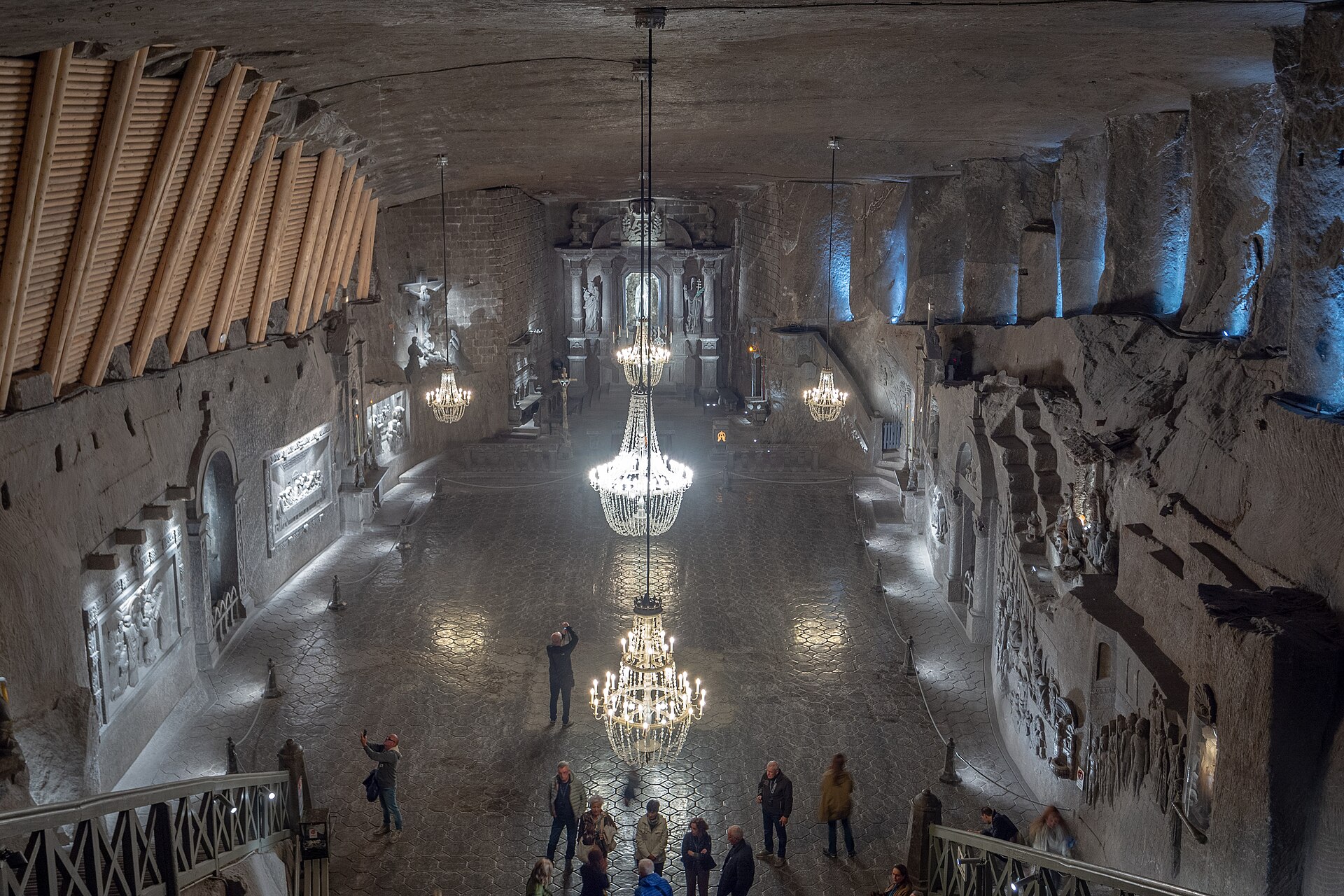
The Wieliczka Salt Mine, located in southern Poland, is a vast underground complex that operated continuously from the 13th century until 2007. Spanning over 287 kilometers of tunnels and reaching depths of 327 meters, the mine served as one of the world's oldest and most significant salt production centers. Its extensive network of chambers, chapels, and galleries reflects centuries of mining technology and artistic endeavor.
Beyond its industrial utility, the site is renowned for its elaborate underground architecture, including the Chapel of St. Kinga, where all elements—from altars to chandeliers—are carved directly from rock salt. The mine remains a significant cultural landmark, illustrating the intersection of medieval economic power and subterranean engineering.
Key Facts
- Materials
- Rock salt, Timber, Stone
- Civilization
- Polish
- Accessibility
- Partial; specific tourist routes are accessible, but many areas involve stairs
- Date(s)
- 13th century - 2007
- Condition
- Preserved as a museum and tourist attraction
- Original Function
- Salt extraction
- Key Figures
- Saint Kinga, Nicolaus Copernicus, Johann Wolfgang von Goethe
Medieval Origins
13th centurySalt production began in the 13th century, quickly becoming a vital source of wealth for the Polish crown. The mine was known as 'Magnum Sal' (Great Salt) and provided the economic foundation for the development of the Polish state.
Expansion and Artistry
16th - 18th centuryDuring the Renaissance and Baroque periods, the mine expanded significantly. Miners began carving religious statues and chapels into the salt walls, transforming the industrial workspace into a site of profound cultural and religious expression.
Industrial Modernization
19th - 20th centuryThe mine underwent technological modernization, including the introduction of steam-powered machinery and electric lighting. Despite these advancements, traditional manual carving techniques were preserved for the creation of decorative elements.
Closure and Heritage
2007 - presentCommercial salt extraction ceased in 2007 due to low salt prices and flooding risks. Today, the site operates exclusively as a historic monument and museum, attracting millions of visitors annually.
Cultural Significance
The Wieliczka Salt Mine is a cornerstone of Polish national heritage, symbolizing the ingenuity and resilience of the mining community. It represents a unique synthesis of industrial history and folk art, where the labor of miners transcended utility to create a subterranean cathedral of salt. It remains a site of pilgrimage and a testament to the historical importance of salt as 'white gold' in European trade.
Interpretive Notes
Scholarly debates and areas of uncertainty
Debates persist regarding the long-term preservation of the salt structures against humidity and atmospheric changes caused by high tourist traffic. Additionally, the extent of the mine's original medieval layout remains a subject of archaeological investigation as new, previously unmapped tunnels are occasionally discovered.
Visiting Information
Entry Rules
Access is restricted to guided tours only. Tickets must be purchased in advance. Visitors are required to follow designated paths and adhere to safety regulations regarding underground movement.
Best Times to Visit
Weekdays during the off-season (November to March) to avoid peak tourist crowds. The underground temperature remains constant year-round, making it a suitable destination regardless of surface weather.
Photography
Personal photography is permitted without flash. Professional photography or filming requires prior authorization and a permit.
Preservation Notes
Do not touch or lick the salt walls, as oils from skin and moisture can accelerate degradation. Stay with the guided group at all times and follow instructions regarding restricted areas.
Nearby POIs
11 shown- Bricks and Figs9.7 km
- Oskar Schindler's Enamel Factory9.8 km
- Museum of Contemporary Art in Krakow9.9 km
- Krakow Old Synagogue10.8 km
- Krakow Pinball Museum11.4 km
- Polish Aviation Museum11.6 km
- Zamek Krolewski na Wawelu11.7 km
- Katedra Wawelska11.7 km
- Basilica of St. Francis of Assisi12.1 km
- Church of the Assumption of the Blessed Virgin Mary12.1 km
- Sukiennice12.2 km
Sources & Further Reading
- [1]Wieliczka Salt Mine: A History — Jerzy Grzesiowski. Wieliczka Salt Mine Museum Press (2010)
- [2]UNESCO World Heritage Nomination: Wieliczka Salt Mine — UNESCO World Heritage Centre. UNESCO (1978)View
Key Facts
- Materials
- Rock salt, Timber, Stone
- Civilization
- Polish
- Accessibility
- Partial; specific tourist routes are accessible, but many areas involve stairs
- Date(s)
- 13th century - 2007
- Condition
- Preserved as a museum and tourist attraction
- Original Function
- Salt extraction
- Key Figures
- Saint Kinga, Nicolaus Copernicus, Johann Wolfgang von Goethe
Nearby POIs
11 shown- Bricks and Figs9.7 km
- Oskar Schindler's Enamel Factory9.8 km
- Museum of Contemporary Art in Krakow9.9 km
- Krakow Old Synagogue10.8 km
- Krakow Pinball Museum11.4 km
- Polish Aviation Museum11.6 km
- Zamek Krolewski na Wawelu11.7 km
- Katedra Wawelska11.7 km
- Basilica of St. Francis of Assisi12.1 km
- Church of the Assumption of the Blessed Virgin Mary12.1 km
- Sukiennice12.2 km