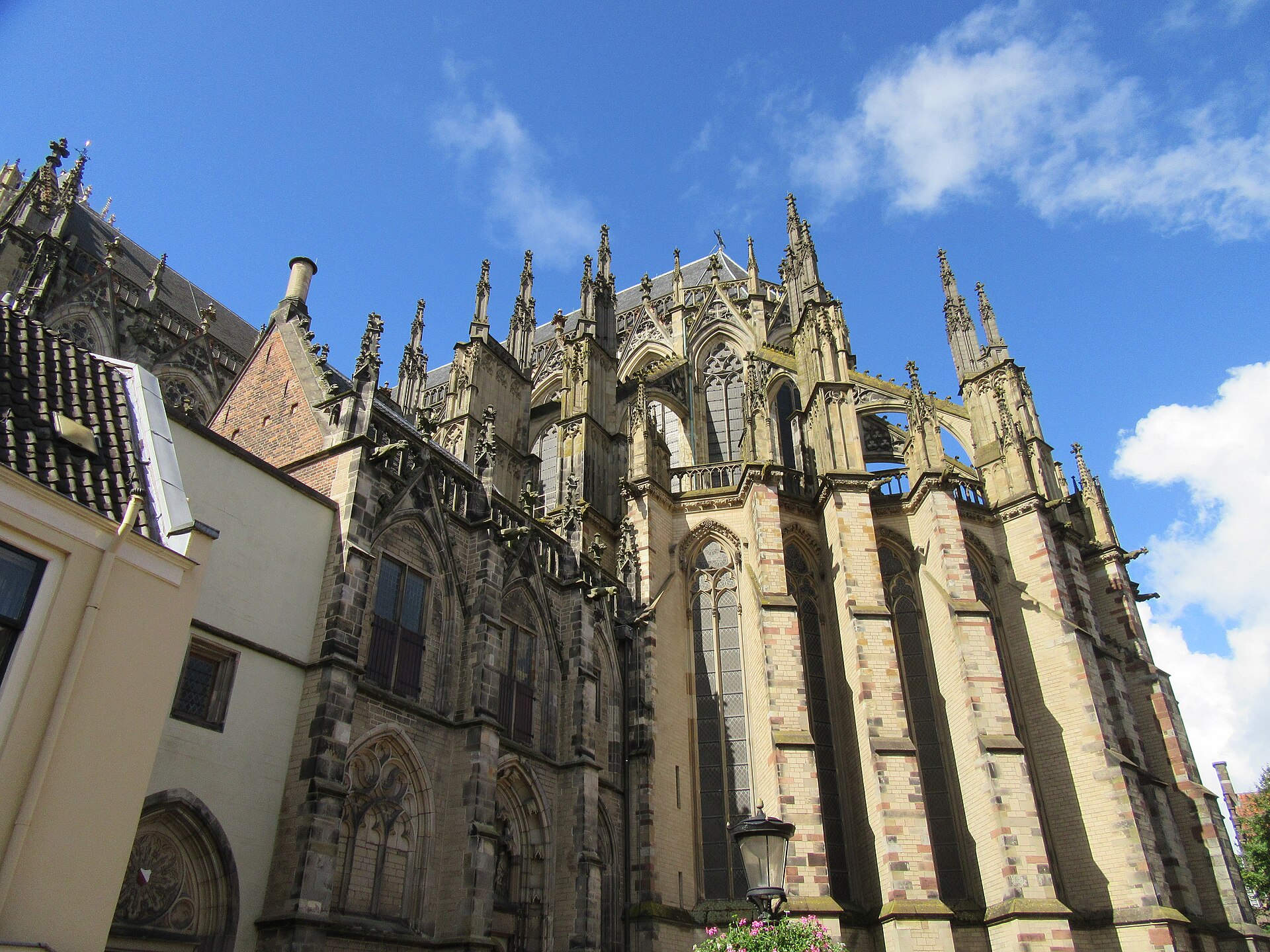
St. Martin's Cathedral, also known as the Dom Church, is a prominent Gothic structure in Utrecht, Netherlands. Originally serving as the cathedral of the Diocese of Utrecht, the building was once the largest church in the country. Today, only the choir and the transept remain standing, separated from the iconic Dom Tower by the site of the nave, which collapsed during a severe storm in 1674.
The architecture represents a significant example of French Gothic influence in the Northern Netherlands, characterized by its high vaults and intricate stonework. Despite the loss of the nave, the remaining sections continue to function as a place of worship and a landmark of Dutch ecclesiastical history.
Key Facts
- Materials
- Brick, Natural stone
- Civilization
- Medieval Dutch
- Accessibility
- Wheelchair accessible
- Date(s)
- 1254 - 1520
- Condition
- Partially ruined; choir and transept in use as a church
- Original Function
- Cathedral
- Key Figures
- Bishop Hendrik van Vianden
Foundations
1254Bishop Hendrik van Vianden laid the first stone for the new Gothic cathedral in 1254, intended to replace the earlier Romanesque structure that had been damaged by fire.
Construction and Expansion
14th - 15th centuryConstruction proceeded slowly over several centuries. The choir and transept were completed first, followed by the construction of the massive Dom Tower, which was finished in 1382.
The Great Storm
1674A catastrophic tornado struck Utrecht in 1674, causing the unfinished and structurally weak nave of the cathedral to collapse. The nave was never rebuilt, leaving the choir and transept physically detached from the tower.
Modern Era
19th century - presentThe site underwent various restoration efforts to preserve the remaining Gothic elements. It remains an active Protestant church and a central cultural site in Utrecht.
Cultural Significance
The cathedral is a symbol of Utrecht's historical status as the most important religious center in the Northern Netherlands. The separation of the tower and the church serves as a permanent reminder of the 1674 disaster and the shifting architectural landscape of the city.
Interpretive Notes
Scholarly debates and areas of uncertainty
There is ongoing academic discussion regarding the original intended height and design of the nave prior to its collapse, with various digital reconstructions proposed based on archaeological surveys of the foundation.
Visiting Information
Entry Rules
Open to the public. Free entry, though donations are encouraged. Visitors are asked to respect ongoing services.
Best Times to Visit
Weekdays during morning hours to avoid weekend tourist crowds and ensure access to the interior.
Photography
Personal photography allowed. Tripods and commercial equipment require prior permission from the church administration.
Preservation Notes
The structure is subject to ongoing maintenance due to its age and the exposed nature of the ruins. Please remain within designated visitor areas.
Nearby POIs
11 shownSources & Further Reading
- [1]The Dom Church and Tower — R.E. de Bruin. Utrecht University Press (2010)
- [2]Gothic Architecture in the Netherlands — A.J.J. Mekking. Walburg Pers (1991)
Key Facts
- Materials
- Brick, Natural stone
- Civilization
- Medieval Dutch
- Accessibility
- Wheelchair accessible
- Date(s)
- 1254 - 1520
- Condition
- Partially ruined; choir and transept in use as a church
- Original Function
- Cathedral
- Key Figures
- Bishop Hendrik van Vianden